Caterpillar Part reference

0618639seal-o-ring

This page covers Caterpillar part number 0618639, catalogued as a seal-o-ring. Catalog records list it in the basic engine group, rocker arm subgroup, as an occurrence within assembly listings that include Caterpillar 735 and Caterpillar 740 entries. These are catalog associations only and do not confirm fitment for every machine configuration.

Recorded applications

Models and catalog references

Selected catalog references that list this part. A catalog association does not confirm fitment for every machine or configuration.

& More catalog references

Catalog context

Where this part appears

  1. ModelCaterpillar 735
  2. Groupbasic engine
  3. Subgrouprocker arm group
  4. Unit198-9898 rocker arm gp s/n bet200-99999 part of 148-7482 mechanism gp-fuel pump & valve
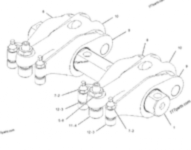
Reduced catalog diagram for Caterpillar 735 Locked
Diagram previewReduced catalog thumbnail
About diagram access

Check the signed-in Part Book for available diagrams and the complete catalog breakdown.

Parts in this preview

Selected records
Selected catalog parts, with other part numbers masked
Part numberDescription
03***13seal-o-ring
0618639seal-o-ring (current part)
19***51button; (24-mm od)
19***69screw-arm adjustment; (9/16-18x2-in)

Selected entries from this catalog unit. Other part numbers are masked. Confirm the full breakdown and your machine configuration before ordering.

View model page

General guidance

Component knowledge

Understanding this component

In general, an O-ring is a sealing element, typically a ring of elastomer set into a groove, used to prevent leakage of fluids or gases between mating surfaces. Heavy equipment uses such seals wherever a joint must stay pressure-tight or contamination-resistant. Exact construction, dimensions and material for this specific part are not stated in its catalog record.

What to check before ordering

Use part number 0618639 exactly as listed when referencing this seal-o-ring. Before ordering, confirm the machine model, serial number range and the parent assembly it is used in, since the catalog associations are conditional on those details.