Caterpillar BG-230
Specifications · fluids and capacities · maintenance intervals
Post a parts request and compare supplier quotes.
The Caterpillar BG-230 is a medium-production, rubber-tire asphalt paver built on Caterpillar's Barber-Greene-derived paving line, sized for city streets, parking lots, industrial sites, and county or highway overlay work rather than mainline interstate paving. The base BG-230 (serial prefix 9AL, dating to the mid-1990s) runs a Cat 3054DIT turbocharged diesel rated about 80 kW (107 hp) at 2200 rpm. The updated BG-230D (serial prefix B4G, introduced around 2006) carries a Cat 3054C turbocharged-aftercooled diesel rated about 97 kW (130 hp) at 2200 rpm; both engines are mechanically governed, with no ECM or digital fault-code tree. Operating weight runs around 12,200 kg (about 26,900 lb), depending on screed and options fitted. Propel is fully hydrostatic with four speed ranges and wheel-based anti-slip traction control, giving a travel speed near 19.2 km/h (about 12 mph). The paver ships with either the Extend-A-Mat 8-16B or the AS2251 screed off a 2.5 m (8 ft 2 in) base frame, extending paving width from 1.8 to 6.1 m (6 to 20 ft), with a choice of diesel-fired or electric screed heat (electric requires the optional onboard generator).
The move from the base BG-230 to the BG-230D was mainly a powertrain upgrade. The 3054C's turbo-aftercooling gave roughly 20 percent more rated power and steadier response under load than the earlier 3054DIT, while keeping the same conservative, non-electronic control architecture: there is no Cat ET session involved, diagnosis is still done with warning lamps and a multimeter against the electrical schematic. That simplicity is a large part of why these pavers hold value in the used market; independent shops and owner-operators can keep one running without dealer-only diagnostic tools. Recurring parts and service demand centers on the 3054 family's known quirks (front-cover and oil-cooler seal leaks that let coolant into the oil, injector tip coking, turbo smoke under load), plus wear items tied to the rubber-tire chassis and hydrostatic driveline: wheel hub bearings, drive chains, and screed plates and slide rails on the Extend-A-Mat or AS2251 screed. Caterpillar continued the BG-series wheeled paver lineup after the BG-230D; later paver generations were sold under different model families and specifications, and no single, clearly documented direct replacement for the BG-230/BG-230D is confirmed.
Below: full specifications, fluids & capacities, the factory service schedule, common service parts, verified fault codes, what owners discuss, attachment guidance, the complete assembly directory, and a serial-number reference. Complete parts lists with full OEM part numbers, exploded diagrams, quantities, and fitment data are available free in Heavy Parts AI.
Caterpillar BG-230 specifications
Engine
| Engine model (early BG-230) | Cat 3054DIT turbocharged diesel, 4 cylinders |
| Gross power (early BG-230, 3054DIT) | 80 kW (107 hp) at 2200 rpm |
| Engine model (later BG-230D) | Cat 3054C turbocharged diesel, 4 cylinders. The BG-230D chassis was also cataloged as the Cat AP-800D under Caterpillar's alternate paver-line naming |
| Gross power (later BG-230D, 3054C) | 97 kW (130 hp) at 2200 rpm |
| Displacement | 4.4 L (268 cu in), 105 mm x 127 mm bore x stroke, common to the 3054 engine family fitted across both generations |
| Emissions tier | Not published for this model. Engines of this vintage predate or fall outside standard Tier certification tables; confirm with a dealer for a specific serial range |
Weights
| Operating weight (without screed) | approx. 12,200 kg (26,901 lb). Published for the BG-230 base chassis, shared with BG-230D; varies with screed and options fitted |
| Shipping weight | Not separately published for this model |
| Ground pressure | Not published; not typically issued for this rubber-tire paver class |
Dimensions
| Length (with screed) | 6.48 m (21.25 ft) |
| Transport width | 2.44 m (8 ft) |
| Transport height | 2.62 m (8.6 ft) |
| Wheelbase | 2.34 m (7.67 ft) |
| Tires | 13x22 solid rubber and 16x24 sand-rib tread, as equipped |
| Ground clearance | Not published for this model |
Performance
| Travel speed, maximum | 19.2 km/h (11.9 mph) |
| Paving speed, maximum | approx. 76 m/min (249 ft/min), roughly 4.6 km/h |
| Paving width, standard screed | 1.83 m (6 ft) |
| Paving width, maximum extended | 6.1 m (20 ft) with screed extensions fitted (Extend-A-Mat or AS2251-family screed) |
| Auger diameter | 40.6 cm (16 in) |
| Hopper capacity | approx. 7.2 t as published; this figure carries an inconsistent unit label, treat as approximate and confirm with a dealer |
| Propel system | Fully hydrostatic drive with four speed ranges, anti-slip control, and steering-wheel control |
| Gradeability | Not published for this model |
Service capacities (summary)
| Fuel tank | 189 L (50 gal) |
| Hydraulic system | 189 L (50 gal) |
| Cooling system | 19.3 L (5.1 gal) |
| Engine oil (with filter) | Not published for this model; refer to the Cat 3054 engine service literature for the exact refill spec |
Values vary by configuration, region, and serial range — confirm against your machine before planning transport or lifts.
BG-230 fluids & capacities
| System | Capacity | Recommended fluid |
|---|---|---|
| Engine crankcase, with filter (Cat 3054/3054C 4-cyl diesel) | approx. 6.9-9.5 L (7.3-10 US qt) on the base 3054-powered BG-230; approx. 11-13 L (11.6-13.7 US qt) on the 3054C-powered BG-230D update. Varies by engine generation and dipstick fill level - confirm against this unit's serial-specific manual before topping off. | Cat DEO (Diesel Engine Oil). Select viscosity by ambient temperature per Cat's multi-viscosity chart: SAE 10W-30 for cold climates down to roughly -20C (-4F), SAE 15W-40 for temperate-to-hot climates from about -15C (5F) and up. |
| Cooling system | approx. 19 L (5.1 US gal) for the full machine circuit (radiator, block, hoses, expansion tank); the engine block/head alone holds close to 7 L (7.4 US qt) of that total. | Cat DEAC (Diesel Engine Antifreeze/Coolant) full-fill formula, or Cat ELC (Extended Life Coolant) on units factory-filled with it. Keep the factory glycol-to-water ratio for the expected climate and never mix coolant types in the same system. |
| Fuel tank | approx. 189 L (50 US gal). | No. 2-D diesel fuel meeting Cat's diesel fuel specification. Switch to No. 1-D or a winter-blend fuel in cold weather to prevent fuel gelling and filter plugging. |
| Hydraulic system (tank plus lines, propel and work circuits combined) | approx. 189 L (50 US gal) total system fill. | Cat TDTO (Transmission/Drive Train Oil) is common on this paver family since the hydrostatic propel drive shares the main hydraulic circuit, though some units call for Cat HYDO Advanced hydraulic oil where a dedicated hydraulic-only fill is specified. The two are not interchangeable - confirm which one this unit's manual calls for before adding fluid. Pick the viscosity grade (TDTO 10W/30/50 or HYDO 10W-30/15W-40) by ambient temperature per Cat's chart. |
| Hydraulic tank (reservoir only) | not published as a separate figure - it is folded into the total hydraulic system capacity above. Fill to the sight gauge or dipstick on the tank itself rather than relying on a total-system number. | Same fluid as the hydraulic system entry above. |
| Transmission / propel drive | no separate compartment documented. This paver uses a hydrostatic propel drive that draws from the main hydraulic system above rather than a standalone mechanical transmission sump. | Serviced as part of the hydraulic system above - no separate fluid fill. |
| Final drives / wheel-end gear cases (each) | not documented in available specifications for this model. Check the fill/level plug on each unit and confirm the exact figure against this machine's own manual or with your Cat dealer. | Cat TDTO or Cat GO (Gear Oil), viscosity selected by ambient temperature per Cat's chart. |
| Grease (all fittings, spec only) | not applicable - service per the grease interval chart, no reservoir capacity to report. | Cat MPGM (Multipurpose Grease), NLGI 2 lithium-complex EP grease, for routine service. For sustained sub-zero operation, use Cat's arctic-grade grease instead. |
Capacities are refill values from factory literature — always fill to the dipstick/sight gauge, not the number.
Caterpillar BG-230 maintenance schedule
| Service interval | Tasks |
|---|---|
| Every 10 h |
|
| Every 250 h |
|
| Every 500 h |
|
| Every 1,000 h |
|
| Every 2,000 h |
|
| Every 4,000 h |
|
Servicing the BG-230 beyond the schedule
Predictive Maintenance & Fluid Analysis
Run oil sampling (SOS) on the engine and the roughly 189 L (50 US gal) hydraulic reservoir on a fixed interval; rising water or coolant readings point straight at the 3054 family's known front-cover and oil-cooler seal leak before it costs a bearing. Because there is no ECM fault-code tree, track injector condition by exhaust smoke color and power loss under load rather than a scan tool. Watch hydrostatic charge pressure and speed-range shift feel over time; a slow drop signals pump or motor wear well before a failure.
Corrective & Common Repairs
Most corrective work traces to the 3054's front timing cover and oil-cooler seals; reseal at the first sign of coolant-in-oil rather than waiting for a milky dipstick. Decoke or replace injector tips when smoke and power complaints show up under load, this engine has no self-diagnostics to flag it. Chase warning-lamp faults with a multimeter against the machine's electrical schematic, not a laptop. On the wheel-based anti-slip traction control, single-wheel slip complaints usually trace to a speed sensor or its wiring, not the hydrostatic pump itself.
Overhaul & Rebuild Points
Plan a hydrostatic propel pump and motor rebuild once speed-range shifts get sluggish or the anti-slip control starts hunting; this drivetrain carries all four speed ranges, not a torque-converter powershift. Inspect the turbocharger for shaft play whenever smoke complaints recur. Because the BG-230 rides on rubber tires and a steering axle, not tracks, wheel hub bearings and steering linkage take the wear and are the undercarriage rebuild items. On the screed, rebuild extension slide rails, wear pads, and tamper/vibrator bearings on the Extend-A-Mat or AS2251 screed as mat quality degrades.
Seasonal & Environment Servicing
Before winter lay-up, drain and treat the roughly 189 L (50 US gal) fuel tank, drain the fuel-water separator, and protect exposed hydrostatic hoses and conveyor/auger chains from asphalt buildup and corrosion. Verify screed heat function before the first cold-mix day of the season, whether the screed runs diesel-fired heat or electric heat off the optional onboard generator. Check the 24V system, dual 12V batteries, and 55-amp alternator for cold-start reliability. In hot climates, watch hydraulic oil temperature and cooler condition given the 3054's known front-cover and oil-cooler seal leak.
BG-230 common service parts
| Part number | Part | Notes | |
|---|---|---|---|
| 8N-9803 | Filter-Fuel | Fuel system service | Check fitment → |
| 119-0073 | Filter Element-Fuel | Fuel system service | Check fitment → |
| 102-9387 | Filter Element As-Air | Air intake service | Check fitment → |
| 102-9388 | Filter Element As-Air | Air intake service | Check fitment → |
| 077-5232 | Filter Element-Breather | Hydraulic service | Check fitment → |
Always confirm against your machine's serial number — cross-check any part in Heavy Parts AI before ordering.
BG-230 fault codes & troubleshooting
| Code | Meaning | Likely cause | What to do |
|---|---|---|---|
| Engine Oil Pressure warning lamp (red) | Engine oil pressure has dropped below the safe minimum. | Low oil level, worn oil pump, clogged filter, or a faulty pressure sensor/switch. | Shut the engine down immediately, check oil level and look for leaks, then correct the cause before restarting. |
| Coolant Temperature warning lamp (red) | Engine coolant temperature has exceeded the normal operating range. | Low coolant level, a radiator or side-draft intake screen clogged with asphalt dust, a failed thermostat, or a slipping fan drive. | Idle the engine down, let it cool, then check coolant level and clean the radiator and intake screen before resuming work. |
| Charging System warning lamp (battery/alternator icon) | Alternator output or battery voltage has fallen below the acceptable range. | A loose or worn drive belt, a failed alternator or regulator, or a loose/corroded battery connection. | Check belt tension and battery terminals first, then test alternator output and replace the alternator or regulator if needed. |
| Hydraulic Oil Temperature warning lamp (amber/red) | Hydraulic system oil temperature has climbed past the normal working range. | Low hydraulic fluid level, a clogged oil cooler, a failing cooling fan, or a sustained heavy load on the propel or auger/conveyor circuits. | Reduce load and idle the machine to cool the oil, check fluid level, and inspect the cooler core and fan drive for debris or slippage. |
| Air Filter Restriction indicator (pop-up or amber lamp) | The air cleaner element has reached its service restriction limit. | Dust and asphalt fines loading the primary filter element over time. | Service or replace the air filter element and reset the restriction indicator. |
| Hydraulic Filter Restriction indicator (pop-up or amber lamp) | The hydraulic return or case-drain filter has reached bypass condition. | Normal filter loading from wear debris, or contamination entering the hydraulic system. | Replace the hydraulic filter element, reset the indicator, and sample the oil if contamination is suspected. |
Codes and remedies are general guidance for this model family — always confirm with diagnostic tooling and your dealer before major repairs.
BG-230 attachments & work tools
Screed systems
This machine pairs with two screed choices: the AS2251 vibratory/tamper screed and the Extend-A-Mat 8-16B screed. Base plate width on the 8-series frame is 2.5 m (8 ft 2 in); bolt-on extensions push documented paving range out to roughly 1.8-6.1 m (6-20 ft), varying with the extension kit fitted.
Screed heat
Both screed options come with a choice of diesel-fired or electric heating elements. Electric heat needs the optional tractor-mounted generator package; diesel heat runs off its own burner and needs no extra generator.
Generator / auxiliary power package
An optional single-phase, tractor-mounted generator (sized for roughly 1,800 rpm operation) feeds an auxiliary power panel rated around 10.8 hp for electrical receptacles. It is sized to run electric screed heat plus jobsite lighting and accessories.
Screed width extensions
Heavy-duty screed frames accept bolt-on extensions for extra-wide mats beyond the base plate width. Exact increment sizes vary by screed model and dealer stock, so confirm the specific kit against the screed fitted.
Tire / undercarriage options
This is a rubber-tire (wheel) paver; no track or Mobil-trac undercarriage is offered in this size class. Drive tires are available in solid-rubber or sand-rib tread, chosen per surface and traction needs on the job.
Propel system
Standard propel is fully hydrostatic with four speed ranges and anti-slip traction control for the drive tires. This is a factory drivetrain configuration rather than a bolt-on option, but it shapes which tire choice suits a given site.
Feeder / auger arrangement
Feeder drives are mounted outboard of the mainframe, clear of the feeder tunnel and asphalt heat, for easier service access. Augers are hydraulically adjustable, raised for transport clearance and lowered to tune material spread ahead of the screed; no model-specific bolt-on auger extension could be verified for this machine.
Part Book
Browse by group, subgroup and unit. Part numbers are masked and diagram thumbnails are locked.
103-7338 Air Cleaner Group s/n 9al1-up; 1pm1-up Part of 103-4782 Engine ar
103-7338 Air Cleaner Group s/n 9al1-up; 1pm1-up Part of 103-4782 Engine ar is listed in the Air inlet and exhaust system / air cleaner group catalog section.
- Group
- Air Inlet and Exhaust System
- Subgroup
- Air Cleaner Group
- Unit
- 103-7338 Air Cleaner Group s/n 9al1-up; 1pm1-up Part of 103-4782 Engine ar
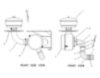 Locked diagram
Parts in this unit
Catalog descriptions with masked part numbers.
| Part number | Description |
|---|---|
| 06***76 | Elbow; Spare Part 06***76 Elbow (Caterpillar) |
| 07***29 | Reducer; Spare Part 07***29 Reducer (Caterpillar) |
| 10***87 | Filter Element as-air; (Secondary); Spare Part 10***87 Filter Element as-air (Caterpillar) |
| 10***88 | Filter Element as-air; (Primary); Spare Part 10***88 Filter Element as-air (Caterpillar) |
| 10***89 | Cover; Spare Part 10***89 Cover (Caterpillar) |
| 10***92 | Tube; Spare Part 10***92 Tube (Caterpillar) |
| 10***93 | Tube; Spare Part 10***93 Tube (Caterpillar) |
| 10***38 | Air Cleaner Group; Spare Part 10***38 Air Cleaner Group (Caterpillar) |
| 10***33 | Air Cleaner Group; Spare Part 10***33 Air Cleaner Group (Caterpillar) |
| 10***45 | Tube as-air; Spare Part 10***45 Tube as-air (Caterpillar) |
| 11***48 | Precleaner Group; Spare Part 11***48 Precleaner Group (Caterpillar) |
| 3g***23 | Clamp Assem.; Spare Part 3g***23 Clamp Assem. (Caterpillar) |
| 5c***61 | Nut (m8x1.25 thd); (m8x1.25 thd); spare part 5c***61 nut (m8x1.25 thd) (Caterpillar) |
| 5l***33 | Fitting (to air cleaner); spare part 5l***33 fitting (to air cleaner) (Caterpillar) |
| 6i***33 | Indicator Group-Air Filter Change; Spare part 6i***33 Indicator Group-Air Filter Change (Caterpillar) |
| 8t***24 | Washer-to Assemble Valve as and Plates; Spare part 8t***24 Washer-to Assemble Valve as and Plates (Caterpillar) |
| 8t***07 | Seal-bulb; (46-cm); spare part 8t***07 seal-bulb (Caterpillar) |
| 9m***59 | Clamp Tube Assembly to Flange; Spare Part 9m***59 Clamp Tube Assembly to Flange (Caterpillar) |
BG-230 serial number reference
The PIN/serial plate is mounted on the machine frame, generally accessible near the operator's platform on the tractor unit; if worn or missing, check for the number stamped into the frame rail as a backup. Read the first three characters as the prefix, which identifies the model/generation and production block, and the digits that follow as the sequence number within that block (e.g. 9AL00123). Units built from the early-to-mid 2000s onward carry a longer 17-character PIN, with the same 3-character model prefix embedded within that string. Confirm exact serial-break points with a dealer.
| Prefix | Identifies | Notes |
|---|---|---|
| 9AL | BG-230 (base/original series) | Barber-Greene-era Caterpillar design; parts documentation for this serial block dates to the mid-1990s. Rubber-tire, medium-production paver fitted with the Cat 3054 DIT diesel, rated around 107 hp (80 kW) at 2200 rpm. Single manual-sourced - confirm exact serial break with a dealer. |
| B4G | BG-230D | Marks the redesigned D-series, introduced around 2006. Carries the turbocharged Cat 3054C diesel rated 130 hp (97 kW) at 2200 rpm, up from the base model. Single manual-sourced - confirm exact serial break with a dealer. |
Frequently asked questions
What engine does the Caterpillar BG-230 use?
It depends on the series. The original BG-230 (serial prefix 9AL) runs a Cat 3054DIT turbocharged diesel rated about 80 kW (107 hp) at 2200 rpm. The updated BG-230D (serial prefix B4G) runs a Cat 3054C turbocharged-aftercooled diesel rated about 97 kW (130 hp) at 2200 rpm. Both are mechanically governed, with no ECM or digital fault-code tree.
What is the BG-230's operating weight?
Operating weight runs around 12,200 kg (about 26,900 lb). The exact figure varies with the screed fitted (Extend-A-Mat 8-16B or AS2251) and options such as the onboard generator used for electric screed heat.
What replaced the Caterpillar BG-230?
There is no single, clearly documented direct replacement model. Caterpillar continued the BG-series wheeled paver lineup after the BG-230D, and later paver generations were sold under different model families and specifications. If you are sourcing parts or comparing a replacement, match current paving-width and engine-class needs against today's Cat wheel paver lineup rather than assuming a one-to-one successor.
What BG-230 owners discuss
How does the BG-230's hydrostatic propel system behave, and what causes jerky or uneven travel?
What wears out first on a BG-230 as the hours climb?
Does engine spec change across BG-230 model years, and what should I watch for?
What electrical or sensor problems come up most on these pavers?
Is the BG-230 screed diesel-heated or electric, and does that affect upkeep?
What should I check before buying a used BG-230?
Compiled from owner and technician discussions across the industry — experiences vary by serial range and machine history.
Need a specific BG-230 part?
Search live OEM part data, check fitment, and cross-reference alternatives with Heavy Parts AI.
Post a parts request and compare supplier quotes.