Caterpillar Part reference

1031260cone-bearing

Catalog part 1031260, listed as cone-bearing under Caterpillar catalog data. The catalog records its association with the hydraulic system and pump group-piston subgroup in two Caterpillar AP-series model contexts, which should be confirmed against the recorded conditions before ordering.

Recorded applications

Models and catalog references

Selected catalog references that list this part. A catalog association does not confirm fitment for every machine or configuration.

& More catalog references

Catalog context

Where this part appears

  1. ModelCaterpillar AP-1000B
  2. Grouphydraulic system
  3. Subgrouppump group-piston
  4. Unit160-5113 pump gp-piston s/n 7hn1-up; 8gn1-up part of 194-7094, 194-7095 generator gp-hydraulic an attachment
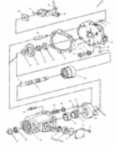
Reduced catalog diagram for Caterpillar AP-1000B Locked
Diagram previewReduced catalog thumbnail
About diagram access

Check the signed-in Part Book for available diagrams and the complete catalog breakdown.

Parts in this preview

Selected records
Selected catalog parts, with other part numbers masked
Part numberDescription
00***63seal-o-ring; (55.24mm id)
03***16bolt-self locking; (1/4unc x 3/4)
10***52cover-pintle
1031260cone-bearing (current part)

Selected entries from this catalog unit. Other part numbers are masked. Confirm the full breakdown and your machine configuration before ordering.

View model page

General guidance

Component knowledge

Understanding this component

In general, a cone bearing is a tapered rolling-element bearing that carries radial and axial loads, which are forces acting across and along a shaft. In heavy machinery, such bearings are used in rotating assemblies where combined loads and smooth shaft support are needed, but the exact role of this catalog item must be checked against its catalog record.

What to check before ordering

Use part number 1031260 as the catalog reference for this item. Before ordering, compare the recorded catalog associations and any listed serial or configuration conditions with your machine or assembly, because those associations do not by themselves confirm compatibility for every configuration.