Caterpillar Part reference

0067232cone-bearing

Catalog listing 0067232 is recorded as a cone-bearing under Caterpillar's catalog. Its catalog associations appear under the Caterpillar AP-1050 undercarriage groups for drive and track-roller assemblies, but these are catalog occurrences only and do not confirm fitment on every machine configuration.

Recorded applications

Models and catalog references

Selected catalog references that list this part. A catalog association does not confirm fitment for every machine or configuration.

& More catalog references

Catalog context

Where this part appears

  1. ModelCaterpillar AP-1050
  2. Groupundercarriage
  3. Subgroupdrive group-track
  4. Unit7r-0327 drive gp-track s/n 1jg1-up part of 5e-9752 undercarriage ar
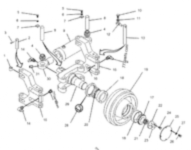
Reduced catalog diagram for Caterpillar AP-1050 Locked
Diagram previewReduced catalog thumbnail
About diagram access

Check the signed-in Part Book for available diagrams and the complete catalog breakdown.

Parts in this preview

Selected records
Selected catalog parts, with other part numbers masked
Part numberDescription
00***31cup-bearing
0067232cone-bearing (current part)
1J***34seal-lip type
3B***06washer,lock; flange,elbow,clamp assembly,tube to pump,tube assembly to screen,clip mounting,and tube assembly to transmission

Selected entries from this catalog unit. Other part numbers are masked. Confirm the full breakdown and your machine configuration before ordering.

View model page

General guidance

Component knowledge

Understanding this component

In general, a cone bearing is a tapered roller bearing that supports radial and axial loads, often used where a shaft or pivot must carry force in more than one direction. In heavy equipment it is typically associated with rotating or pivoting joints, and its exact role and fit depend on the specific assembly it serves.
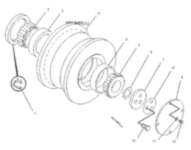
What to check before ordering

Use part number 0067232 as the reference for this cone-bearing listing. Before ordering, confirm the machine's serial number and configuration against the catalog occurrences, since the recorded parent-unit conditions and any position-specific notes must match the application you are servicing.