Caterpillar Part reference

1178713block-clamp

This page covers Caterpillar part number 1178713, catalogued as a block-clamp. The catalog records it in association with the hydraulic system and steering system assemblies of the PF-300B and PF-300C models shown below. These are catalog associations only; confirm the recorded conditions before ordering.

Recorded applications

Models and catalog references

Selected catalog references that list this part. A catalog association does not confirm fitment for every machine or configuration.

& More catalog references

Catalog context

Where this part appears

  1. ModelCaterpillar PF-300B
  2. Grouphydraulic system
  3. Subgrouplines group-control
  4. Unit187-4850 lines gp-control s/n 6hm413-up; 4pn526-up part of 202-0277 operator ar
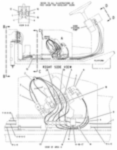
Reduced catalog diagram for Caterpillar PF-300B Locked
Diagram previewReduced catalog thumbnail
About diagram access

Check the signed-in Part Book for available diagrams and the complete catalog breakdown.

Parts in this preview

Selected records
Selected catalog parts, with other part numbers masked
Part numberDescription
10***01plate
10***03plate-cover
11***81hose as
1178713block-clamp (current part)

Selected entries from this catalog unit. Other part numbers are masked. Confirm the full breakdown and your machine configuration before ordering.

View model page

General guidance

Component knowledge

Understanding this component

In general, a block-clamp is a clamping device that holds a block or mounting block firmly in place so that lines or components attached to it stay secured. In heavy equipment it is typically used where hoses or hydraulic lines need to be supported and restrained against vibration and movement. Its exact construction and any included hardware should be checked against the catalog entry.

What to check before ordering

Order using the existing part number 1178713 and confirm it against the recorded conditions in the catalog entry for your specific machine and serial number. The catalog associations listed here do not by themselves establish compatibility for every machine configuration.