Caterpillar Part reference

1154924bushing-track

This page covers catalog part 1154924, listed as a track bushing. Catalog occurrences associate it with Caterpillar C9.3 and Caterpillar 572R II undercarriage assemblies, shown as catalog associations only, so confirm the recorded conditions before ordering.

Recorded applications

Models and catalog references

Selected catalog references that list this part. A catalog association does not confirm fitment for every machine or configuration.

& More catalog references

Catalog context

Where this part appears

  1. ModelCaterpillar C9.3
    Browse Caterpillar models
  2. Groupundercarriage
  3. Subgroupguiding ar-undercarriage
  4. Unit329-8780 guiding ar-undercarriage s/n scg1-up full length for use with heavy duty undercarriage cannot be used with waste handling ar an attachment
Heavy Parts AI

Caterpillar C9.3

Catalog referenceCaterpillar C9.3
About diagram access

Check the signed-in Part Book for available diagrams and the complete catalog breakdown.

Parts in this preview

Selected records
Selected catalog parts, with other part numbers masked
Part numberDescription
11***23pin-track
1154924bushing-track (current part)
15***73ring-thrust
23***43seal as

Selected entries from this catalog unit. Other part numbers are masked. Confirm the full breakdown and your machine configuration before ordering.

Browse Caterpillar models

General guidance

Component knowledge

Understanding this component

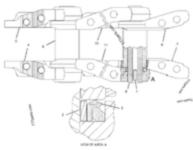
In general, a track bushing is a cylindrical component in a track chain that forms a pivot point, allowing links to articulate as the track moves around the undercarriage. Track bushings are typically used in tracked machines, where they work with pins and other chain parts to transmit motion and support the machine's weight across the track system.
What to check before ordering

Part 1154924 is the catalog number to use when ordering this track bushing. Before ordering, confirm that the recorded catalog associations and any listed conditions match your machine and service requirements, because catalog associations do not establish compatibility with every configuration.