Caterpillar Part reference

1100012cone-roller bearing

Catalog part 1100012 is listed as a cone-roller bearing in the Caterpillar catalog. The catalog records its occurrences within power train and frame and body assemblies for certain Caterpillar machine models, including the 416B and D11T. These are catalog associations only and do not establish universal fitment for every machine configuration.

Recorded applications

Models and catalog references

Selected catalog references that list this part. A catalog association does not confirm fitment for every machine or configuration.

Catalog context

Where this part appears

  1. ModelCaterpillar 416B
  2. Grouppower train
  3. Subgroupaxle as-drive & steering
  4. Unit9r-8557 axle gp-drive & steering -front s/n 8sg1-11999 part of 9r-8036 axle & mtg gp-drive & steering an attachment
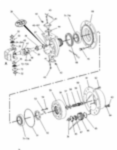
Reduced catalog diagram for Caterpillar 416B Locked
Diagram previewReduced catalog thumbnail
About diagram access

Check the signed-in Part Book for available diagrams and the complete catalog breakdown.

Parts in this preview

Selected records
Selected catalog parts, with other part numbers masked
Part numberDescription
00***02cone-roller bearing
05***59shim 1.0mm(.039in)thk
05***60shim 1.05mm(.041in)thk
1100012cone-roller bearing (current part)

Selected entries from this catalog unit. Other part numbers are masked. Confirm the full breakdown and your machine configuration before ordering.

View model page

General guidance

Component knowledge

Understanding this component

In general, a cone-roller bearing is a tapered bearing that uses angled rollers running between an inner cone and an outer cup, allowing it to carry combined radial and axial loads. Such bearings are commonly used in heavy machinery wheels, axles and drive assemblies where load direction and adjustment matter.
What to check before ordering

To order part 1100012, reference the existing catalog number exactly as listed. Before ordering, confirm the machine model, serial number, and the specific assembly location, because catalog associations depend on recorded conditions that may not apply to every configuration.