Caterpillar Part reference

1105190washer-thrust; (1.6-mm thk)

This page covers catalog part 1105190, a thrust washer listed in the Caterpillar catalog as 1.6-mm thick. The catalog records it within brake and planetary group assemblies for the Caterpillar 914G, and those associations should be confirmed against the recorded conditions before ordering.

Recorded applications

Models and catalog references

Selected catalog references that list this part. A catalog association does not confirm fitment for every machine or configuration.

Catalog context

Where this part appears

  1. ModelCaterpillar 914G
  2. Grouppower train
  3. Subgroupbrake & planetary group
  4. Unit109-5504 brake & planetary gp s/n 7zm1-439; 9wm1-1012 part of 109-5499, 117-3632 axle ar-fixed, 117-3635, 140-0358, 140-0368 axle ar-oscillating
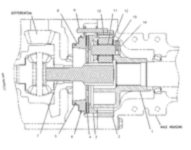
Reduced catalog diagram for Caterpillar 914G Locked
Diagram previewReduced catalog thumbnail
About diagram access

Check the signed-in Part Book for available diagrams and the complete catalog breakdown.

Parts in this preview

Selected records
Selected catalog parts, with other part numbers masked
Part numberDescription
09***89pin, spring
10***68gear-sun; (18-teeth)
10***69gear-planetary; (26-teeth)
1105190washer-thrust; (1.6-mm thk) (current part)

Selected entries from this catalog unit. Other part numbers are masked. Confirm the full breakdown and your machine configuration before ordering.

View model page

General guidance

Component knowledge

Understanding this component

In general, a thrust washer is a flat, disc-shaped bearing component that controls axial (end-to-end) load and clearance between rotating and stationary parts in a drivetrain. Its thickness is often used to set end play, so the catalog's stated thickness is an important identifying detail.
What to check before ordering

Reference part number 1105190 exactly as listed when requesting this item. Before ordering, check the catalog's recorded serial and configuration conditions for the associated brake and planetary group assemblies, since those conditions determine whether an association applies to a given machine.