Caterpillar Part reference

1100165washer-thrust; (1.5mm(.059in)thk)

Part 1100165 is a Caterpillar thrust washer listed at 1.5mm (.059in) thickness. Its catalog association with Caterpillar 426C and 436C power train assemblies is recorded for reference, but the catalog occurrence conditions should be checked before ordering.

Recorded applications

Models and catalog references

Selected catalog references that list this part. A catalog association does not confirm fitment for every machine or configuration.

& More catalog references

Catalog context

Where this part appears

  1. ModelCaterpillar 426C
  2. Grouppower train
  3. Subgroupaxle group-drive & steering
  4. Unit111-1523 axle gp-drive & steering -rear s/n 1mr1-955 ratio 18.62. all wheel steer part of 112-2113 axle & mtg gp-drive & steering an attachment
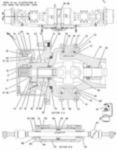
Reduced catalog diagram for Caterpillar 426C Locked
Diagram previewReduced catalog thumbnail
About diagram access

Check the signed-in Part Book for available diagrams and the complete catalog breakdown.

Parts in this preview

Selected records
Selected catalog parts, with other part numbers masked
Part numberDescription
00***02cone-roller bearing
00***18housing-axle drive
00***19cone-roller bearing
1100165washer-thrust; (1.5mm(.059in)thk) (current part)

Selected entries from this catalog unit. Other part numbers are masked. Confirm the full breakdown and your machine configuration before ordering.

View model page

General guidance

Component knowledge

Understanding this component

In general, a thrust washer is a flat, disc-shaped bearing element placed between rotating and stationary parts to take axial load and reduce friction and wear. In heavy equipment, thrust washers are used in drive and gear assemblies to control end play and keep rotating components correctly positioned.

What to check before ordering

Use part number 1100165 as the reference for this washer. Before ordering, confirm the machine model, serial number, and the parent assembly and its recorded qualifiers against the catalog, because a catalog association does not establish compatibility for every machine configuration.