Caterpillar Part reference

1073601link as-bearing

Catalog part 1073601 is listed as a link as-bearing, a Caterpillar catalog item. In the supplied catalog data, it appears in the implements group under the linkage group-bucket subgroup, within a parent unit labeled as a linkage gp-bucket for Caterpillar 350 applications. This is a catalog association only; confirm the recorded conditions before ordering.

Recorded applications

Models and catalog references

Selected catalog references that list this part. A catalog association does not confirm fitment for every machine or configuration.

Catalog context

Where this part appears

  1. ModelCaterpillar 350
  2. Groupimplements
  3. Subgrouplinkage group-bucket
  4. Unit107-3600 linkage gp-bucket s/n 2zl1-up; 3ml1-up g-family part of 107-3599 linkage ar-bucket an attachment
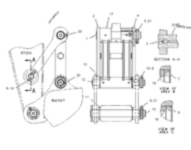
Reduced catalog diagram for Caterpillar 350 Locked
Diagram previewReduced catalog thumbnail
About diagram access

Check the signed-in Part Book for available diagrams and the complete catalog breakdown.

Parts in this preview

Selected records
Selected catalog parts, with other part numbers masked
Part numberDescription
09***47seal-o-ring; (id=200.00mm)
10***00linkage group-bucket
1073601link as-bearing (current part)
11***73seal-o-ring (id=149.5mm); (id=149.50mm)

Selected entries from this catalog unit. Other part numbers are masked. Confirm the full breakdown and your machine configuration before ordering.

View model page

General guidance

Component knowledge

Understanding this component

In general, a link assembly is a connecting component in an attachment or linkage system, used to transfer motion and load between pivoting parts. A bearing is a component that supports rotation or pivoting movement while reducing friction and wear at the joint. Exact construction and any supplied contents are not stated in this catalog record.

What to check before ordering

Use part number 1073601 exactly as supplied when identifying this item. Before ordering, check the recorded serial number ranges, group, and parent-unit conditions in the catalog, since a catalog association does not establish compatibility with every machine configuration.