Caterpillar Part reference

1020804swashplate

Part 1020804 is listed in the catalog as a swashplate, a Caterpillar catalog entry. The catalog places it within hydraulic-system rotating-group references for Caterpillar 350 and 350 L machines, but these are catalog associations only and do not establish fitment for every machine configuration.

Recorded applications

Models and catalog references

Selected catalog references that list this part. A catalog association does not confirm fitment for every machine or configuration.

Catalog context

Where this part appears

  1. ModelCaterpillar 350
  2. Grouphydraulic system
  3. Subgrouprotating group-pump
  4. Unit102-0799 rotating gp-pump s/n 2zl1-up; 3ml1-up part of 105-7281 pump gp-swing
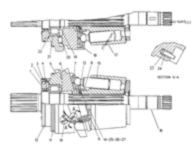
Reduced catalog diagram for Caterpillar 350 Locked
Diagram previewReduced catalog thumbnail
About diagram access

Check the signed-in Part Book for available diagrams and the complete catalog breakdown.

Parts in this preview

Selected records
Selected catalog parts, with other part numbers masked
Part numberDescription
09***27ring-retaining
10***99rotating group-pump
10***03barrel as
1020804swashplate (current part)

Selected entries from this catalog unit. Other part numbers are masked. Confirm the full breakdown and your machine configuration before ordering.

View model page

General guidance

Component knowledge

Understanding this component

In general, a swashplate is an angled or tilted plate that a piston pump or motor uses to convert rotation into piston stroke, or the reverse, and its angle helps control displacement and flow. In heavy hydraulic equipment it is one part of a rotating assembly, so its exact role and interface should be checked against the catalog entry and the machine's documentation.

What to check before ordering

Before ordering part 1020804, confirm the catalog number and description match the component you need. Review the recorded machine model, serial, group and subgroup conditions on the catalog reference you are working from, since those conditions limit where the association applies.