Caterpillar Part reference

1140131housing as

Catalog listing 1140131 is recorded as a housing assembly (housing as) in the Caterpillar catalog. It appears in the catalog as an occurrence within two drive-related parent units for a Caterpillar 3054 basic engine, which should be treated only as catalog associations. Confirm the recorded conditions before relying on any association.

Recorded applications

Models and catalog references

Selected catalog references that list this part. A catalog association does not confirm fitment for every machine or configuration.

  • Caterpillar 3054
  • Caterpillar 3054B
  • Caterpillar 3056

Catalog context

Where this part appears

  1. ModelCaterpillar 3054
    Browse Caterpillar models
  2. Groupbasic engine
  3. Subgroupadapter group-power take-off
  4. Unit100-6326 adapter gp-power take-off max power cap. 142 nm (105 lb-ft). 13 teeth for use with sae a pump and sae a 2-bolt flange also an attachment
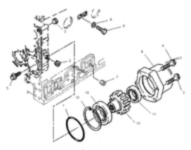
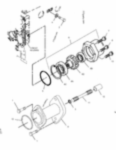
Reduced catalog diagram for Caterpillar 3054 Locked
Diagram previewReduced catalog thumbnail
About diagram access

Check the signed-in Part Book for available diagrams and the complete catalog breakdown.

Parts in this preview

Selected records
Selected catalog parts, with other part numbers masked
Part numberDescription
06***10washer
10***26adapter group-power take-off
10***73seal-o-ring
1140131housing as (current part)

Selected entries from this catalog unit. Other part numbers are masked. Confirm the full breakdown and your machine configuration before ordering.

Browse Caterpillar models

General guidance

Component knowledge

Understanding this component

In general, a housing is a protective casing that encloses and supports internal parts such as gears, shafts or drive components, and it often provides mounting points for attachments or accessory drives. Its exact role and any supplied contents must be checked against the catalog entry for this specific number.
What to check before ordering

Reference part number 1140131 exactly as listed when requesting this item. Before ordering, check the catalog association details, including the recorded parent units, subgroups and any conditions shown for the target entry, because a catalog occurrence does not by itself confirm compatibility with every machine configuration.