Caterpillar Part reference

1056742strainer

Catalog reference 1056742 is listed as a strainer. Its catalog entry is recorded here as a Caterpillar strainer, and its only catalog association shown on this page is with a fuel transfer pump group for a Caterpillar 350 L fuel system. Recorded serial and configuration conditions for that parent assembly should be checked before relying on the association.

Recorded applications

Models and catalog references

Selected catalog references that list this part. A catalog association does not confirm fitment for every machine or configuration.

Catalog context

Where this part appears

  1. ModelCaterpillar 350 L
  2. Groupfuel system
  3. Subgrouppump group-fuel transfer
  4. Unit119-3656 pump gp-fuel transfer s/n 8hk1-99999; 9fl1-up part of 120-6565 pump ar-fuel transfer an attachment
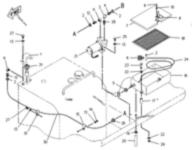
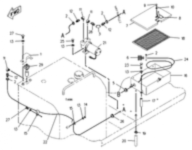
Reduced catalog diagram for Caterpillar 350 L Locked
Diagram previewReduced catalog thumbnail
About diagram access

Check the signed-in Part Book for available diagrams and the complete catalog breakdown.

Parts in this preview

Selected records
Selected catalog parts, with other part numbers masked
Part numberDescription
00***07elbow; (90 degree)
09***65grommet
09***90clamp; (hose) (26-39mm id)
1056742strainer (current part)

Selected entries from this catalog unit. Other part numbers are masked. Confirm the full breakdown and your machine configuration before ordering.

View model page

General guidance

Component knowledge

Understanding this component

In general, a strainer is a filtering device placed in a fluid line or pump circuit to catch debris and particles before they reach downstream components. In fuel systems it is used to help keep contaminants out of the fuel path, and exact construction, size and supplied contents must be confirmed against the catalog entry.
What to check before ordering

Use part number 1056742 when referencing this strainer. Before ordering, compare the recorded catalog associations with your machine's serial number, configuration and attachment status, since the parent fuel transfer pump group carries its own conditions.