Caterpillar Part reference

0310782elbow-flared

Caterpillar part number 0310782 is listed in the catalog as an elbow-flared fitting. Catalog occurrences associate this number with a cooling system lines group for Caterpillar 3406C and a heat exchanger group for Caterpillar C-15, but these are catalog associations only and do not establish universal fitment across machine configurations.

Recorded applications

Models and catalog references

Selected catalog references that list this part. A catalog association does not confirm fitment for every machine or configuration.

  • Caterpillar 3406C
  • Caterpillar C-15
  • Caterpillar 3406E
& More catalog references
  • Caterpillar C15

Catalog context

Where this part appears

  1. ModelCaterpillar 3406C
    Browse Caterpillar models
  2. Groupcooling system
  3. Subgrouplines group-water
  4. Unit101-7757 lines gp-water s/n 3er1244-up
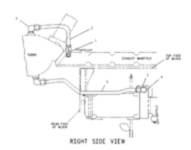
Reduced catalog diagram for Caterpillar 3406C Locked
Diagram previewReduced catalog thumbnail
About diagram access

Check the signed-in Part Book for available diagrams and the complete catalog breakdown.

Parts in this preview

Selected records
Selected catalog parts, with other part numbers masked
Part numberDescription
0310782elbow-flared (current part)
10***57lines group-water
2P***11elbow-flared
2W***10tube as

Selected entries from this catalog unit. Other part numbers are masked. Confirm the full breakdown and your machine configuration before ordering.

Browse Caterpillar models

General guidance

Component knowledge

Understanding this component

In general, an elbow-flared fitting is a bent connector that changes the direction of a fluid line and uses a flared end to seal against a mating fitting. In heavy equipment, such fittings are used in cooling and fluid circuits where line routing and clearance require a change in direction.

What to check before ordering

Use Caterpillar part number 0310782 as the reference for this listing. Before ordering, confirm the machine model, serial number and assembly location in the catalog, since the associated parent units carry recorded conditions that must be checked against your equipment.