Caterpillar D6G SR
Specifications · fluids and capacities · maintenance intervals
Post a parts request and compare supplier quotes.
The Caterpillar D6G SR ("Super Rural") is a mid-size track-type tractor factory-built as an agricultural export specification for the Brazilian and South American farm market. It runs a naturally aspirated Caterpillar 3306 diesel rated around 119 kW (160-162 hp) at 1,900 rpm from 10.5 L displacement, mechanically governed with no electronic controls, unlike the turbocharged 3306T fitted to the mainstream construction-spec D6G. Drive runs through a Cat torque-divider "Direct Drive" mechanical transmission, three speeds forward and reverse, clutch-shifted and controlled through clutch-and-brake steering rather than the torque-converter powershift used on standard D6G units. Operating weight specific to the SR trim is not separately published; the wider D6G family spans roughly 15,400 kg (34,000 lb) in base configuration to about 16,900 kg (37,200 lb) in Series II XL trim, and the SR sits in that general weight class. It carries serial prefix 3SR00001-up and continues an ag-export line running back through the D6E SR and D6D SR.
Each SR-designated generation kept the same conventional, low-drive chassis and mechanical driveline that Caterpillar was phasing out of its mainstream construction dozers in favor of the elevated-sprocket D6H and later D6R. Buyers on the SR program traded electronics and emissions hardware for simple, field-serviceable mechanics: no ECM, no diagnostic codes, no aftertreatment, so scheduled fluid and filter service carries the full diagnostic load. Because the SR sold in far smaller numbers outside South America, and most public spec sheets fold it into the general D6G line, dedicated documentation and parts breakdowns for this exact variant stay thin. That scarcity, paired with pre-electronic simplicity that keeps overhaul costs down and allows parts interchange across the wider low-drive D6 family, is what keeps used D6G SR units and their parts in demand today.
Below: full specifications, fluids & capacities, the factory service schedule, common service parts, verified fault codes, what owners discuss, attachment guidance, the complete assembly directory, and a serial-number reference. Complete parts lists with full OEM part numbers, exploded diagrams, quantities, and fitment data are available free in Heavy Parts AI.
Caterpillar D6G SR specifications
Configuration & Identity
| Platform | Part of the D6D/D6E/D6F SR/D6E SR/D6G/D6G SR/D6G2 XL/D6G2 LGP parts-book family. The SR designation carries its own factory serial prefix, distinct from base D6G and from the later D6G Series II XL/LGP prefixes. |
| SR designation meaning | "Super Rural" - Caterpillar's simplified, lower-cost ag-spec track tractor built for the Brazilian/South American farm market, continuing a line that included the earlier D6D SR and D6E SR ag tractors. |
| Market position | D6G-family production (including SR) was built mainly for export/non-emissions-regulated markets and was not the emissions-certified line sold new in the US/EU under later Tier rules. |
Engine
| Engine model | Cat 3306, six-cylinder four-stroke diesel with direct injection, naturally aspirated on the D6G SR - not the turbocharged 3306T fitted to the mainstream D6G. |
| Net power | 119 kW (160-162 hp) at 1,900 rpm net flywheel power, depending on source rounding. |
| Displacement | 10.5 L (638-641 cu in), minor variance between sources is rounding only. |
| Bore and stroke | 121 mm x 152 mm (4.75 in x 6.00 in). |
| Governor | Mechanical governor with inline injection pump; no electronic engine controls on this generation. |
| Altitude capability | No power deration required up to 2,300 m (7,500 ft) per factory rating. |
Transmission & Drivetrain
| Transmission type | Cat torque-divider power train named "Transmission Group-Direct Drive" in the OEM parts book: a torque-converter section combined with a mechanical direct-drive path, feeding a countershaft/planetary gearset shifted by large-diameter, oil-cooled clutches. This is a clutch-shifted mechanical transmission, not a torque-converter powershift like the mainstream D6G. |
| Steering | Multiplate steering clutches with external contracting brake bands at each final drive, clutch-and-brake steering (not hydrostatic or differential steering). |
| Speeds | Three forward, three reverse, with clutch modulation for fast speed and direction changes. |
| Clutch cooling | Forced oil flow lubricates and cools the clutch packs for extended clutch life. |
Weights
| Operating weight, base/Series I D6G | 15,435 kg (34,028 lb), the figure most consistently documented for standard D6G production. |
| Operating weight, Series II XL | 16,880 kg (37,219 lb), with lubricants, coolant, hydraulics, standard-width shoes, straight blade, non-ROPS cab, full fuel, and operator included. |
| Operating weight, SR configuration | Not separately published in available spec sources. Falls in the same general medium-dozer weight class as the wider D6G family above; confirm the exact figure against dealer or OEM literature for this serial range. |
Dimensions
| Height to top of cab/canopy | 3,057-3,200 mm (10.0-10.5 ft), depending on cab vs ROPS-canopy fitment and source. |
| Ground clearance | 310-335 mm (1.02-1.1 ft), minor variance between sources. |
| Track gauge | 1,880 mm (6.17 ft), standard gauge. |
| Overall length, less blade/ripper | 3,937 mm (12.9 ft), Series II XL. |
| Overall width, less blade | 2,440 mm (96.1 in / 8.0 ft). |
| Blade width, straight blade | 3,297 mm (10.8 ft). |
Undercarriage
| Track type | Sealed and lubricated track chain, reducing internal bushing wear versus a dry-pin chain. |
| Track frame | Multi-roller track frame typical of this dozer class, with carrier rollers supporting the top run of chain. |
| Standard shoe width | 560 mm (22 in) standard, 610 mm (24 in) optional on XL-type configurations. |
| Grouser height | 61 mm (2.4 in). |
| Wide shoes | Wider swamp-type shoes reduce ground pressure on wide-gauge configurations. Exact shoe width for the SR variant specifically is not documented in available sources; confirm with dealer or OEM literature. |
Performance
| Travel speed, forward | About 4.0 km/h (2.5 mph) 1st, 6.9 km/h (4.3 mph) 2nd, 10.8 km/h (6.7 mph) 3rd, Series II XL. |
| Travel speed, reverse | About 4.8 km/h (3.0 mph) 1st, 8.4 km/h (5.2 mph) 2nd, 12.9 km/h (8.0 mph) 3rd, Series II XL. |
| Ground pressure | 58.6 kPa (8.5 psi) documented for the standard-shoe configuration with angling blade. Wide-shoe configurations run lower than this, but an exact SR-specific figure is not separately published; verify with dealer or OEM spec sheet. |
| Drawbar pull | Not consistently documented across independent sources for this exact model and configuration; verify against OEM performance charts. |
| Ripper | Fixed parallelogram multi-shank ripper offered as an attachment, with penetration to about 500 mm (19.7 in). Not standard equipment on all configurations. |
Blades
| Straight (S) blade capacity | 3.27 m3 (4.28 yd3). |
| Angling (A) blade capacity | 2.4 m3 (3.14 yd3). |
| Semi-universal (SU) blade | Offered as a special/custom option on this platform. Capacity is not separately documented in available spec sheets for this variant. |
| Blade width | 3,297 mm (10.8 ft) for the straight blade. |
| VPAT availability | Not offered on this generation - VPAT (variable pitch angle/tilt) arrived on later Cat medium dozers (D6K and newer). |
Service Capacities
| Fuel tank | 300-320 L (79-84 gal), minor variance by source/series. |
| Cooling system | 39 L (10.3 gal). |
| Engine oil (crankcase) | 27 L (7.3 gal). |
| Hydraulic tank | 47 L (12.4 gal). |
| Final drive and other compartments | Not documented in available sources for this configuration. |
Values vary by configuration, region, and serial range — confirm against your machine before planning transport or lifts.
D6G SR fluids & capacities
| System | Capacity | Recommended fluid |
|---|---|---|
| Engine crankcase (with filter) - Cat 3306 diesel | Exact refill volume for this SR-line serial prefix (3SR00001-UP) is not published in accessible specification sources. Comparable 3306-powered track-type tractors in this size class typically hold in the region of 25-34 L (26-36 US qt) with filter; treat this as a class-typical range, not a confirmed D6G SR figure - verify against the machine's own OMM before service. | Cat DEO (diesel engine oil). Multigrade 15W-40 covers most ambient ranges. In cold climates below about -18 C (0 F) use straight SAE 10W; in sustained hot climates above roughly 10 C (50 F) SAE 30 or SAE 40 is preferred where a suitable multigrade is not available. |
| Cooling system | Not documented for this exact SR variant in accessible sources. Comparable 3306-powered dozers of this size commonly carry roughly 30-40 L (8-10.5 US gal); this varies by radiator and oil-cooler configuration - confirm with the OMM. | Caterpillar-branded ethylene-glycol antifreeze/coolant with a supplemental coolant additive (SCA), the standard corrosion-inhibited coolant package for this machine's production era (predates Cat ELC). Set the glycol mix ratio for the coldest expected ambient; do not drop below the minimum glycol percentage even in warm climates, since the SCA package also carries corrosion protection. |
| Fuel tank | Not independently confirmed for the SR configuration. The mainline D6G (XL/LGP) of the same engine generation is documented at 300 L (79.3 US gal); use this only as a reference point - actual SR tank size can vary by configuration/series. | No. 2-D diesel fuel; use No. 1-D or a winter-blend diesel in cold climates to prevent fuel waxing/gelling. |
| Transmission (Direct Drive compartment) | Caterpillar's own power-train parts literature for this exact machine (3SR00001-UP) identifies a Transmission Group - Direct Drive, confirming a clutch-shifted geared transmission rather than a torque-converter powershift unit. No accessible source gives an exact oil-fill volume for this compartment on the SR configuration - do not substitute a figure quoted for a different D6-family transmission without checking the OMM. | Cat TDTO (Transmission/Drive Train Oil). Typical grade selection by ambient: SAE 10W for -20 C to 10 C (-4 F to 50 F), SAE 30 for 0 C to 35 C (32 F to 95 F), SAE 50 above about 10 C (50 F) up to 50 C (122 F). A TDTO multigrade formulation can cover roughly -20 C to 43 C (-4 F to 110 F) in one fill where daily temperature swings are wide. |
| Bevel gear and steering clutch compartment | This direct-drive power train groups the bevel gear differential with the steering clutch and brake packs in the OEM parts breakdown. Whether these share one oil compartment with the transmission or a separate one on the SR configuration is not confirmed from accessible sources - no exact capacity found; verify against the machine's own OMM. | Cat TDTO, same grade selection as the transmission compartment above. |
| Final drives (each side) | Not confirmed for this SR configuration. Comparable direct-drive D6-family final drives of this era are commonly serviced in the high-teens to low-20s of liters (roughly 4-6 US gal) per side; this is a class-typical range, not a confirmed D6G SR figure. Both sides take an equal fill - check and service each independently. | Cat TDTO. |
| Hydraulic system/tank | Not confirmed for this SR configuration from accessible sources. Varies by configuration/series - verify against the OMM before adding fluid. | Cat TDTO is the typical fill where the implement-hydraulic circuit shares common power-train oil, as on many mechanical-era Cat dozers of this size. Where the OMM specifies a separate implement-hydraulic reservoir, Cat HYDO (SAE 10W, 20W, 30W, or a suitable multigrade) is the alternative - confirm which arrangement applies before topping off. |
| Pivot shaft (equalizer bar) | Not confirmed for this model from accessible sources. Larger Cat track-type tractors of this era commonly use an oil-filled pivot shaft compartment; whether the D6G SR's equalizer bar pivot is oil-filled or simply grease-lubricated is not confirmed - check the lubrication chart in the OMM. | Where an oil-filled pivot shaft compartment is fitted, Cat TDTO 30 is the standard fill. Where the pivot is grease-lubricated instead, use the same multipurpose EP grease specified for the other chassis pivot points. |
| Grease points (track, pins, linkage) | No fixed reservoir volume applies - grease points are serviced by lubricating to purge at each fitting on the maintenance interval, not by a metered fill quantity. | Cat Multipurpose Grease, NLGI 2, for routine track and linkage pins. For the most heavily loaded pins (track/roller-frame pivots, blade lift and tilt cylinder pins, C-frame trunnions), Caterpillar's Extreme Application grease (NLGI 2 with about 5% moly) is the heavier-duty option for this class of machine. |
Capacities are refill values from factory literature — always fill to the dipstick/sight gauge, not the number.
Caterpillar D6G SR maintenance schedule
| Service interval | Tasks |
|---|---|
| Every 10 h |
|
| Every 250 h |
|
| Every 500 h |
|
| Every 1,000 h |
|
| Every 2,000 h |
|
| Every 3,000 h |
|
| Every 6,000 h |
|
Servicing the D6G SR beyond the schedule
Predictive Maintenance & Fluid Analysis
The D6G SR's naturally aspirated 3306 has no ECM and sets no fault codes, so scheduled oil, coolant, and fuel sampling is the real diagnostic layer. Pull engine oil samples to catch fuel dilution or wear metal from the mechanical injection pump early. Sample torque-divider and bevel-gear-case oil separately for clutch-pack and final-drive wear. Test coolant SCA concentration on schedule; this era ran conventional coolant, not extended-life fill. Track fuel filter restriction closely, since a mechanical governor masks fuel starvation until power already drops.
Corrective & Common Repairs
Expect steering clutch and brake linkage wear from the clutch-and-brake steering system; relining or adjusting clutches and brake bands is the most common repair on high-hour units. Mechanical injection pump and injector service (pop-off pressure, spray pattern, governor linkage) is routine, since there is no electronic fuel trim to mask drift. Sealed-and-lubricated track pins and bushings fail at high hours despite needing no periodic lube; inspect for seal leakage. Ag use packs radiators and oil coolers with dust and chaff faster than construction duty, making core cleaning a recurring job.
Overhaul & Rebuild Points
Rebuild work centers on the torque-divider clutch pack and bevel-gear final drive, the wear points unique to this Direct Drive powertrain rather than a torque-converter powershift. Evaluate undercarriage wear percentage on rollers, idlers, and the sealed track chain to plan replacement before steel-on-steel wear accelerates frame damage. On the naturally aspirated 3306, top-end rebuilds cover liners, pistons, and injectors once oil consumption or blow-by climbs; there is no turbocharger to overhaul. Steering clutch and brake assemblies are common full-rebuild items alongside the transmission.
Seasonal & Environment Servicing
Farm duty means heavier dust and crop-residue loading than construction sites; service the air filter and clean radiator and oil-cooler cores more often during harvest and tillage seasons. Between planting cycles the SR often sits idle for weeks, so drain fuel-system water, add stabilizer, and keep the battery on a maintainer to avoid a hard mechanical start on the naturally aspirated 3306. Adjust track tension for soft tilled ground versus hard-pan field edges, and check coolant strength manually each season change since there is no electronic monitoring.
D6G SR common service parts
| Part number | Part | Notes | |
|---|---|---|---|
| 1R-0750 | Filter As-Fuel | Fuel system service | Check fitment → |
| 1W-6629 | Tube As-Fuel Filter | Fuel system service | Check fitment → |
| 6I-0273 | Filter Element As-Air | Air intake service | Check fitment → |
| 6I-0274 | Filter Element As-Air | Air intake service | Check fitment → |
| 132-8876 | Filter Element As-Oil | Hydraulic service | Check fitment → |
Always confirm against your machine's serial number — cross-check any part in Heavy Parts AI before ordering.
D6G SR attachments & work tools
Blades
The D6G SR shares the D6G-line blade lineup: Straight (S) blade for general dozing, Angling (A) blade that angles roughly 25 degrees either side for sidecasting, and a Semi-Universal (SU) blade offered as a factory option where dirt penetration and side-load resistance matter more than raw capacity. All use strongbox-section construction in high-tensile blade steel with hardened cutting edges and end bits. VPAT (variable pitch angle/tilt) blades are not offered on this generation - VPAT arrived on later Cat medium dozers (D6K and newer) - so blade angle/tilt on the D6G SR is set by pin position or straight hydraulic angling, not VPAT geometry. Published blade width/capacity figures for the SR's wider swamp-type gauge are not consistent across sources; width tracks the wider track gauge rather than the standard-gauge D6G numbers, so confirm against the specific machine's build sheet.
Rippers
The rear ripper fitted to this dozer class is normally a parallelogram multi-shank unit, reconfigurable down to fewer shanks for maximum penetration in hard or rocky ground. A dedicated single-shank giant ripper option trades ripping width for deeper penetration and higher per-tip breakout force compared with the multi-shank setup. Shipping weight for a multi-shank ripper in this size class runs roughly 2.5-3 t depending on shank configuration and beam type - treat as an approximate range, since figures vary by source. Shank and tip wear parts are shared across several Cat medium-dozer generations in this family (D6E through D6H-era machines), reflecting a common ripper parts platform rather than a part unique to the SR.
Winches
A rear power-shift/PTO-driven cable winch, built for D6G power-shift tractors, is the documented winch fitment for this dozer family; the SR shares the same drivetrain layout and rear output as other D6G machines. Class rating sits in the roughly 22-27 t (50,000-60,000 lb) bare-drum line-pull range typical of Cat D6-class towing winches, with wire rope capacity up to about 25 mm (1 in) diameter, and the winch unit itself weighs on the order of 900 kg (2,000 lb) empty. It mounts at the rear in place of the ripper or drawbar and targets logging/cable-skidding and heavy towing rather than earthmoving; the fitment documentation names the D6G chassis generally rather than the SR by name, so confirm the specific mounting bracket kit with a dealer.
Drawbars/counterweights
A rigid rear drawbar bolts to the same rear mounting location used by the ripper or winch, for towing scrapers, wagons, or other trailed implements when neither ripper nor winch is fitted. Bolt-on rear counterweights rebalance the machine when a heavy front blade or attachment is carried, improving traction and stability - this matters more on a wide, lower-ground-pressure undercarriage, where the balance point differs from a standard-gauge D6G. Counterweight mass is not consistently published for this configuration across sources and should be checked against the dealer attachment list.
Cab/ROPS guarding (forestry/waste)
For forestry and debris-heavy work, Cat offered a screen/guard package for this dozer generation: heavy wire mesh over the front and rear cab openings, a removable front grille guard ahead of the radiator, and underbody strike bars shielding the fuel tank and hydraulic lines from branch and stump strikes. The guarding fits onto the standard ROPS/FOPS cab or canopy rather than replacing it, and a raised roof section keeps the emergency skylight/hatch operable underneath the mesh. This screen and grille-guard arrangement is shared across the D6-generation family that uses the same cab structure, so it is a common cab-protection package rather than an SR-only item; track-dozer waste/landfill use relies on the same forestry-style screening rather than a distinct waste-specific guard package.
Hydraulic arrangement (front/rear tools)
The implement hydraulic system on this era of machine is an engine-driven pump and valve bank with mechanical lever controls, not the pilot-operated joystick or load-sensing arrangement used on later Cat medium dozers (D6N and newer) - electro-hydraulic joystick control should not be assumed for the D6G SR. A forward blade valve section (lift plus tilt, or lift/angle/tilt depending on blade type) and a separate rear ripper valve section (raise/lower, plus shank angle on adjustable rippers) share the same pump and reservoir. When a winch replaces the ripper at the rear, the drum itself is normally driven mechanically off the transmission PTO rather than by the implement hydraulics, with hydraulics on that setup limited to clutch/brake control for the winch rather than full hydraulic drive.
Part Book
Browse by group, subgroup and unit. Part numbers are masked and diagram thumbnails are locked.
7n-3884 Lines Group-Air s/n 6nc2649-up; 8td10430-99999 part of 125-6715, 151-5310 engine ar
7n-3884 Lines Group-Air s/n 6nc2649-up; 8td10430-99999 part of 125-6715, 151-5310 engine ar is listed in the Air inlet and exhaust system / air lines group catalog section.
- Group
- Air Inlet and Exhaust System
- Subgroup
- Air Lines Group
- Unit
- 7n-3884 Lines Group-Air s/n 6nc2649-up; 8td10430-99999 part of 125-6715, 151-5310 engine ar
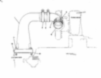 Locked diagram
Parts in this unit
Catalog descriptions with masked part numbers.
| Part number | Description |
|---|---|
| 0s***71 | Screw, cap, hexagon; tube assembly to turbocharger and elbow mounting; spare part 0s***71 screw, cap, hexagon (Caterpillar) |
| 4n***20 | Elbow (air transmission); spare part 4n***20 elbow (air transmission) (Caterpillar) |
| 4n***81 | Elbow; spare part 4n***81 elbow (Caterpillar) |
| 4n***15 | Hose-air; spare part 4n***15 hose-air (Caterpillar) |
| 4n***16 | Hose-air; spare part 4n***16 hose-air (Caterpillar) |
| 5m***13 | Plug to turbocharger lubrication valve body assembly; spare part 5m***13 plug to turbocharger lubrication valve body assembly (Caterpillar) |
| 5p***97 | Clamp fumes disposal; spare part 5p***97 clamp fumes disposal (Caterpillar) |
| 5p***68 | Clamp-hose; (us sourced); spare part 5P***68 clamp-hose (Caterpillar) |
| 5s***35 | Gasket-elbow to cylinder head; spare part 5s***35 gasket-elbow to cylinder head (Caterpillar) |
| 7n***84 | Air lines group; spare part 7N***84 air lines group (Caterpillar) |
D6G SR serial number reference
On a D6G SR the Product Identification Number plate is riveted to the tractor's main frame at the rear, near the drawbar. Caterpillar also stamps a backup serial number directly into the frame in the same area in case the plate is lost. The first three characters of the number are letters - the serial prefix (3SR on this model) - and identify the specific machine/engine build; the digits that follow are the sequential unit number within that production run.
| Prefix | Identifies | Notes |
|---|---|---|
| 3SR | Caterpillar D6G SR (Super Rural) track-type tractor | Factory serial prefix for the D6G SR, production beginning at 3SR1 and up. Powered by the naturally aspirated 3306 diesel, not the turbocharged 3306T fitted to the mainstream D6G. Super Rural was Caterpillar's simplified, lower-cost ag-spec track tractor for the Brazilian/South American farm market, continuing a line that included the earlier D6D SR and D6E SR ag tractors. No Std/XL/LGP split documented for this prefix - treat it as one standard-gauge configuration unless your own plate or parts book shows otherwise. Build plant and exact production years are not confirmed for this prefix - confirm both with your dealer. |
Frequently asked questions
What engine powers the Caterpillar D6G SR?
A naturally aspirated Caterpillar 3306 diesel, mechanically governed with no electronic controls, rated at roughly 119 kW (160-162 hp) at 1,900 rpm from 10.5 L displacement. That is a different engine than the turbocharged 3306T used in the mainstream, non-SR D6G sold into construction markets.
What is the operating weight of the D6G SR?
An SR-specific figure is not separately published. The wider D6G family runs from about 15,400 kg (34,000 lb) in base configuration up to roughly 16,900 kg (37,200 lb) in Series II XL trim, and the SR sits in that general weight class. Confirm exact weight against your machine's nameplate and configuration.
What replaced the Caterpillar D6G SR?
No confirmed direct successor is documented under the Super Rural designation. The SR line ran D6D SR and D6E SR before the D6G SR; whether Caterpillar continued the ag-export SR badge past this generation is not documented in available records. Check with a Caterpillar dealer for the specific continuation in your market.
What D6G SR owners discuss
What do owners and mechanics say about the D6G SR's steering clutch and brake band behavior, and how are they adjusted?
What engine quirks come up around the D6G SR's naturally aspirated Cat 3306?
How does the blade hydraulic system behave, and what usually causes blade drift?
What undercarriage wear patterns should owners expect on a machine this size and weight class?
Are there electrical or sensor issues to watch for on the D6G SR?
What should you check when buying a used D6G SR?
Compiled from owner and technician discussions across the industry — experiences vary by serial range and machine history.
Need a specific D6G SR part?
Search live OEM part data, check fitment, and cross-reference alternatives with Heavy Parts AI.
Post a parts request and compare supplier quotes.