Caterpillar D6F SR
Specifications · fluids and capacities · maintenance intervals
Post a parts request and compare supplier quotes.
The Caterpillar D6F SR is a special-application track-type tractor built on the D6 platform, factory-configured as a wide-track, low-ground-pressure machine for swamp and forestry work rather than general construction grading. It carries serial prefix 5FR and runs the Caterpillar 3306, a six-cylinder direct-injection diesel with mechanical governing; there is no ADEM controller or diagnostic connector on this generation. The D6F SR belongs to a parallel low-drive SR sub-line that ran alongside the mainstream D6 dozer evolution: the D6D SR gave way to the D6E SR, which was replaced by the D6F SR, which in turn was succeeded by the D6G SR. It is not part of the later high-drive D6H/D6M/D6N/D6R/D6T family, which used a different undercarriage architecture entirely. Cat never issued a standalone public spec sheet with weight, dimension, and performance numbers for this specific swamp/forestry build, so exact operating weight is not documented for the D6F SR configuration; published mainstream D6F figures should be treated as reference only, not a match for this wide-track machine.
Across the SR line, the core change from generation to generation was the engine and its supporting fuel and cooling hardware, while the wide-track swamp undercarriage concept, low-drive layout, and general chassis architecture stayed consistent. The D6F SR shares its lift cylinder seal design, radiator core, turbocharger group, and equalizer bar housing with its D6D SR, D6E SR, D6F, and D6G SR relatives, which is why parts cross-reference listings group these machines together. In the used and parts market today, the D6F SR is a niche find: it was built in far smaller numbers than the standard D6F because it was ordered specifically for logging, wetland, and utility right-of-way work, so parts support leans on shared-casting commonality across the SR family rather than a D6F SR-specific catalog. Buyers who value simplicity over emissions compliance still look to it for its mechanically governed 3306 engine, with no ECM, no aftertreatment, and analog gauge diagnostics, which keeps it serviceable in the field with basic tools.
Below: full specifications, fluids & capacities, the factory service schedule, common service parts, verified fault codes, what owners discuss, attachment guidance, the complete assembly directory, and a serial-number reference. Complete parts lists with full OEM part numbers, exploded diagrams, quantities, and fitment data are available free in Heavy Parts AI.
Caterpillar D6F SR specifications
Engine
| Engine Model | Cat 3306, 6-cylinder direct-injection diesel. Confirmed for this chassis via factory parts fitment (radiator core and turbocharger groups referencing this model by name); it is the same base engine used across the D6D SR / D6E SR / D6G SR special-application line. |
| Aspiration | Offered in this dozer platform in both naturally aspirated and turbocharged (3306T) form depending on factory arrangement and build date. The turbocharger group fitted to this machine cross-references the same turbo group used on other 3306-powered dozers of the era, consistent with a turbocharged build; confirm the exact arrangement against the machine's serial number. |
| Bore | 121 mm (4.75 in) — 3306 engine-family constant, unaffected by rating or turbo option. |
| Stroke | 152 mm (6.0 in) — 3306 engine-family constant. |
| Displacement | 10.5 L (638 in³) — 3306 engine-family constant. |
| Cylinders / Cycle | 6-cylinder, in-line, 4-stroke diesel, direct injection. |
| Net / Gross Power | Not documented in available OEM or dealer literature for this specific application configuration. Cat rated the 3306 across this special-application dozer line differently by generation and turbo option; verify the exact flywheel power rating with a Cat dealer using this unit's serial number. |
| Emissions Certification | Mechanical, pre-emissions-era diesel. Predates EPA/EU non-road emissions tiers; no certification level applies. |
Weights
| Operating Weight (Std/XL/LGP) | Not published for this exact application configuration in available specification sources. Operating weight on this size of dozer chassis varies with track shoe width, blade type, hydraulics package, and cab/canopy option — verify with a Cat dealer or the machine's data plate. |
| Shipping Weight | Not documented for this specific configuration. Varies by shoe width and equipment fitted at time of shipment. |
Dimensions
| Blade Width Options | Not documented for this specific configuration. As with the rest of this platform family, blade width tracks the undercarriage gauge selected (standard vs wide/swamp gauge). |
| Track Gauge / Shoe Width | Not published for this exact unit. This is an SR (special/swamp application) chassis, factory-built with a wider track gauge and wider shoes than a standard-gauge D6-class dozer of the same era to lower ground-bearing pressure; the exact gauge and shoe width depend on the shoe option ordered — verify with a Cat dealer. |
| Ground Clearance | Not documented for this specific configuration in available sources. |
| Transport Dimensions (length/width/height) | Not documented for this specific configuration in available sources. Overall transport length and height depend on the blade and ripper fitted. |
Performance
| Travel Speeds (Forward/Reverse) | Not published for this specific configuration in available sources. Verify against the machine's operation and maintenance manual. |
| Drawbar Pull | Not documented for this specific configuration in available sources. |
| Gradeability | Not documented for this specific configuration in available sources. |
| Ground Pressure | Not documented as a published figure for this exact unit. As a special/swamp-application (SR) chassis, it is built for lower ground-bearing pressure than a standard-gauge dozer of the same size class via a wider track gauge and shoe, but the exact kPa/psi rating is shoe-width dependent — verify with a Cat dealer. |
Blades
| Blade Types Offered | Factory parts records for this unit confirm a hydraulic blade-tilt cylinder group and a separate blade-lift cylinder group, consistent with a tilt-capable dozer blade (straight or semi-universal type) being available on this machine. Exact blade capacities by type are not published for this configuration — verify with a Cat dealer. |
| S-Blade Capacity | Not documented for this specific configuration. Varies by undercarriage width and blade width ordered. |
| SU-Blade Capacity | Not documented for this specific configuration. |
| A-Blade Capacity | Not documented for this specific configuration. |
| Ripper | Factory parts records confirm a ripper lift cylinder group was catalogued for this machine, so a rear-mounted parallelogram ripper was an available work tool. Penetration and beam-width figures are not published for this configuration. |
Service Capacities Summary
| Fuel Tank | Not published for this specific configuration in available literature. Verify with a Cat dealer or the machine's operation and maintenance manual. |
| Cooling System | Not published for this specific configuration in available literature. |
| Engine Crankcase (Oil) | Not published for this specific configuration. Use a Cat DEO-class engine oil of the viscosity grade specified in the machine's maintenance manual for the ambient temperature range. |
| Hydraulic Tank | Not published for this specific configuration in available literature. |
| Power Train / Final Drives | Not published for this specific configuration in available literature. |
Values vary by configuration, region, and serial range — confirm against your machine before planning transport or lifts.
D6F SR fluids & capacities
| System | Capacity | Recommended fluid |
|---|---|---|
| Engine crankcase (with filter) | Not separately published for the D6F SR under that name. The tractor runs the Cat 3306 diesel shared across the D6D SR - D6E - D6E SR - D6F SR - D6G SR chassis family (tied together by shared turbocharger, radiator core, and water pump fitment across these models). Crankcase-with-filter capacity for this 3306 platform runs roughly 19-20 L (20-21 qt); confirm against a serial-specific OMM before servicing. | Cat Diesel Engine Oil (DEO). Viscosity by ambient temperature, per standard Cat guidance for this engine generation: SAE 10W below -18 C (0 F), SAE 30 above 0 C (32 F), or a 15W-40 multigrade for a broad ambient range. |
| Cooling system | Not documented for the D6F SR in available literature, and no reliable cross-verified figure exists for this exact chassis. Verify the refill volume against a serial-specific OMM or with a Cat dealer before service. | Caterpillar-specified ethylene-glycol based coolant/antifreeze (Cat ELC or an equivalent heavy-duty coolant meeting Cat's water-glycol specification), mixed per the OMM's climate chart. |
| Fuel tank | About 295-300 L (78-79 gal). This figure is consistent across the D6D and D6G machines built on the same chassis platform as the D6F SR; a D6F SR-specific republished figure was not found, so treat this as the platform-typical capacity and confirm against the serial-specific OMM. | Diesel fuel meeting Cat's fuel specification for the 3306 engine. Use a fuel grade with cold-flow properties suited to ambient temperature in cold climates. |
| Powertrain - direct-drive transmission, bevel gear case, and steering-clutch compartments | This machine uses a direct-drive (clutch-shifted) transmission, confirmed via its own parts catalog. On this generation of Cat D6-class tractor, the transmission, bevel gear case, and left/right steering-clutch compartments are interconnected and share a single oil system drawn by one transmission pump. Combined refill for this platform is approximately 32-38 L (8.5-10 gal); not separately confirmed for the D6F SR by name, so verify against a serial-specific OMM. The OMM does not list separate capacities per compartment on this design - they are serviced and checked as one shared system. | Cat Transmission and Drive Train Oil (TDTO), SAE 30 for this era, or a multigrade TDTO where offered for wider ambient range. |
| Final drive (each side) | Approximate for this size class: roughly 3-4 gal (11-15 L) per side. Only a single, unverified figure was found for this exact machine; treat as indicative only and confirm against a serial-specific OMM. | Cat TDTO (Transmission and Drive Train Oil), same specification used in the powertrain compartments. |
| Hydraulic system/tank | Approximate for this size class, based on a same-platform turbocharged 3306 sibling: about 12 gal (46 L). Not independently corroborated for the D6F SR specifically - verify against a serial-specific OMM. | Cat Hydraulic Oil (Cat HYDO or an equivalent anti-wear hydraulic fluid), viscosity grade selected by ambient temperature per the OMM's chart. |
| Pivot shaft (equalizer bar) | This generation of D6-class tractor uses a grease-lubricated equalizer-bar pivot pin serviced through a grease fitting rather than a separate oil-filled compartment. No discrete refill volume applies. | Cat Multipurpose Grease, graded for ambient temperature, applied at the equalizer bar fitting on the scheduled service interval. |
| Grease points (chassis, track, linkage) | No fill volume - serviced by grease gun at each fitting per the lubrication schedule. | Cat Multipurpose Grease (MPGM): NLGI 1 for cold-weather service or NLGI 2 for normal/warm ambient conditions, per the OMM's climate guidance. |
Capacities are refill values from factory literature — always fill to the dipstick/sight gauge, not the number.
Caterpillar D6F SR maintenance schedule
| Service interval | Tasks |
|---|---|
| Every 50 h |
|
| Every 250 h |
|
| Every 500 h |
|
| Every 1,000 h |
|
| Every 2,000 h |
|
| Every 6,000 h |
|
Servicing the D6F SR beyond the schedule
Predictive Maintenance & Fluid Analysis
Run condition-monitoring style sampling on 3306 engine oil, Cat TDTO powertrain oil, and Cat ELC coolant at every scheduled drain. This pre-electronic tractor has no ECM fault history, so fluid analysis is the only early-warning system available. Watch for turbocharger bearing wear metal in engine oil samples; the turbo group is shared across the SR platform. Monitor transmission oil temperature gauge readings for early signs of clutch pack or final drive distress, and track coolant additive depletion in the Cat ELC system between changes.
Corrective & Common Repairs
Lift cylinder seal weeping is the most common hydraulic complaint on this platform; the D6F SR shares its seal design with D6D SR, D6E SR, D6F, and D6G SR siblings. On the 3306, watch for injection pump and injector wear from sustained swamp-duty idling, and keep the fuel tank water separator drained to protect the injection system. Wide-track shoes and low-drive sprockets see accelerated bushing turn and shoe bolt loosening in wet ground; recheck torque after initial running in a new muddy site.
Overhaul & Rebuild Points
Plan a 3306 top-end inspection, covering cylinder liners, rings, and injection timing, once oil consumption or blow-by rises noticeably; this mechanically governed engine gives no electronic warning of internal wear. On the undercarriage, budget for wide-track chain, roller, and idler replacement based on measured wear rather than hours alone, since swamp and forestry duty accelerates pin and bushing wear versus dry-ground dozing. Equalizer bar bushings and pins, and the turbocharger group, are shared rebuild points across the D6D/D6E/D6F/D6G SR family.
Seasonal & Environment Servicing
The D6F SR was built for wet, soft-ground swamp and forestry work, so track tension and undercarriage sealing need closer attention than on a standard D6F working dry sites. Mud and organic debris packed into wide-track shoes accelerates roller and bushing wear. Before wet-season or cold-start operation, check coolant corrosion inhibitor concentration in the Cat ELC system and confirm the air cleaner restriction indicator isn't fouled by fine debris. Drain fuel tank water and sediment more often when working in or near standing water.
D6F SR fault codes & troubleshooting
| Code | Meaning | Likely cause | What to do |
|---|---|---|---|
| Engine Oil Pressure warning lamp (red, oil-can icon) | Engine oil pressure has dropped below the safe minimum for current rpm. | Low oil level, worn oil pump, plugged suction screen, or a failed pressure sender/switch. | Stop the engine immediately, check oil level and look for external leaks, then verify the sender before restarting. |
| Coolant Temperature gauge in red zone / high-temp warning lamp | Engine coolant temperature is above normal operating range. | Low coolant, plugged radiator core or fins, failing thermostat, or a slipping/damaged fan drive. | Reduce load and let the engine idle down, check coolant level once safe, then inspect the radiator, fan drive, and thermostat. |
| Alternator / Charging System warning lamp | Charging system voltage is below normal and the battery is not being charged. | Loose or broken alternator belt, corroded wiring, a bad voltage regulator, or a failed alternator. | Check belt tension and battery cable/wiring connections, then test alternator output and regulator. |
| Air Cleaner Service (restriction) indicator | Intake air filter restriction has reached the service limit. | Clogged primary or secondary air filter element from dust ingestion. | Service or replace the air filter element and reset the restriction indicator. |
| Transmission Oil Temperature warning lamp / gauge in red zone | Power-train (transmission) oil temperature is above the normal operating range. | Low transmission oil level, a plugged oil cooler, sustained lugging under heavy load, or a stuck cooler bypass valve. | Reduce load and let the machine idle to cool, then check fluid level and inspect the cooler and bypass valve. |
| Transmission/Hydraulic Filter Bypass indicator | The filter element is restricted enough that oil is bypassing it unfiltered. | Contaminated or overdue filter element, or cold, high-viscosity oil at startup. | Replace the filter element and check oil condition and change interval. |
| Parking Brake engaged indicator lamp | The parking brake circuit shows the brake applied. | Operator has the park brake set, or a brake control valve/switch fault is holding the circuit on. | Confirm lever position; if the lamp stays lit with the brake released, check the brake control valve and switch wiring. |
| Fuel Level low warning (where equipped) | Fuel level has reached the reserve range on the sender. | Low fuel in the tank or an erratic/failed fuel level sender. | Refuel as needed; if the gauge reads erratically with adequate fuel, check the sender and wiring. |
Codes and remedies are general guidance for this model family — always confirm with diagnostic tooling and your dealer before major repairs.
D6F SR attachments & work tools
Blades (S/SU/A, VPAT)
This low-drive D6 platform tractor (part of the D6D/D6E/D6F/D6G swamp-lineage) was offered with S (straight), SU (semi-universal) and A (angling) blade choices typical of this dozer class; the taller, more curved U (universal) blade belongs to larger models, not this size class. SU blade width in this class runs roughly 3.2-3.8 m (10.5-12.5 ft), with the straight blade narrower and higher-capacity per pass and the angle blade able to pivot for side-casting but carrying less material. VPAT (variable pitch) blade geometry is a later high-drive D6 (D6R/D6T-onward) feature and is not offered on this earlier platform.
Rippers (single vs multi-shank)
Rear ripper choices for this dozer class split into single-shank (one deep-penetration tooth on a longer, heavier frame, often with a cab-controlled pin-puller, for maximum fracturing force in hard or frozen ground) and multi-shank parallelogram rippers (a frame that accepts one, two or three shanks depending on ground conditions, better suited to softer or pre-fractured material and general land-clearing/forestry work). A single-shank ripper frame for this class runs heavier than a comparable multi-shank frame; exact assembly weight varies by supplier and by how many shank positions are fitted, so verify against the specific ripper actually mounted.
Winches
A rear-mounted cable winch (PTO or hydraulically driven) is a common factory or dealer-fit option on D6-class swamp and forestry tractors, used for tree-length skidding, log winching, and self-recovery in soft ground. Drum and cable capacity vary with the spool fitted. On this generation the winch and the ripper share the same rear drawbar mounting location, so a machine is normally set up with one or the other at the rear, not both at once.
Drawbars / counterweights
With no ripper or winch fitted, a standard rigid drawbar bolts to the rear frame for towing and pulling. Adding a ripper or winch at the rear typically calls for added rear counterweight (or removal of the standard drawbar) to rebalance the machine, particularly with a straight (S) blade up front, which already carries more weight forward. Drawbar and counterweight fitment is configuration-specific and shares the same rear mounting point as the ripper/winch.
Cab/ROPS guarding (forestry/waste)
Forestry and waste/landfill-duty builds of this size of swamp dozer typically add ROPS/FOPS-rated cab guarding: heavy screen mesh over front, side and rear glass, screened door guards, and belly/underbody guards to protect the crankcase and final drives from stumps and debris. A grille or radiator screen is also common, to keep brush and debris out of the cooling package. These are supplied as bolt-on guarding packages by Caterpillar and third-party attachment houses for this dozer class; no single published spec sheet defines one fixed 'forestry package' for this exact model, so confirm the guarding scope against the specific machine and supplier.
Hydraulic arrangement (front/rear tools)
Front blade functions (lift and tilt, plus angle on the A blade) run off the tractor's implement hydraulic circuit and control valve bank at the front. A rear-mounted ripper (shank raise/lower, plus shank angle on multi-cylinder frames) or an installed winch draws from a separate rear circuit or motor fed by the same implement pump, since front and rear tools are not normally operated together. High-pressure hydraulics (around 27,600 kPa/4,000 psi) built specifically for high-output hydraulic winches is a feature of the later D6/D6 XE generation; this earlier platform runs a conventional, lower-pressure implement circuit, so winch performance on this machine depends mainly on the winch's own pump/motor rather than the tractor's blade-circuit pressure.
Part Book
Browse by group, subgroup and unit. Part numbers are masked and diagram thumbnails are locked.
7n3884 Lines Group-Air
7n3884 Lines Group-Air is listed in the Air inlet and exhaust system / air lines group catalog section.
- Group
- Air Inlet and Exhaust System
- Subgroup
- Air Lines Group
- Unit
- 7n3884 Lines Group-Air
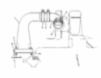 Locked diagram
Parts in this unit
Catalog descriptions with masked part numbers.
| Part number | Description |
|---|---|
| 7N***84 | Air Lines Group |
D6F SR serial number reference
The PIN plate on a D6F SR is riveted to the mainframe, on the left side toward the rear of the tractor near the drawbar/ripper mount, low enough to read from ground level. Post-war Cat PINs on this era of machine run 8 characters: a 3-letter prefix identifying the model/configuration followed by a 5-digit sequence number (e.g. 5FR00001), so the first three letters are what ties a given unit to the D6F SR parts and service literature rather than a sibling D6 model.
| Prefix | Identifies | Notes |
|---|---|---|
| 5FR | D6F SR | Sole documented PIN prefix for the D6F SR track-type tractor, range 5FR00001-UP. Powered by the Cat 3306 diesel, a tie shared with the D6D SR/D6E SR/D6G SR siblings on the same aftermarket fitment listings. Sits in the SR lineage between D6E SR and D6G SR; service literature for this prefix is issued jointly with the D6G and D6G SR. Uses a direct-drive (clutch-shifted) transmission, confirmed via this exact model's own service parts catalog. No separate Std/XL/LGP/XW split documented for this prefix - SR itself is the configuration designation. Region/plant not documented in available sources. |
Frequently asked questions
What engine does the Caterpillar D6F SR use?
The D6F SR runs the Caterpillar 3306, a six-cylinder direct-injection diesel with mechanical governing. It predates ADEM and ECM engine control, so there is no electronic diagnostic connector on this generation.
What is the operating weight of the D6F SR?
Operating weight for this specific swamp/forestry configuration was not published in a standalone spec sheet and is not documented for the D6F SR. Its wide-track, low-ground-pressure undercarriage means it does not share the mainstream D6F's published weight figures; check with your dealer or the machine's OMM for the exact configuration in question.
What replaced the Caterpillar D6F SR?
The D6F SR was succeeded by the D6G SR within the same low-drive, wide-track SR sub-line. It sits between the D6E SR before it and the D6G SR after it, and is unrelated to the mainstream high-drive D6H/D6M/D6N/D6R/D6T lineage that developed separately.
What D6F SR owners discuss
What's the reputation of the 3306 engine in the D6F SR, and what tends to wear out first?
How do the transmission and steering clutches behave as they age on this drivetrain?
What's the typical complaint with the blade lift cylinders and hydraulic system?
What wear pattern should I expect on the wide-track swamp/forestry undercarriage?
What commonly goes wrong with the electrical system?
Any quirks with cold starting or the ether starting aid?
What should I check before buying a used D6F SR?
Compiled from owner and technician discussions across the industry — experiences vary by serial range and machine history.
Need a specific D6F SR part?
Search live OEM part data, check fitment, and cross-reference alternatives with Heavy Parts AI.
Post a parts request and compare supplier quotes.