Caterpillar D6E SR
Specifications · catalog references · fluids and capacities
Post a parts request and compare supplier quotes.
The Caterpillar D6E SR is a mid-size Direct Drive track-type tractor on the D6 chassis, built as a mechanically-driven counterpart to the mainstream Powershift D6E. It runs the Caterpillar 3306 direct-injection diesel rated at roughly 115.6 kW (155 hp gross), driving the tracks through steering clutches and brakes rather than a torque-converter powershift transmission. Operating weight sits in the range typical of the D6 platform, though the exact figure varies with blade, ripper, and undercarriage configuration. The SR designation ties this machine to the D6D SR and D6D SA Direct Drive dozers that share its power train service literature, and its production window sits within Caterpillar's D6D/D6E era, running alongside (not instead of) the standard Powershift D6D and D6E line offered for the same period.
What separated the SR line from its Powershift siblings was the power train, not the basic chassis. Direct Drive machines steer with operator-actuated clutches and brakes instead of a differential-steer powershift transmission, trading some ride comfort and shift-on-the-fly convenience for mechanical simplicity, lower first cost, and easier field repair away from a dealer shop. That same simplicity is why the D6E SR still shows up in the used and parts market today: fewer electronic and hydraulic-transmission components mean fewer expensive failure points, and its 3306 engine and steering-clutch power train share parts and service manuals with the D6D SA and D6D SR, which widens the pool of interchangeable components for owners. Anyone shopping a surviving unit should expect an older, low-tech but rugged machine best suited to buyers comfortable maintaining clutch-brake steering and a mechanically governed diesel rather than a modern electronically controlled dozer.
Below: full specifications, fluids & capacities, the factory service schedule, common service parts, verified fault codes, what owners discuss, attachment guidance, the complete assembly directory, and a serial-number reference. Complete parts lists with full OEM part numbers, exploded diagrams, quantities, and fitment data are available free in Heavy Parts AI.
Caterpillar D6E SR specifications
Machine Identity & Configuration
| Platform | D6E SR track-type tractor, a special-application configuration built on Caterpillar's D6E medium dozer platform. Applicable to the SR serial range 8FJ00001 and up. |
| Family context | The D6E platform sits alongside, but separate from, the plain D6E, D6D, D6D SR, D6F SR, D6G, and D6G SR nameplates in Caterpillar's D6 lineage. Treat each as its own build and do not blend specs across them. |
| Engine aspiration | The parts breakdown for this SR unit carries a full turbocharger air-intake and exhaust package: turbocharger cartridge, turbine housing, and dedicated exhaust/muffler groups. This configuration runs a turbocharged engine, not a naturally aspirated one. |
| Blade options documented | Both a straight (S) dozer blade arrangement and a power-angling (A) blade and C-frame arrangement appear in the factory parts breakdown for this unit, so both were offered on this SR configuration. |
| Data availability | No spec aggregator or dealer spec sheet publishes a dedicated numeric spec table for the SR configuration. The figures below for weight, dimensions, speed, ground pressure, and blade capacity are reference values published for the shared D6E platform and are flagged where they are not confirmed specific to this SR build. Verify exact figures against the data plate or OEM spec sheet for this serial range. |
Engine
| Engine model | Cat 3306, inline 6-cylinder diesel, turbocharged on this SR configuration (turbo assembly confirmed in this unit's own air-intake and exhaust parts breakdown). |
| Displacement | 10.5 L (640 cu in). |
| Rated power (platform reference) | Approximately 115.6 kW (155 hp) gross is published for the naturally aspirated D6E. A separate turbocharged rating for this SR configuration is not published in any source reviewed; confirm against the dealer data plate. |
| Fuel system | Mechanical diesel fuel-injection pump, pre-electronic control. No ECM or electronic governor on this engine generation. |
| Emissions | Pre-emissions-era mechanical diesel. No EPA or equivalent emissions tier applies to this engine. |
Weights
| Operating weight (D6E platform reference, std configuration) | Published figures for the base D6E range from about 14.3 to 15.4 t (31,500 to 33,868 lb); varies by configuration and series. No SR-specific operating weight is published. |
| SR configuration weight | Not independently documented. SR builds share the D6E chassis but can differ in weight depending on track gauge, shoe width, and blade fitted. |
Dimensions
| Overall length with blade (platform reference) | About 4.8 m (15.75 to 15.8 ft). |
| Length without blade (platform reference) | About 3.7 m (12.2 to 12.3 ft). |
| Width over tracks (platform reference) | About 2.47 m (8.1 ft). |
| Height to cab/ROPS top (platform reference) | About 3.05 to 3.08 m (10.0 to 10.1 ft). |
| Ground clearance (platform reference) | About 0.31 m (1.02 ft). |
| Track gauge (platform reference) | About 1.88 m (6.17 to 6.2 ft / 74 in). |
| Standard shoe width (platform reference) | 508 mm (20 in) on the base D6E. The SR designation typically points to a special track/shoe fitment for softer ground, but no separate SR shoe-width figure is published; the parts breakdown for this unit lists more than one track group option, consistent with alternate shoe widths being offered. |
Performance
| Maximum forward travel speed (platform reference) | About 10.9 km/h (6.8 mph), powershift transmission with 3 forward and 3 reverse speed ranges. |
| Maximum reverse travel speed (platform reference) | About 13.0 km/h (8.1 mph). |
| Ground pressure (platform reference, standard shoe) | About 54 kPa (7.9 psi) on the base D6E with standard shoes. A wider-shoe SR build would run lower, but no SR-specific figure is published. |
| Drawbar pull | Not documented in the spec sheets, dealer pages, or OEM literature reviewed for this model. Not published for the base D6E either. |
| Gradeability | Not documented in the sources reviewed for this model. |
Blades
| Blade types offered | Straight (S) blade and power-angling (A) blade/C-frame arrangement, per this unit's own parts breakdown. No SU or VPAT blade grouping appears in the parts breakdown for this model. |
| Straight blade capacity (platform reference) | About 3.3 m3 (4.3 cu yd) is published for the base D6E S-blade. A capacity specific to the SR build is not separately published. |
| Angling blade capacity | Not documented with a published cubic capacity in the sources reviewed. |
Service Capacities Summary
| Fuel tank (platform reference) | About 295 L (78 US gal). |
| Hydraulic tank capacity | Not documented in the sources reviewed. Check the OEM service manual lubrication and capacities chart for this serial range. |
| Engine oil (crankcase) capacity | Not documented in the sources reviewed. |
| Cooling system capacity | Not documented in the sources reviewed. |
Values vary by configuration, region, and serial range — confirm against your machine before planning transport or lifts.
D6E SR fluids & capacities
| System | Capacity | Recommended fluid |
|---|---|---|
| Engine crankcase (with filter) - Cat 3306 diesel | Reported in the 26-34 L (27-36 US qt) range for the 3306 vehicular engine used across this tractor family; exact figure not confirmed for the SR configuration specifically - varies by naturally aspirated vs turbocharged fitment, verify against the OMM for the exact serial range. | Cat Diesel Engine Oil (DEO). Viscosity by climate: SAE 10W below 0°C (32°F); SAE 30 in the 0-40°C (32-104°F) range, matching this era's Cat lubrication chart convention; multigrade 15W-40 diesel engine oil is the practical year-round recommendation used by dealers servicing this machine today. |
| Cooling system | Total system capacity varies with radiator and aftercooler configuration, roughly 30-50 L (32-53 US qt) for the 3306 vehicular installation; the engine block alone holds about 15.9 L (4.2 US gal). Not documented specifically for the SR configuration - treat as an approximate range and verify against the OMM. | Caterpillar-approved ethylene-glycol heavy-duty antifreeze/coolant with corrosion inhibitor, mixed per the OMM cooling-system section for the expected ambient range. |
| Fuel tank | Base D6D-generation tanks are documented around 238 L (62.9 US gal); base D6E-generation tanks around 295 L (78 US gal). Figure varies by configuration/series and is not confirmed specifically for the SR variant. | ASTM D975 No. 2-D diesel fuel for normal operation; No. 1-D diesel recommended in cold weather, per Cat's standard fuel guidance for this engine family. |
| Powershift transmission and bevel gear/steering clutch compartment | This tractor family documents the transmission, bevel gear, flywheel clutch, and steering clutches as one shared oil compartment rather than two separately filled sections. Reported combined capacity ranges roughly 64-91 L (17-24 US gal); treat as approximate and verify against the OMM for the exact serial range. Caterpillar's own power train service documentation covers the D6E SR together with the D6D (SA) and D6D (SR) configurations, indicating shared power train hardware with the D6D SR rather than the mainstream (non-SR) D6E. | Original-era Caterpillar TO-2 transmission/hydraulic oil: SAE 30 for 0-40°C (32-104°F) ambient, SAE 10 for below-freezing operation. Current Cat guidance treats Cat TDTO (meeting the TO-4 performance level) as the modern equivalent, SAE 30 grade, for this compartment. |
| Final drives (each side) | Reported around 15-19 L (4-5 US gal) per side; figures vary by series/configuration - verify against the OMM for the exact serial range. | Same oil family as the transmission (originally Cat TO-2, now Cat TDTO meeting TO-4). Caterpillar revised its final-drive recommendation to a heavier SAE 50 grade for this tractor generation; current Cat literature favors FDAO (FD-1 specification) final drive and axle oil, with TDTO/TO-4 still accepted. |
| Hydraulic system/tank (implement hydraulics - blade/ripper control) | A figure of about 45.8 L (12.1 US gal) is documented for the base D6D generation; not confirmed specifically for the SR configuration - verify against the OMM for the exact serial range. | Dealer guidance specific to this D6E family notes the hydraulic system commonly runs the same diesel engine oil grade as the crankcase (15W-40) rather than a separate hydraulic-specific fluid on this tractor generation; confirm against the OMM before mixing fluid types. |
| Pivot shaft | Not documented in available sources for this model. | Not documented for this model in available sources - verify with a Caterpillar dealer or the OMM directly for whether the SR configuration lists a separate pivot-shaft fill point. |
| Grease (fittings, pins, bushings) | Not a fill-capacity item; applied per scheduled grease-gun service at each fitting. | Cat Multipurpose Grease (MPGM), NLGI 2, is the standard recommendation for this tractor family's grease fittings. Cat Extreme Application Grease is listed as a compatible alternative for high-load or extreme-temperature service. |
Capacities are refill values from factory literature — always fill to the dipstick/sight gauge, not the number.
Caterpillar D6E SR maintenance schedule
| Service interval | Tasks |
|---|---|
| Every 50 h |
|
| Every 250 h |
|
| Every 500 h |
|
| Every 1,000 h |
|
| Every 2,000 h |
|
| Every 6,000 h |
|
| Every 12,000 h |
|
Servicing the D6E SR beyond the schedule
Predictive Maintenance and Fluid Analysis
The D6E SR's Cat 3306 is mechanically governed and predates electronic diagnostics, so there are no fault codes to pull. S.O.S oil analysis is the main predictive tool here. Sample engine oil, the bevel-gear/steering clutch case, and the final drives on a fixed schedule to catch clutch-band and gear wear before it causes a tow-in. Pull coolant samples too, since the 3306's wet liners are vulnerable to cavitation if inhibitor levels drop unnoticed.
Corrective and Common Repairs
Direct Drive steering means the clutch and brake bands do the work a torque-converter transmission handles on the mainstream D6E, so band and linkage adjustment or replacement is the most frequent corrective job. Turbocharger wear and injection pump output loss on the 3306 show up as soft starts and blue smoke. Final drive and steering clutch case seals leak with age, and radiator cores plug from dozing dust, driving frequent core cleaning and pressure testing.
Overhaul and Rebuild Points
Rebuild points center on the power train, not the engine alone. Steering clutch and brake packs wear to their service limit and need disassembly and relining, and the bevel-gear final drives need case-opening inspection once oil samples show metal. The 3306 typically needs a top-end and turbocharger rebuild before a full inframe job. Track, rollers, idlers, and sprockets on the standard undercarriage wear as a set and are usually replaced together rather than piecemeal.
Seasonal and Environment Servicing
Cold starts on the 3306 benefit from an ether start aid and a block heater; check glycol concentration and switch to a winter-blend diesel before hard freezes hit. In hot, dusty dozing conditions, shorten air filter and radiator core cleaning intervals and watch the steering clutch/brake compartment oil for heat-related breakdown. On soft or wet ground, ease track tension slightly and inspect final drive seals more often for grit ingestion.
D6E SR common service parts
| Part number | Part | Notes | |
|---|---|---|---|
| 1R-0750 | Filter As-Fuel | Fuel system service | Check fitment → |
| 4W-9057 | Tube As | Fuel system service | Check fitment → |
| 134-3589 | Film-Information | Fuel system service | Check fitment → |
| 2S-1286 | Filter Element As-Air | Air intake service | Check fitment → |
| 4M-9334 | Filter Element-Air | Air intake service | Check fitment → |
Always confirm against your machine's serial number — cross-check any part in Heavy Parts AI before ordering.
D6E SR fault codes & troubleshooting
| Code | Meaning | Likely cause | What to do |
|---|---|---|---|
| Engine Oil Pressure warning lamp (red) | Engine oil pressure has dropped below the safe operating threshold sensed by the mechanical oil pressure switch. | Low engine oil level, worn oil pump, clogged oil filter or oil cooler passages, or worn main/rod bearings. | Stop the engine right away. Check oil level and look for external leaks. Inspect the oil cooler for sludge before restart. Do not continue running on this lamp. |
| Coolant Temperature warning lamp (red) | Engine coolant temperature has exceeded the safe limit sensed by the thermal-expansion temperature switch. | Low coolant level, debris-blocked radiator core, slipping or broken fan belt, failed water pump, or a thermostat stuck closed. | Idle down and shut off in a safe location. Let the engine cool before opening the radiator cap. Check coolant level, radiator fins, belt tension, and fan drive. |
| Charging System warning lamp (battery symbol) | Alternator output is not charging the batteries at the correct rate. | Worn or slipping alternator belt, failed voltage regulator, loose or corroded battery and harness connections, or a failing alternator. | Check belt tension and battery terminal connections first. Test alternator output with a multimeter and replace the regulator or alternator if output is out of range. |
| Torque Converter/Transmission Oil Temperature warning lamp | Powershift transmission or torque converter oil temperature has risen above the normal operating range. | Low transmission fluid, a clogged transmission oil cooler, sustained high-load operation, or a failing torque converter. | Reduce load and let the machine idle to cool. Check transmission fluid level and cooler for restriction before returning to work. |
| Air Cleaner Restriction indicator | Intake air filter restriction has reached the point where airflow to the engine is reduced. | Dirty or clogged primary or secondary air filter element, or a damaged intake hose causing a false reading. | Service or replace the air filter element per the restriction indicator, then reset the indicator. |
Codes and remedies are general guidance for this model family — always confirm with diagnostic tooling and your dealer before major repairs.
D6E SR attachments & work tools
Blades
Standard S-blade runs about 3200 mm (10.5 ft) wide with roughly 3.3 m3 (4.3 yd3) capacity, 1128 mm (44.5 in) blade height, about 472 mm (18.6 in) max cutting depth, and around 12 degrees blade angle. Some surviving field units are equipped with a PAT (power-angle-tilt) straight blade instead of the fixed S-blade. VPAT was not offered on this generation of dozer; it arrived on much later Next Generation models. An SU (semi-universal) blade option is not clearly documented for this exact model in available sources - verify against a period parts book.
Rippers
The typical rear ripper for this dozer class is a multi-shank parallelogram unit with a single lift cylinder, sharing mounting and ripper-parts commonality with the D6C and D6D chassis of the same size class. Reported assembly weight runs around 1.6 t on aftermarket catalogs; treat as approximate and unconfirmed. Single-shank/giant-tip rippers are more associated with the next size class up (D7 and larger); not documented as a factory option on this model.
Winches
A cable-type Hyster winch is reported fitted to surviving units, rear-mounted with roughly 25 mm (1 in) main cable on at least one documented example, in line with the same family of PTO- or hydraulically-driven Hyster/Allied winches used across this dozer size range in its era. Winch and ripper share the same rear mounting position, so only one rear tool is fitted at a time. This model is old enough that current winch-maker catalogs no longer list it, so exact OEM line-pull figures aren't available - confirm against a period parts manual.
Drawbars/Counterweights
A rear drawbar and bolt-on counterweight slabs are the typical options for this dozer class when no ripper or winch is fitted, used to restore rear-end balance and improve traction backing up grades or in heavy dozing work. Specific drawbar/counterweight weights for this exact model are not documented in available sources - verify with a dealer or period parts book rather than using figures from later D6-family dozers.
Cab/ROPS guarding
Forestry/waste-duty examples of this dozer are commonly fitted with an open ROPS structure plus a rear screen, fuel tank guard, and full undercarriage/rock guards. Side and door screens with sweeps are the usual additional guarding for brush and timber work on dozers this size, protecting glass, lights, and hydraulic lines from debris impact. Exact factory package names for this specific model aren't documented - confirm current guarding options with a dealer.
Hydraulic arrangement
A single engine-driven hydraulic pump and valve bank powers the front blade circuit (lift, tilt, angle as fitted). The rear ripper cylinder runs off its own auxiliary control valve per aftermarket ripper documentation, separate from the blade circuit. When a winch is fitted instead of a ripper, it is typically PTO- or hydraulically-driven off the rear of the machine in the same mounting position, so front (blade) and rear (ripper or winch) tools operate as independent circuits but the rear position itself is single-tool only.
Part Book
Browse by group, subgroup and unit. Part numbers are masked and diagram thumbnails are locked.
7n-3884 Lines Group-Air s/n 8td4064-11450 Part of 4p-7851 Engine ar
7n-3884 Lines Group-Air s/n 8td4064-11450 Part of 4p-7851 Engine ar is listed in the Air inlet and exhaust system / air lines group catalog section.
- Group
- Air Inlet and Exhaust System
- Subgroup
- Air Lines Group
- Unit
- 7n-3884 Lines Group-Air s/n 8td4064-11450 Part of 4p-7851 Engine ar
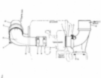 Locked diagram
Parts in this unit
Catalog descriptions with masked part numbers.
| Part number | Description |
|---|---|
| 1a***29 | Bolt (1-1/8") tube assembly to transfer drive case; spare part 1a***29 bolt (1-1/8") tube assembly to transfer drive case (Caterpillar) |
| 1b***55 | Nut, plain, hexagon turbocharger mounting; spare part 1b***55 nut, plain, hexagon turbocharger mounting (Caterpillar) |
| 1c***51 | Bolt--installation of 2v***26 retainer; spare part 1c***51 bolt--installation of 2v***26 retainer (Caterpillar) |
| 3s***30 | Pipe assembly air transfer; spare part 3s***30 pipe assembly air transfer (Caterpillar) |
| 4n***66 | Elbow-inlet; spare part 4n***66 elbow-inlet (Caterpillar) |
| 4n***91 | Coupling-exhaust; spare part 4n***91 coupling-exhaust (Caterpillar) |
| 4n***14 | Elbow (exhaust); spare part 4n***14 elbow (exhaust) (Caterpillar) |
| 5h***04 | Packing, preformed elbow part of kit p/n 5r***26; spare part 5h***04 packing, preformed elbow part of kit p/n 5r***26 (Caterpillar) |
| 5l***55 | Seal ring-metal-turbo to coupling; spare part 5l***55 seal ring-metal-turbo to coupling (Caterpillar) |
| 5p***98 | Clamp-assemble one each to valve as; spare part 5p***98 clamp-assemble one each to valve as (Caterpillar) |
| 5p***63 | Hose 12.70 cm(5 in.) long; spare part 5P***63 hose 12.70 cm(5 in.) long (Caterpillar) |
| 6n***09 | Ring (o.d. 90.5 in. dia.); spare part 6n***09 ring (o.d. 90.5 in. dia.) (Caterpillar) |
| 7m***74 | Element-filter; (air cleaner - air lines); spare part 7m***74 element-filter (Caterpillar) |
| 7n***84 | Air lines group; spare part 7N***84 air lines group (Caterpillar) |
D6E SR serial number reference
The PIN plate on a D6E SR sits at the rear of the tractor, high up on the left-hand frame rail near the final drive/drawbar area. The plate stamps the full product identification number; the first three characters are the serial prefix (the build/configuration series, here 8FJ), and the digits following it are the sequential unit number within that series. The prefix, not the trailing digits, ties the machine to its SR configuration and engine arrangement.
| Prefix | Identifies | Notes |
|---|---|---|
| 8FJ | D6E SR track-type tractor | Machine PIN prefix for the D6E SR configuration of the D6 platform, separate from the base (non-SR) D6E which carries its own prefix. Runs from 8FJ00001-up. Uses the 3306 diesel, the same engine family fitted to the standard D6E. No second or later serial-prefix block found for this configuration; treat 8FJ as the sole documented SR production run. Exact model year span not documented in dealer/parts references, approximate late-1980s to early/mid-1990s window based on the wider D6E platform's known sales period. Verify exact year against the PIN plate via a dealer lookup. |
Frequently asked questions
What engine does the Caterpillar D6E SR use?
The D6E SR runs the Caterpillar 3306 direct-injection diesel, rated at roughly 115.6 kW (155 hp gross). This is the Direct Drive tune shared with the D6D SR and D6D SA power train family, distinct from the engine tune used in the mainstream Powershift D6E.
What is the operating weight of the Caterpillar D6E SR?
Operating weight falls in the range typical of Direct Drive D6-family dozers of this era, varying with blade, ripper, and undercarriage configuration. No single factory figure is independently published for this exact SR configuration, so confirm the number for your specific machine against its identification plate or a dealer parts book.
What replaced the Caterpillar D6E SR?
The Direct Drive 'SR' lineage continued into the D6F SR before Caterpillar consolidated the D6 series onto powershift transmissions across the board in later generations. There is no single factory replacement model beyond that transition.
What D6E SR owners discuss
What transmission/torque converter quirk shows up on D6E SR dozers?
Why do operators sometimes report weak or uneven steering on the D6E SR?
What causes blade or ripper cylinder drift on this machine?
What undercarriage wear pattern is typical for the D6E SR?
What engine quirks come up for the D6E SR's 3306?
What electrical issues are common on the D6E SR?
What should a buyer check before purchasing a used D6E SR?
Compiled from owner and technician discussions across the industry — experiences vary by serial range and machine history.
Need a specific D6E SR part?
Search live OEM part data, check fitment, and cross-reference alternatives with Heavy Parts AI.
Post a parts request and compare supplier quotes.