Caterpillar D6D SR
Specifications · catalog references · fluids and capacities
Post a parts request and compare supplier quotes.
The Caterpillar D6D SR is the direct-drive configuration of Cat's D6D medium track-type tractor, identified in Caterpillar's own parts documentation as a distinct factory build separate from the standard powershift D6D, the D6D SA agricultural trim, and the D6D LGP low-ground-pressure trim. Instead of a torque-converter transmission, the SR uses a mechanical transmission with oil-cooled clutch packs for gear selection and dry, adjustable steering clutches and brake bands for steering - the same direct-drive architecture Caterpillar carried forward on the later D6E SR and D6F SR configurations. Power comes from the turbocharged Cat 3306 diesel, rated at roughly 104 kW (140 hp) gross for this chassis. Operating weight for the D6D family is inconsistently published across sources, ranging from roughly 9.2 to 17.4 tonnes (20,000 to 38,300 lb) depending on equipment and configuration; no dedicated SR-specific figure is published, so treat this as a reference band and confirm against the machine's nameplate. The D6D line, introduced in 1977, replaced the D6C (in production since 1963); Caterpillar offered it with straight, angling, or semi-universal blades, plus rear ripper, winch, or swinging-drawbar attachments depending on the job.
Caterpillar kept refining cooling, air intake, and steering-clutch details through the D6D's run without renaming the model, and the direct-drive parts book was later shared across D6D SR, D6E SR, D6F SR, and D6G SR as those generations followed, so service and parts information has to be matched to the correct build rather than just the D6D nameplate. Because the SR shares its chassis and blade/implement fitments with the wider D6D family but runs a different power train than the standard powershift version, mixing up transmission, steering-clutch, and final-drive parts between the two is a common and costly mistake. In the used and parts market, the D6D SR stays in demand for its mechanical simplicity: no torque converter, powershift valve body, or electronics to diagnose, which keeps overhaul costs predictable and makes it a practical choice for remote, oilfield, or forestry work where dealer diagnostic support isn't close at hand. Undercarriage and final-drive condition, more than engine hours, are what drive resale value on a machine this age.
Below: full specifications, fluids & capacities, the factory service schedule, common service parts, verified fault codes, what owners discuss, attachment guidance, the complete assembly directory, and a serial-number reference. Complete parts lists with full OEM part numbers, exploded diagrams, quantities, and fitment data are available free in Heavy Parts AI.
Caterpillar D6D SR specifications
Identification
| Model line | Caterpillar D6D SR track-type tractor, a factory trim/configuration within the D6D lineup, distinct from the standard D6D, the D6D SA (agricultural) trim, and the D6D LGP (low ground pressure) trim. |
| Configuration notes | SR is a separate undercarriage/gauge configuration offered alongside standard and LGP D6D builds. Public spec aggregators do not carry a dedicated data sheet for this trim, so most published D6D numbers below reference the wider D6D family rather than an SR-specific test sheet. Treat weight, dimension, and ground-pressure figures as reference points, not confirmed SR values, unless noted otherwise. |
Engine
| Engine model | Caterpillar 3306, inline 6-cylinder diesel, turbocharged. |
| Displacement | 10.5 L (640.7 cu in) |
| Gross power | Approximately 104 kW (140 hp) gross. |
| Net/drawbar power | Not separately published for this configuration in available sources. |
| Aspiration | Turbocharged. |
| Emissions tier | Pre-emissions-regulation, mechanically governed diesel, typical of this production era. No EPA/Tier rating applies. |
| Governor/fuel system | Mechanical governor with fuel-ratio (air/fuel) control and mechanical fuel-injection pump, consistent with mechanically governed diesels of this era. |
Weights
| Base/standard D6D reference weight | Roughly 9,235 kg (20,360 lb) as a stripped/base figure up to about 13,600 kg (30,000 lb) as an operating weight with standard equipment. Sources disagree depending on whether blade and standard attachments are included. |
| D6D LGP reference weight | Roughly 17,373 kg (38,301 lb) operating weight, for comparison only (wide-gauge low ground pressure trim, not SR). |
| D6D SR operating weight | Not separately published in available specification sources. As a wide-gauge/flotation-oriented trim, expect a figure between the standard and LGP references above. Verify against the unit's own nameplate or dealer build data. |
Dimensions
| Operating length (reference) | 4.57 m (15 ft 0 in), standard-configuration reference figure. |
| Operating width (reference) | 1.96 m (6 ft 5 in), standard-configuration reference figure. |
| Operating height (reference) | 2.87 m (9 ft 5 in), standard-configuration reference figure. |
| Track gauge (reference) | 1.52 m (4.99 ft), standard-configuration reference figure. |
| Length of track on ground (reference) | 1.83 m (6.01 ft), standard-configuration reference figure. |
| Ground clearance (reference) | 0.36 m (1.19 ft), standard-configuration reference figure. |
| Track shoe width range | Standard shoe width about 406 mm (16 in); wider flotation-type shoes up to about 915 mm (36 in) are used on wide-gauge/LGP-style D6D undercarriages. |
| SR-specific dimensions | Not separately published. SR trims typically run a wider track gauge than the standard tractor for added flotation; exact figures for this trim were not found in available sources. Confirm against dealer data for the exact serial range. |
Performance
| Transmission | Direct-drive mechanical transmission with oil-cooled clutch packs for gear selection, paired with dry steering clutches and brake bands for steering — not a torque-converter powershift. The standard (non-SR) D6D nameplate offered a separate powershift transmission; the SR configuration is covered by its own direct-drive power train documentation. |
| Maximum travel speed, forward (reference) | About 10.8-10.9 km/h (6.7-6.8 mph). |
| Maximum travel speed, reverse (reference) | About 12.9 km/h (8 mph). |
| Ground pressure, standard undercarriage (reference) | About 65-66 kPa (9.4-9.5 psi). |
| Ground pressure, LGP undercarriage (reference) | About 32-35 kPa (4.7-5 psi), for comparison only. |
| Ground pressure, SR undercarriage | Not separately published. As an intermediate wide-gauge/flotation trim, expect a figure between the standard and LGP references above. Verify with dealer/nameplate data. |
| Drawbar pull | Not documented in available sources for this configuration. |
| Gradeability | Not documented in available sources for this configuration. |
Blades
| Straight (S) blade, reference figures | About 3.2 m (10.5 ft) width, maximum cut depth about 472 mm (18.6 in), capacity about 3.1-3.3 cubic m (4.1-4.3 cubic yd). Reference figures for the D6D family's standard blade. |
| Other blade types | Universal (U), semi-U (SU), and LGP-specific blade capacities are not separately documented in available sources for the SR trim. |
| SR blade fitment | Not separately published. Confirm exact blade type and capacity against the specific unit's build sheet. |
Service capacities summary
| Hydraulic (implement) system | About 45.8 L (12.1 gal), reference figure for the D6D family. |
| Fuel tank | About 238 L (62.9 gal), reference figure for the D6D family. |
| Engine oil (crankcase, incl. filter) | Roughly 27-34 L (28.5-36.0 US qt), a general range for the 3306 diesel depending on pan and filter configuration; not confirmed specific to this chassis. |
| Cooling system | Roughly 30-50 L (32-53 US qt), a general range for the 3306 diesel depending on radiator/fan configuration; not confirmed specific to this chassis. |
| Capacity caveat | Engine oil and cooling system capacities are not separately published for the SR trim specifically. Verify against the service manual for the exact serial prefix before servicing. |
Values vary by configuration, region, and serial range — confirm against your machine before planning transport or lifts.
D6D SR fluids & capacities
| System | Capacity | Recommended fluid |
|---|---|---|
| Engine crankcase (with filter) — Cat 3306 turbocharged diesel | approx. 27–27.6 L (7.2–7.3 US gal / about 28.5–29 US qt) | Cat diesel engine oil (Cat DEO or an equivalent heavy-duty diesel engine oil meeting the era-correct API diesel spec). Viscosity by ambient temperature per Cat's engine oil chart: SAE 30 or SAE 10W-30 for roughly 0°C to 40°C (32°F to 104°F); SAE 10W down to about -18°C (0°F); an arctic-grade oil (0W-20/0W-30) below that. SAE 15W-40 multigrade is a common all-season substitute above about -9°C (15°F). |
| Cooling system | not consistently documented for this exact configuration across available sources — verify against the machine's own OMM or with your dealer | Full-strength, corrosion-inhibited heavy-duty antifreeze/coolant meeting Cat's coolant specification for this era, with Cat coolant conditioner (SCA) added and renewed on the scheduled interval. |
| Fuel tank | 238 L (62.9 US gal) | No. 2-D diesel fuel meeting the OMM's fuel spec; No. 1-D diesel in cold weather to reduce wax/gelling risk. |
| Direct-drive transmission (mechanical, oil-cooled clutch packs) | not broken out separately in available sources — this platform shares one drain/fill point with the bevel-gear/steering-clutch compartment | Cat TO-4 (early D6D production was originally spec'd to Cat TO-2, later superseded by TO-4) or Cat TDTO, SAE 30. |
| Bevel gear and steering-clutch compartment | combined with the transmission oil on a common fill/drain point per the OMM; no distinct capacity figure found across sources | Same oil as the transmission — Cat TO-4 or Cat TDTO, SAE 30. |
| Final drives (each side) | figures vary across sources for this model line, roughly in the 13–19 L (3.5–5 US gal) range per side — not consistently confirmed for this exact configuration; verify with your dealer | Cat TO-4 or Cat TDTO, SAE 50. Do not substitute a straight SAE 50 engine oil in this compartment — zinc-additive engine oils have been reported to damage the bronze final-drive components. |
| Hydraulic system/tank | 45.8 L (12.1 US gal) | Cat TO-4 or Cat TDTO, SAE 10W, in the hydraulic tank. |
| Pivot shaft | not documented as a separate lubrication/fill point for this model in available sources | not documented separately — check equalizer bar/track-frame pivot lubrication against the OMM's lube schedule |
| Grease (chassis lube points) | no fill volume — applied at grease fittings per the lube schedule, not a sump or tank fill | Cat Multipurpose Grease, NLGI 2, suited to roughly -30°C to 40°C (-22°F to 104°F); a moly-fortified multipurpose or extreme-application grease for heavily loaded pins and bushings. |
Capacities are refill values from factory literature — always fill to the dipstick/sight gauge, not the number.
Caterpillar D6D SR maintenance schedule
| Service interval | Tasks |
|---|---|
| Every 10 h |
|
| Every 250 h |
|
| Every 500 h |
|
| Every 1,000 h |
|
| Every 2,000 h |
|
| Every 6,000 h |
|
Servicing the D6D SR beyond the schedule
Predictive Maintenance and Fluid Analysis
Sample engine oil, the shared transmission/steering-clutch oil, and final-drive oil on schedule. Final drive bearing wear is the costliest failure on this platform - rising metal counts or a worn-smooth drive taper are the early warning, often years before a rebuild is due. Watch the turbocharged 3306 for gradual power loss from a boost leak, and treat hard starting or stalling as a fuel filter or transfer-pump issue before suspecting the injection pump. No ECM on this generation, so oil analysis and gauges are the only diagnostics you have.
Corrective and Common Repairs
Dry steering clutches and brake bands wear faster than later oil-bathed designs and need regular band adjustment - uneven braking or wander in reverse usually means a band out of adjustment, not a failed clutch. Low-range clutch packs on the mechanical transmission take the most shock load and slip first; check shift linkage and the modulating valve before condemning a pack. Blade slow to lift traces to cylinder rod seals, a worn control valve spool, or a tired hydraulic pump, roughly in that order.
Overhaul and Rebuild Points
Undercarriage parts - track chain, sprocket segments, idlers, rollers - wear as a set, so full-set replacement at high hours is normal, not a red flag. Final drive bearings are this platform's costliest wear point; owners report bearing service falling due around 8,000 hours, with a worn-smooth drive taper as the warning sign, and a rebuild runs into real money. Steering clutches and dry brake bands are best rebuilt together once adjustment can't compensate for wear. Plan a 3306 inframe or top-end overhaul once oil analysis shows sustained wear trends.
Seasonal and Environment Servicing
In cold climates, check coolant strength and battery/charging condition before winter work - the coolant temperature gauge is your only overheat warning on this generation, so a weak charging system or slipping fan belt shows up fast. In dusty or sandy jobsites, service the air cleaner element on condition rather than the full interval; the restriction indicator is the only air-intake diagnostic available. Forestry or waste-handling duty calls for bolt-on screen guarding over the radiator and front glass plus a belly guard, since this generation predates any factory forestry-package trim.
D6D SR common service parts
| Part number | Part | Notes | |
|---|---|---|---|
| 2Y-8670 | Filter As-Fuel | Fuel system service | Check fitment → |
Always confirm against your machine's serial number — cross-check any part in Heavy Parts AI before ordering.
D6D SR fault codes & troubleshooting
| Code | Meaning | Likely cause | What to do |
|---|---|---|---|
| Coolant Temperature gauge - needle in red zone | Engine coolant temperature above normal operating range | Low coolant level, blocked radiator core or grille screen, slipping or broken fan belt, thermostat stuck closed, sustained overload | Reduce load and let engine idle to cool before shutdown; once cool, check coolant level, belt condition, and radiator core for debris |
| Engine Oil Pressure gauge - needle in low/red zone | Engine oil pressure below the safe minimum | Low oil level, worn oil pump, plugged oil filter, diluted or wrong-viscosity oil | Stop the engine immediately, check oil level and filter condition before restarting; do not run the engine with sustained low pressure |
| Transmission Oil Temperature gauge - needle in red zone | Direct-drive transmission oil overheating | Low transmission oil level, prolonged high sustained load or shock loading, restricted transmission oil cooler | Reduce load, shift to a lower gear or idle to allow cooling, then check transmission oil level and inspect the oil cooler for restriction |
| Charging System (ammeter) - discharge indication | Alternator/generator not charging the battery circuit | Worn or broken drive belt, faulty alternator or regulator, loose or corroded battery/charging connections | Check belt tension and condition, inspect and clean battery and charging system connections, test charging output |
| Air Cleaner service (restriction) indicator | Air intake restriction has reached the service limit | Clogged primary or secondary air filter element, dusty operating conditions | Service or replace the air filter element, then reset the restriction indicator |
| Fuel Level gauge - low reading | Fuel tank level low | Normal consumption approaching empty, or an unexpected leak in the fuel system | Refuel; if the drop in level is faster than normal usage, inspect fuel lines and tank for leaks |
Codes and remedies are general guidance for this model family — always confirm with diagnostic tooling and your dealer before major repairs.
D6D SR attachments & work tools
Blades
Straight (S) blade for this class runs about 3.2 m (10.5 ft) wide with roughly 3.3 m3 (4.3 yd3) capacity, built for fine grading and penetration in hard-packed material with no side wings. Angling (A) blade hydraulically swings left or right off a C-frame for side-casting and road work; the parts catalog lists straight and angling bulldozer arrangements as separate groups, not interchangeable without the matching linkage. Semi-universal (SU) is a factory option on this size class, giving more load capacity than the straight blade and better penetration than a full-universal blade for mixed dirt/rock work. VPAT (variable-pitch angle/tilt) blade control does not apply to this generation - that system arrived on later medium-dozer platforms; blade control here is conventional hydraulic tilt with mechanical or hydraulic angling.
Rippers
Multi-shank parallelogram ripper (radial linkage) is the common rear attachment for this class, offered in reduced-shank configurations for harder digging conditions. A dedicated single-shank ripper is offered for deep-penetration rock work where more pryout force per tooth is needed versus spreading it across multiple shanks. Ripper assembly weight for this size machine runs roughly 1,400-1,800 kg (3,000-4,000 lb) depending on shank count and beam configuration - varies by supplier and arrangement. The rear ripper mounts to the same subframe/linkage family the parts book uses for other rear implement fitments, so ripper, drawbar and winch are mutually exclusive at the rear mount without swapping brackets.
Winches
A cable-control winch fits at the front or rear of this machine, sized to the tractor's weight class rather than shared with larger D7/D8-class tractors. Period-correct winch suppliers for this dozer class built dedicated drum winches (both front-mount and rear-mount) with wire-rope capacity typically in the 45-90 m range across multiple layers, used for logging skid, pipeline pulling and general recovery work. Winch control is independent of the dozer hydraulic circuit - these are mechanically or hydraulically clutched off the power train, not plumbed into the blade's tilt/lift lines.
Drawbars/counterweights
A rear swinging drawbar group is a factory-catalog option for towing and pull-behind work, separate from the ripper or winch mount and fitted only when neither of those is installed. When a rear ripper or winch is fitted, its own mass typically substitutes for a separate counterweight; a plain drawbar-only rear end can take an add-on counterweight block to balance the machine when running a heavy front blade without a rear implement.
Cab/ROPS guarding options for forestry/waste configs
For forestry or waste-handling duty, this class of Cat dozer commonly gets heavy screen or perforated-plate guarding over the front glass and radiator grille plus a belly guard and brush/rock deflector ahead of the blade, protecting glass and cooling package from branches and debris. Both cab and open ROPS/FOPS canopy configurations exist for this machine; forestry-duty guarding is added on top of the standard rollover/falling-object structure rather than replacing it. This generation predates the badged "forestry package" factory trim used on current-production medium dozers - guarding here is bolt-on sheet/screen kit hardware rather than an integrated factory option line, so exact coverage varies by dealer/region kit.
Hydraulic arrangement notes for front/rear tools
The hydraulic system carries its own tank-and-valve group and gear-type pump feeding the main control valve for blade lift/tilt/angle cylinders, plus a separate auxiliary valve group for external attachment circuits at the rear. Front blade functions run off the main control valve and tilt-cylinder lines; a rear ripper or winch draws off the auxiliary valve group, so the two are not normally run off shared lines without reconfiguring the valve stack. The rear-attachment linkage and cylinder mounting groups in the parts catalog are shared/renamed between bulldozer and ripper fitments, reflecting one common rear subframe design across the different rear tool options.
Part Book
Browse by group, subgroup and unit. Part numbers are masked and diagram thumbnails are locked.
7n3884 Lines Group-Air
7n3884 Lines Group-Air is listed in the Air inlet and exhaust system / air lines group catalog section.
- Group
- Air Inlet and Exhaust System
- Subgroup
- Air Lines Group
- Unit
- 7n3884 Lines Group-Air
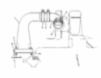 Locked diagram
Parts in this unit
Catalog descriptions with masked part numbers.
| Part number | Description |
|---|---|
| 7N***84 | Air Lines Group |
D6D SR serial number reference
On a D6D-era Cat track-type tractor the PIN/serial plate is riveted up high on the rear of the left frame rail, and can be hidden behind a rear ripper mount, so clean off dirt and grease to read it; the number is often duplicate-stamped on the mainframe near the operator's seat as a backup. The first three characters are the serial number prefix, which identifies the model and build configuration (for example 7XF ties to the D6D SR direct-drive tractor); the digits after the prefix are the sequential machine number within that build run.
| Prefix | Identifies | Notes |
|---|---|---|
| 7XF | D6D SR (Direct Drive) | Direct-drive D6D SR track-type tractor, powered by the Caterpillar 3306 diesel, with steering clutches and brakes (not differential steering). Parts documentation covers 7XF00001 and up. No separate powershift or LGP/XL SR-specific prefix turned up — the SR line appears to run on this one serial break. Confirm exact break with your dealer before ordering parts. |
Frequently asked questions
What engine does the Caterpillar D6D SR use?
A Caterpillar 3306 inline diesel, turbocharged. Gross power is rated at roughly 104 kW (140 hp) at the flywheel. The wider D6D family also included naturally aspirated versions rated closer to 93 kW (125 hp) for other applications, so confirm aspiration and rating against your machine's own data plate.
What is the operating weight of the Caterpillar D6D SR?
Not separately published for the SR configuration. Reference figures for the D6D family vary widely by source and equipment, from roughly 9.2 tonnes (20,000 lb) for a base/stripped machine up to about 17.4 tonnes (38,300 lb) fully equipped or in wide-track trim. Treat this as a broad reference range rather than a fixed number and check the nameplate on your specific unit.
What replaced the Caterpillar D6D SR?
Caterpillar's direct-drive line continued from the D6D SR into the D6E SR and D6F SR before the mechanical direct-drive configuration was phased out around the D6G SR generation. The parallel powershift D6D nameplate was eventually succeeded by the D6G. Both paths trace back to the same D6D-era chassis and implement family introduced in 1977.
What D6D SR owners discuss
What engine does the D6D SR run, and do owners report different power ratings?
What's the most common transmission complaint on these machines?
Blade is slow to lift or won't hold up. What do owners check first?
What undercarriage wear pattern should I expect on a D6D SR?
Steering feels inconsistent, or the brake doesn't hold the same in both directions. Why?
Gauges are dead or acting erratically. What's the usual cause?
What should I check before buying a used D6D SR?
Compiled from owner and technician discussions across the industry — experiences vary by serial range and machine history.
Need a specific D6D SR part?
Search live OEM part data, check fitment, and cross-reference alternatives with Heavy Parts AI.
Post a parts request and compare supplier quotes.