Caterpillar D4C III
Specifications · fluids and capacities · maintenance intervals
Post a parts request and compare supplier quotes.
The Caterpillar D4C Series III is a compact track-type tractor (crawler dozer) in Cat's D4 size class, built from roughly 1993 to 2001. It runs the Cat 3046, a naturally aspirated 5.0 L (305 cu in) inline six-cylinder diesel rated at 65.6 kW (88 hp) gross and 59.7-60.4 kW (80-81 hp) net at 2400 rpm, the same engine across every configuration. Operating weight runs about 7.3-7.8 t (16,000-17,200 lb) depending on setup. Caterpillar offered it as Standard, XL (wide-gauge), or LGP (low ground pressure) undercarriage, each buildable with a three-speed power-shift transmission and steering-clutch final drives or with the dual-path Hystat hydrostatic drive, giving six factory build combinations. It replaced the D4C Series II, which used a turbocharged four-cylinder 3204 engine, and was itself succeeded by the D4G starting in 2001.
The move from Series II to Series III was a real engine change, not just a badge update: Caterpillar swapped the turbocharged 3204 four-cylinder for the larger, naturally aspirated 3046 six-cylinder, trading turbo lag and boost-system upkeep for a simpler, mechanically governed engine. Series III also brought the Hystat hydrostatic drivetrain to this platform as a factory option alongside the established power-shift-and-steering-clutch layout. In the used and parts market today the D4C III holds a niche as one of the last fully mechanical small Cat dozers, with no ECM or electronic fault codes to complicate diagnosis and a driveline shared closely with its D3C and D5C Series III siblings. Demand centers on undercarriage wear parts, power-shift clutch and steering components, and Hystat pump, motor, and coupling parts; because those parts are not shared across every Standard/XL/LGP and power-shift/Hystat combination, buyers and parts counters need the exact configuration before ordering.
Below: full specifications, fluids & capacities, the factory service schedule, common service parts, verified fault codes, what owners discuss, attachment guidance, the complete assembly directory, and a serial-number reference. Complete parts lists with full OEM part numbers, exploded diagrams, quantities, and fitment data are available free in Heavy Parts AI.
Caterpillar D4C III specifications
Identity
| Machine | Track-type tractor (crawler dozer), small-dozer class |
| Configurations offered | Standard gauge, XL (extended gauge), and LGP (low ground pressure) undercarriages; each offered with a 3F/3R powershift transmission or a dual-path Hystat (hydrostatic) transmission |
| Production era | Part of the D4C platform run spanning roughly the late 1980s through 2001; Series III is the final update of that platform before the D4G/D4H-era successors |
Engine
| Engine model | Cat 3046, 6-cylinder inline diesel (same engine across Standard, XL, and LGP, powershift and Hystat) |
| Aspiration / fuel system | Naturally aspirated, direct injection, mechanically governed (pre-electronic, pre-ADEM control) |
| Bore x stroke | 94 mm x 119 mm (3.70 in x 4.70 in) |
| Displacement | 5.0 L / 305 cu in (4,998 cc) |
| Gross power | 88 hp (65.6-65.7 kW) at 2,400 rpm |
| Net power | 80-81 hp (59.7-60.4 kW) at 2,400 rpm (net figure varies slightly by publication) |
| Emissions | Pre-emissions-tier mechanical diesel, typical of its production era; no aftertreatment or electronic engine control |
Transmission and Performance
| Powershift transmission | 3 forward / 3 reverse powershift gears; maximum travel speed approximately 11.2 km/h (6.9 mph) forward and 12.0 km/h (7.4 mph) reverse, same across Standard, XL, and LGP powershift configurations |
| Hystat transmission | Dual-path, closed-loop hydrostatic drive with infinitely variable speed; single-lever control for speed, direction, and steering with full power to both tracks through any turn; maximum travel speed approximately 9.0 km/h (5.6 mph), same in forward or reverse, same across Standard, XL, and LGP Hystat configurations |
| Per-gear speeds (powershift) | Individual 1st/2nd/3rd gear speed steps are not published in generally available spec sheets for this model; only the maximum forward/reverse figures above are documented |
| Ground pressure - Standard | Approximately 42.7-43.4 kPa (6.2-6.3 psi), powershift or Hystat |
| Ground pressure - XL | Approximately 36.2-36.5 kPa (5.25-5.3 psi), powershift or Hystat |
| Ground pressure - LGP | Approximately 29.0-29.2 kPa (4.2-4.25 psi), powershift or Hystat |
| Drawbar pull | Not documented in publicly available spec sheets for this specific model/series; consult the factory performance handbook or your dealer for the drawbar-pull-versus-speed curve |
| Gradeability | Not documented in publicly available spec sheets for this specific model/series; consult your dealer for rated maximum grade |
Weights (operating, by configuration)
| Standard, powershift | 7,266 kg (16,019 lb) |
| Standard, Hystat | 7,326-7,330 kg (16,150 lb) |
| XL, powershift | 7,458 kg (16,442 lb) |
| XL, Hystat | 7,516-7,518 kg (16,573-16,574 lb) |
| LGP, powershift | 7,725 kg (17,032 lb) |
| LGP, Hystat | 7,784 kg (17,163 lb) |
Dimensions (by configuration)
| Length with blade | Approximately 3,994-4,020 mm (13.1-13.2 ft), consistent across Standard, XL, and LGP |
| Length without blade - Standard/XL | Approximately 3,039 mm (9.97 ft) |
| Length without blade - LGP | Approximately 2,960-2,963 mm (9.71-9.72 ft) |
| Width over tracks - Standard/Hystat | 1,905 mm (6.25 ft) |
| Width over tracks - XL | 1,957 mm (6.42 ft) |
| Width over tracks - LGP | 2,313 mm (7.59 ft) |
| Height to top of cab | 2,728-2,743 mm (8.96-9.00 ft), same across configurations |
| Ground clearance | 374-396 mm (1.23-1.30 ft), same across configurations |
| Length of track on ground - Standard/Hystat/LGP | 2,055 mm (6.75 ft) |
| Length of track on ground - XL | 2,213 mm (7.26 ft) |
Undercarriage
| Track gauge - Standard/XL/Hystat | 1,499 mm (4.92 ft) |
| Track gauge - LGP | 1,676 mm (5.5 ft) |
| Track shoe width - Standard/Hystat | 406 mm (16 in), 39 shoes per side |
| Track shoe width - XL | 457 mm (18 in), 41 shoes per side |
| Track shoe width - LGP | 635 mm (25 in), 39 shoes per side |
| Track rollers per side - Standard/Hystat/LGP | 6 |
| Track rollers per side - XL | 7 |
| Ground contact area - Standard/Hystat | Approximately 1.67 m2 (2,586 in2) |
| Ground contact area - XL | Approximately 2.02 m2 (3,131 in2) |
| Ground contact area - LGP | Approximately 2.61 m2 (4,045 in2) |
Blades
| Blade type offered | VPAT (variable pitch, angle, and tilt) blade, factory descriptions cite reinforced box-section construction; this appears to be the blade family offered across the Series III line rather than separate S/SU/A blade families |
| Standard/XL blade - width | 2,740 mm (9.0 ft) |
| Standard/XL blade - height | Approximately 930 mm (36.6 in) |
| Standard/XL blade - capacity | 1.7 m3 (2.2 cu yd) |
| Standard/XL blade - cutting depth | 448 mm (17.7 in) |
| Standard/XL blade - max angle | 25 degrees |
| LGP blade - width | 3,353 mm (11.0 ft) |
| LGP blade - height | Approximately 838 mm (33 in) |
| LGP blade - capacity | 1.76 m3 (2.3 cu yd) |
| LGP blade - cutting depth | 445 mm (17.5 in) |
| LGP blade - max angle | 25 degrees |
Service Refill Capacities
| Fuel tank | Approximately 157 L (41.5 gal); a minority of sources list a larger tank near 165 L (43.6 gal) - verify tank size against the specific serial/configuration |
| Engine oil (with filter) | Approximately 13.2-13.6 L (3.5 gal) |
| Cooling system | Approximately 21.2 L (5.6 gal) |
| Hydraulic system | Approximately 56.8-57.2 L (15.1 gal) |
| Powertrain (transmission/drive) fluid - Standard/XL | Approximately 28.4 L (7.5 gal) |
| Final drive fluid (each side) - Standard/XL | Approximately 14.8 L (3.9 gal) |
| Final drive fluid (each side) - LGP | Approximately 21.6 L (5.7 gal) |
Values vary by configuration, region, and serial range — confirm against your machine before planning transport or lifts.
D4C III fluids & capacities
| System | Capacity | Recommended fluid |
|---|---|---|
| Engine crankcase (with filter) | 13.2 L (3.5 US gal / 2.9 UK gal) | Cat DEO (Diesel Engine Oil), API CD/CF-4 grade diesel engine oil. The OMM grades viscosity by ambient air temperature — a lighter multigrade (SAE 10W or 10W-30) for cold starts, SAE 30 or 15W-40 in warmer ambient conditions. Check the OMM viscosity chart for the exact temperature breakpoints for your serial range. |
| Cooling system | 21.2 L (5.6 US gal / 4.7 UK gal) | Cat DEAC (Diesel Engine Antifreeze/Coolant), fully formulated, mixed per Cat guidelines for freeze protection to about -37°C (-34°F). Cat ELC (Extended Life Coolant) is also usable where factory-fitted on later serial ranges and carries a longer service interval than DEAC. |
| Fuel tank | Approximately 157-165 L (41.5-43.6 US gal) — figures vary slightly by source and by configuration (standard vs XL vs LGP undercarriage). | Diesel fuel meeting No. 1-D/No. 2-D (ASTM D975) or equivalent. Fill the tank at the end of each shift to purge moist air from the tank and limit condensation. |
| Powertrain — transmission plus bevel gear/steering clutch compartments (combined) | Approximately 28.4 L (7.5 US gal / 6.2 UK gal) combined, per published capacity charts. The OMM services the transmission and the bevel gear/steering-clutch compartments as separate fill and check points; a reliably corroborated per-compartment split specific to this Series III generation was not confirmed — verify the exact per-compartment figures against the machine's own OMM capacity chart. | Cat TDTO (Transmission/Drive Train Oil). Viscosity is graded to ambient temperature per the OMM chart, with a lighter grade specified for cold-weather starts. |
| Final drives (each side) | Approximately 14.8 L (3.9 US gal / 3.3 UK gal) per side, per published capacity charts. | Cat TDTO (Transmission/Drive Train Oil). |
| Hydraulic system/tank | Approximately 56.8-57.2 L (15.0-15.1 US gal) — close agreement across sources. | Cat TDTO or Cat HYDO (Hydraulic Oil), consistent with Cat's fluid recommendations for this class of small track-type tractor. Cat BIO HYDO (biodegradable, rapeseed-based) is an approved alternative for the hydraulic-only circuit, but must not be used where hydraulic oil is shared with brake/clutch compartments, and is not recommended below -7°C (20°F) or above 82°C (180°F) tank temperature. |
| Pivot shaft (track roller frame / C-frame pivot) | Sealed, permanently oil-lubricated reservoir inside the pivot shaft bore; no separate scheduled refill capacity is commonly published for this compartment. | Factory oil fill — not a routine service point on this design. Grease the lower C-frame and blade-tilt cylinder zerk fittings per the lubrication chart, using the multipurpose grease specified below. |
| Grease (chassis and track zerk fittings) | Applied with a grease gun at individual fittings per the lubrication interval chart — no bulk reservoir capacity. | NLGI No. 2 Multipurpose-type Grease (MPGM). High-load pin and bushing points on this tractor generation call for a moly-fortified multipurpose grease (about 3-5% molybdenum disulfide); use a standard NLGI 2 multipurpose grease at other fittings per the OMM lubrication chart. |
Capacities are refill values from factory literature — always fill to the dipstick/sight gauge, not the number.
Caterpillar D4C III maintenance schedule
| Service interval | Tasks |
|---|---|
| Every 10 h |
|
| Every 250 h |
|
| Every 500 h |
|
| Every 1,000 h |
|
| Every 2,000 h |
|
| Every 3,000 h |
|
| Every 6,000 h |
|
Servicing the D4C III beyond the schedule
Predictive Maintenance & Fluid Analysis
The D4C III carries no ECM, so oil sampling is the main early-warning tool. Pull engine oil samples on the naturally aspirated 3046 to track soot loading and wear metals between 250-hour changes. Sample Hystat pump and motor oil, or power-shift transmission oil, every 500 hours to catch drive-coupling wear before it causes a total loss of movement. Check alternator harness connectors for corrosion before charging problems appear. Track undercarriage wear rates on LGP and XL shoes; catching roller and idler wear early avoids replacing a full chain later.
Corrective & Common Repairs
Two failure patterns dominate D4C III repair work. On Hystat machines, the engine-to-pump drive coupling fails when its splines aren't fully seated before the housing is bolted up; a machine that suddenly won't move under power points here first. On power-shift machines, clutch-pack slippage and steering clutches that slip only once warm are common, usually traced to worn discs or low system pressure rather than the control valves. Corroded alternator harness connectors under the dash cause intermittent no-start and no-charge complaints; clean and reseal before replacing the alternator.
Overhaul & Rebuild Points
Undercarriage is the biggest recurring rebuild item, especially on LGP and XL machines carrying wider shoes under higher side-loading; budget for rollers, idlers, track rails, and sprockets as a matched set. Power-shift steering clutch packs and brake bands wear predictably and are a standard mid-life rebuild. Hystat drive systems need pump and motor overhaul once coupling wear or internal leakage shows up in oil-sample trends. The naturally aspirated 3046 carries no turbocharger to fail, so top-end work is driven by oil consumption and compression loss, not boost damage.
Seasonal & Environment Servicing
Cold starts on the mechanical, naturally aspirated 3046 depend on glow plugs or ether and full battery capacity; test cranking amperage and coolant freeze protection before winter, since there's no electronic cold-start assist to cover for a weak battery. Drain the fuel-water separator often in wet or humid climates and keep alternator harness connectors sealed against corrosion, a documented weak point on this platform. LGP configurations suit soft, wet, or reclamation ground; retension tracks more often in mud or sand, where abrasive packing accelerates roller and idler wear.
D4C III common service parts
| Part number | Part | Notes | |
|---|---|---|---|
| 094-7998 | Head, Fuel Filter | Fuel system service | Check fitment → |
| 096-9013 | Gasket, Fuel Filter | Fuel system service | Check fitment → |
| 118-5768 | Filter Element-Fuel | Fuel system service | Check fitment → |
| 4N-0313 | Filter Element As-Air | Air intake service | Check fitment → |
| 4N-0326 | Filter Element As-Air | Air intake service | Check fitment → |
Always confirm against your machine's serial number — cross-check any part in Heavy Parts AI before ordering.
D4C III fault codes & troubleshooting
| Code | Meaning | Likely cause | What to do |
|---|---|---|---|
| Coolant Temperature warning lamp (red segment on gauge / panel lamp) | Engine coolant temperature has risen above the normal operating range. | Low coolant level, a plugged radiator core or fins, a slipping or broken fan belt, or a faulty thermostat. | Idle the engine to cool, then shut down. Check coolant level and radiator core for debris, and inspect fan drive belt condition and tension. |
| Engine Oil Pressure warning lamp | Engine oil pressure has dropped below the safe minimum. | Low oil level, a clogged oil filter, a worn oil pump, or worn main or rod bearings. | Stop the engine immediately. Check oil level and filter condition, and verify the pressure sending unit before restarting. |
| Alternator / Charging System warning lamp | The charging system is not producing adequate voltage to the batteries. | A loose or worn alternator drive belt, a failed alternator, or corroded or loose wiring at the alternator and related charging circuit. | Check belt tension and alternator output, then inspect and clean wiring connectors at the alternator and charging circuit. |
| Hydrostatic Oil Temperature gauge/lamp (Hystat-equipped machines) | Hydrostatic transmission oil temperature is above the normal operating range. | Low hydraulic oil level, a plugged oil cooler, a worn charge pump, or sustained heavy load in hot ambient conditions. | Reduce load and idle to cool. Check hydraulic oil level and clean the oil cooler core; if overheating repeats, have charge pressure checked against the machine's testing and adjusting specification. |
| Torque Converter / Power Train Oil Temperature gauge (powershift-equipped machines) | Power train (torque converter/transmission) oil temperature is above normal. | Low transmission oil level, a clogged transmission oil cooler, or converter stall from an overloaded blade pass. | Reduce load and let the machine idle to cool, then check transmission oil level and inspect the cooler for restriction. |
| Air Cleaner (Air Filter) Restriction indicator | Intake air restriction across the air filter has exceeded the allowed limit. | A clogged primary or secondary air filter element, or a damaged or collapsed intake hose. | Service or replace the air filter element and inspect intake piping for leaks or damage. |
| Hydraulic/Transmission Filter Bypass indicator | The filter bypass valve has opened because oil flow through the filter element is restricted. | A clogged hydraulic or transmission filter element, or cold, high-viscosity oil. | Warm the machine before heavy work, then replace the filter element and check oil condition. |
Codes and remedies are general guidance for this model family — always confirm with diagnostic tooling and your dealer before major repairs.
D4C III attachments & work tools
Blades – Standard/XL
Standard S-type straight blade on the Standard/XL undercarriage measures 2.74 m (9 ft) wide by 930 mm (36.6 in) high, rated at about 1.7 m³ (2.2 yd³) capacity, with roughly 450 mm (17.7 in) cutting depth and 25° power-angle in each direction.
Blades – LGP
LGP undercarriage carries a wider 3.35 m (11 ft) blade, 838 mm (33 in) high, about 1.76 m³ (2.3 yd³) capacity, with roughly 445 mm (17.5 in) cutting depth and the same 25° angling range; the wider blade and shoes trade some digging aggression for flotation and stability on slopes.
Blades – VPAT option
A factory VPAT (variable pitch-angle-tilt) blade is offered across the D4C III line, built with four full-width box-section reinforcement cells; on the LGP chassis it is rated around 430 mm (17 in) dig depth and 790 mm (31 in) lift height, adding on-the-fly pitch and tilt adjustment the fixed straight blade lacks. A separate SU (semi-U) profile is not documented for this generation — treat straight and VPAT as the two confirmed families and check the parts book for your serial range before assuming a U/SU option exists.
Rippers – Multi-shank
Ripper shanks and beam components are cataloged jointly across the small-dozer family sharing this chassis, pointing to a common rear ripper mount. The multi-shank hinge-type beam (typically a three-pocket layout) uses twin lift/tip cylinders plus a bolt-on final-drive guard, suited to loosening thinner hard-pan or frozen ground over a wider swath than a single tooth covers.
Rippers – Single-shank
A single-shank ripper is the heavier-duty alternative for this size class: longer beam, deeper penetration, better suited to hard rock, frozen ground, or root removal than a multi-shank unit. Ripper is not broken out as its own spec line in the factory summaries reviewed for this model, so confirm shank count and installed weight against the parts manual for the machine's actual serial range.
Winches
No factory-listed winch option was found on D4C III spec sheets. Historically, PTO-driven cable-control winches were sized across the whole D3-through-D10 Cat dozer range, so this model sits within that general PTO fitment band rather than having a unique named unit; treat any winch as a dealer/aftermarket fitment. Modern hydraulic winch packages marketed for the newer small-dozer line use a different-generation mount and should not be assumed to fit this Series III chassis without checking.
Drawbars/Counterweights
A bolt-on rear drawbar for towing trailed implements or scrapers, and a rear counterweight slab to rebalance the machine when a rear tool (ripper or winch) is fitted, are typical options on small Cat dozers of this size class. Specific capacity and weight figures for this exact model were not found in the documentation reviewed — verify against dealer parts literature for the serial range in question.
Cab/ROPS guarding (forestry/waste)
The Series III operator station is a sealed, pressurized cab with a three-piece flat-glass windshield. Forestry/waste-handling protection (front, screen, and heavy-duty guarding levels, hinged brush screens over the engine and radiator, debris-resistant cooling for easy clean-out) is a documented arrangement pattern for this small-dozer size class generally, but exact availability and content specifically for this nameplate is not confirmed in the sources reviewed — verify with a dealer for the serial range in question.
Hydraulic arrangement – front tools
A single engine-driven gear pump supplies the whole implement circuit at roughly 66.6 L/min (17.6 gpm) and 17 237 kPa (2500 psi) relief, consistent across Standard, XL, LGP, and Hystat variants. Up front this pump drives the blade lift and angle cylinders through the main control valve, plus tilt/pitch cylinders on VPAT-equipped machines.
Hydraulic arrangement – rear tools
When a ripper is fitted, its lift and tip/shank-angle cylinders tap the same gear-pump circuit through an added rear valve section rather than a dedicated pump. A rear winch, if dealer-installed, is more likely PTO-driven off the transmission than hydraulic, given the modest flow this size class's implement pump provides.
Hystat propulsion circuit and engine note
The Hystat variant uses a separate dual-path, closed-loop hydrostatic drive — one variable-displacement piston pump per track — dedicated to propulsion only; this circuit is independent of the gear-pump implement circuit that runs the blade, ripper, and any winch. All configurations of this model use the naturally aspirated six-cylinder engine rated about 66 kW (88 hp) gross and roughly 60 kW (80-81 hp) net at 2400 rpm, not the engine used on adjacent D4-family variants — relevant since attachment hydraulic flow is tied to this specific engine/pump pairing.
Part Book
Browse by group, subgroup and unit. Part numbers are masked and diagram thumbnails are locked.
6i-3760 Air Cleaner Group s/n 6yl1-up; 7sl1-up
6i-3760 Air Cleaner Group s/n 6yl1-up; 7sl1-up is listed in the Air inlet and exhaust system / air cleaner group catalog section.
- Group
- Air Inlet and Exhaust System
- Subgroup
- Air Cleaner Group
- Unit
- 6i-3760 Air Cleaner Group s/n 6yl1-up; 7sl1-up
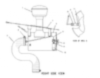 Locked diagram
Parts in this unit
Catalog descriptions with masked part numbers.
| Part number | Description |
|---|---|
| 0a***26 | Fitting; spare part 0a***26 fitting (Caterpillar) |
| 10***24 | Seal; Spare Part 10***24 Seal (Caterpillar) |
| 1w***13 | Indicator-air filter service; (air filter); spare part 1w***13 indicator-air filter service (Caterpillar) |
| 3b***87 | Coupling; (Pipe); Spare Part 3b***87 Coupling (Caterpillar) |
| 5l***33 | Fitting (to air cleaner); spare part 5l***33 fitting (to air cleaner) (Caterpillar) |
| 5p***48 | Connector-tube-to valve as side ports; spare part 5p***48 connector-tube-to valve as side ports (Caterpillar) |
| 5p***30 | Tube-ether fitting to manifold (8 dm); spare part 5p***30 tube-ether fitting to manifold (8 dm) (Caterpillar) |
| 6i***60 | Air Cleaner Group; Spare Part 6i***60 Air Cleaner Group (Caterpillar) |
| 6i***61 | Air cleaner group |
| 6i***62 | Hose; Spare Part 6i***62 Hose (Caterpillar) |
| 8h***21 | Precleaner |
| 8t***75 | Clamp; (hose); spare part 8t***75 clamp (Caterpillar) |
D4C III serial number reference
The PIN plate on D4C III small dozers is riveted to the right-hand side of the main frame near the front of the machine (fuel tank/frame rail area), with the same number often repeated on a plate inside the operator's station. Read the first 3 characters as the plant/model/configuration prefix and the digits that follow as the sequential unit number for that build run (example: 6YL00776 = prefix 6YL, unit 00776). Always confirm the full 17-character PIN and build details against the plate itself or a dealer lookup before ordering parts.
| Prefix | Identifies | Notes |
|---|---|---|
| 1FW | D4C III, Power Shift | Power Shift drivetrain with steering clutch and brake. Cat 3046 6-cylinder naturally aspirated diesel, about 66 kW (88 hp) gross power. Distinct parts-catalog prefix from the plain (non-III) D4C. The factory Power Shift Series III parts manual groups Std, LGP and XL builds together under this and related prefixes rather than splitting configuration by prefix; real-world listings under this prefix are commonly plain (non-XL/LGP) machines, but exact configuration is not guaranteed from the prefix alone - confirm with dealer/PIN. Exact build years not confirmed - confirm with dealer. |
| 6YL | D4C III, Power Shift | Power Shift drivetrain, steering clutch and brake. Cat 3046 6-cylinder naturally aspirated diesel. This prefix block begins around 1994. Std/XL/LGP configuration not distinguished in available sources - confirm with dealer. |
| 7SL | D4C III, Power Shift | Power Shift drivetrain, steering clutch and brake. Cat 3046 6-cylinder naturally aspirated diesel. Confirmed as a valid Series III Power Shift prefix in factory parts documentation. Specific configuration (Std/XL/LGP) and exact production year are not independently confirmed - confirm with dealer. |
| 4LS | D4C III / D4C LGP III / D4C XL III, Hystat | Hydrostatic (Hystat) drivetrain: dual-path variable-displacement piston pumps, single-lever joystick for speed, direction and steering. Cat 3046 6-cylinder naturally aspirated diesel. One shared prefix covers Std, LGP and XL builds per the factory Hystat parts and service manuals. Associated with mid-to-late 1990s production. |
| 6BS | D4C III, Hystat | Hydrostatic (Hystat) drivetrain, single-lever joystick steering, Cat 3046 6-cylinder naturally aspirated diesel. Listed alongside 4LS and 8CS in the shared D3C/D4C/D5C Series III Hystat service documentation, and tied to Series III Hystat tractors in parts-catalog listings referencing mid/late-1990s production. Exact configuration (Std/XL/LGP) not confirmed - confirm with dealer. |
| 8CS | D4C XL III, Hystat | Hydrostatic (Hystat) drivetrain, single-lever joystick steering, Cat 3046 6-cylinder naturally aspirated diesel. XL configuration confirmed on a documented 1999 unit with OROPS and a 6-way blade. Associated with production in the late 1990s (circa 1997-1999). |
Frequently asked questions
What engine does the Caterpillar D4C Series III use?
The D4C Series III uses the Cat 3046, a naturally aspirated 5.0 L (305 cu in) inline six-cylinder diesel rated at 65.6 kW (88 hp) gross and 59.7-60.4 kW (80-81 hp) net at 2400 rpm. It replaced the turbocharged four-cylinder 3204 used on the earlier D4C Series II.
What is the operating weight of the D4C Series III?
Operating weight varies by configuration: about 7,266 kg (16,019 lb) for the Standard power-shift model up to roughly 7,784 kg (17,163 lb) for the LGP Hystat model, with XL and other combinations falling in between. Confirm the exact figure for your serial number and configuration with your dealer.
What replaced the Caterpillar D4C Series III?
Caterpillar replaced it with the D4G starting in 2001, closing out the run of this fully mechanical, pre-emissions small-dozer platform. The D4G carried the D4 nameplate forward on Cat's small-dozer line until later in the 2000s, when the line moved to its next generation.
What D4C III owners discuss
What's the most common complaint about the D4C III's Hystat (hydrostatic) drive?
Any known weak points on the powershift version of the D4C III?
Are steering clutch problems common on the D4C III, and what does the pattern look like?
Does the 3046 engine in the D4C III have any known quirks?
What electrical or sensor issues come up most on the D4C III?
What undercarriage wear pattern should a D4C III owner expect?
What should I check before buying a used D4C III?
Compiled from owner and technician discussions across the industry — experiences vary by serial range and machine history.
Need a specific D4C III part?
Search live OEM part data, check fitment, and cross-reference alternatives with Heavy Parts AI.
Post a parts request and compare supplier quotes.