Caterpillar D3C III
Specifications · fluids and capacities · maintenance intervals
Post a parts request and compare supplier quotes.
The Caterpillar D3C III is the third-generation, small/compact-class track-type tractor in the D3C line, built through the 1990s into the early 2000s. Every arrangement - Standard, XL, and LGP (Low Ground Pressure) - runs the same Cat 3046, a naturally aspirated 6-cylinder diesel of 5.0 L (305 cu in) displacement, rated 78 hp (58 kW) gross and 70-71 hp (52-53 kW) net at 2400 rpm. Caterpillar offered two distinct drivetrains on this generation: a dual-path, closed-loop Hystat (hydrostatic) system with single-lever joystick steering, and a torque-converter powershift with clutch/brake steering via foot pedals. Operating weight runs from roughly 7,040 kg (15,500 lb) on a Standard clutch/brake machine up to about 7,710 kg (17,000 lb) on an LGP Hystat machine, depending on configuration. Every arrangement carries the same VPAT (Variable Pitch, Angle and Tilt) blade - Caterpillar never offered a straight, semi-U, or angle-only blade on this model. The D3C III succeeded the D3C II and was replaced by the D3G starting in 2001.
Compared with the D3C II, the Series III update carried the 3046 engine and one-piece mainframe/track-roller-frame chassis forward largely unchanged while refining the drivetrain controls: the Hystat option's single-joystick direction/speed/steering interface and the powershift's oil-cooled multiple-disc steering clutches with double-wrapped brake bands both belong to this generation. Because Standard, XL, and LGP share one VPAT blade and much of the power-train hardware, parts commonality runs high across the D3C III range, though final-drive, undercarriage, and drivetrain components still split by configuration and by Hystat versus powershift. As a late, mechanically simple entry in a long-running small-dozer family, with no electronic engine controls and no aftertreatment, the D3C III stays a common shop, landscaping, and utility-grade machine on the used market, with owners running it well past factory-book hours on routine undercarriage, final-drive, and drivetrain rebuilds rather than replacing the whole machine. Its successor, the D3G, moved to a different engine platform, which keeps demand alive for the 3046's simpler parts and service base among owners keeping D3C IIIs working.
Below: full specifications, fluids & capacities, the factory service schedule, common service parts, verified fault codes, what owners discuss, attachment guidance, the complete assembly directory, and a serial-number reference. Complete parts lists with full OEM part numbers, exploded diagrams, quantities, and fitment data are available free in Heavy Parts AI.
Caterpillar D3C III specifications
Engine
| Engine model | Cat 3046, four-stroke, in-line 6-cylinder diesel, naturally aspirated. Same base engine used across Standard, XL and LGP arrangements and both power train options offered on this model. |
| Gross power | 58.2 kW (78 hp) at 2400 rpm |
| Net power | 52.9 kW (71 hp) at 2400 rpm per Caterpillar, ISO 9249 and EEC 80/1269 ratings; 52.2 kW (70 hp) per SAE J1349; 54.4 kW (73 hp / 74 PS) per DIN 70020 |
| Bore and stroke | 94 mm x 120 mm (3.7 in x 4.7 in) |
| Displacement | 5.0 L (305 cu in) |
| Torque rise | 35% at 1400 rpm, per factory torque curve |
| Altitude capability | No derating required up to 2300 m (7500 ft) |
| Fuel system | Direct injection with adjustment-free individual injection pumps and valves, electric fuel shutoff solenoid, in-cylinder glow plugs with built-in temperature switch for cold starting |
| Electrical system | 12V system. 55-amp alternator standard with ROPS canopy, 90-amp standard with optional cab. 12V, 900 CCA, group 31, maintenance-free battery with disconnect switch |
| Cooling system hardware | Belt-driven water pump, multi-plate water-cooled oil cooler, conventional core radiator with 533 mm (21 in) fan |
| Starter | 12V direct-electric, gear reduction starter with terminal shielding |
Weights
| Standard arrangement, clutch/brake power train | 7039 kg (15,518 lb) operating weight |
| Standard arrangement, Hystat power train | 7112 kg (15,680 lb) operating weight |
| XL arrangement, clutch/brake power train | 7231 kg (15,941 lb) operating weight |
| XL arrangement, Hystat power train | 7304 kg (16,103 lb) operating weight |
| LGP arrangement, clutch/brake power train | 7640 kg (16,842 lb) operating weight |
| LGP arrangement, Hystat power train | 7713 kg (17,004 lb) operating weight |
| Weight basis | Operating weight is approximate: dozer blade, canopy ROPS, back-up alarm, operator, coolant, lubricants and a full fuel tank included |
| Cab option weight add | Fitting a ROPS cab in place of the open canopy adds about 204 kg (450 lb) to operating weight |
| Ripper option weight add | A rear-mounted ripper with three teeth and its hydraulic cylinder adds about 249 kg (549 lb) |
Dimensions
| Track gauge, Standard (Hystat) and XL | 1448 mm (57 in) |
| Track gauge, Standard clutch/brake | 1422 mm (56 in), narrower than the Standard Hystat arrangement |
| Track gauge, LGP | 1676 mm (66 in) |
| Width over tracks, no blade, Standard (Hystat) and XL | 1854 mm (73 in) |
| Width over tracks, no blade, Standard clutch/brake | 1829 mm (72 in) |
| Width over tracks, no blade, LGP | 2311 mm (91 in) |
| Overall length with blade, Standard (Hystat) and XL | 3982 mm (156.8 in) |
| Overall length with blade, Standard clutch/brake | 3859 mm (151.9 in) |
| Overall length with blade, LGP | 3954 mm (155.7 in) |
| Length of basic tractor without blade, Standard (Hystat), XL and LGP | 2957 mm (116.4 in) |
| Length of basic tractor without blade, Standard clutch/brake | 2934 mm (115.5 in) |
| Tractor height (to top of exhaust stack), Standard (Hystat), XL and LGP | 2728 mm (107.4 in); overall stack height about 2795 mm (110 in) |
| Tractor height, Standard clutch/brake | 2675 mm (105.3 in) |
| Ground clearance, Standard (Hystat), XL and LGP | 374 mm (14.7 in) |
| Ground clearance, Standard clutch/brake | 322 mm (12.7 in) |
| Undercarriage shoe width, Standard and XL | 406 mm (16 in) |
| Undercarriage shoe width, LGP | 635 mm (25 in), standard; a self-cleaning 635 mm (25 in) shoe is also offered as an option for LGP |
| Length of track on ground, Standard | 1899 mm (74.8 in) |
| Length of track on ground, XL and LGP | 2055 mm (80.9 in) |
| Ground contact area | Standard 15,420 cm2 (2390 in2); XL 16,690 cm2 (2586 in2); LGP 26,100 cm2 (4045 in2) |
| Track rollers per side | 5 on Standard, 6 on XL and LGP |
| Track shoes per side | 37 on Standard, 39 on XL and LGP |
| Grouser height | 47 mm (1.9 in), single-grouser shoe |
Performance
| Hystat travel speed | Infinitely variable, 0 to 9.0 km/h (5.6 mph), forward or reverse, via dual-path closed-loop hydrostatic drive |
| Powershift forward speeds (clutch/brake, 3-speed planetary auto shift) | 1st 3.1 km/h (1.9 mph); 2nd 5.9 km/h (3.7 mph); 3rd 10.8 km/h (6.7 mph) |
| Powershift reverse speeds | 1st 3.2 km/h (2.0 mph); 2nd 6.3 km/h (3.9 mph); 3rd 11.4 km/h (7.1 mph) |
| Ground pressure, Standard arrangement | 44.7 kPa (6.49 psi) clutch/brake; 45.2 kPa (6.56 psi) Hystat |
| Ground pressure, XL arrangement | 42.5 kPa (6.16 psi) clutch/brake; 42.9 kPa (6.23 psi) Hystat |
| Ground pressure, LGP arrangement | 28.7 kPa (4.16 psi) clutch/brake; 29.0 kPa (4.20 psi) Hystat |
| Drawbar pull | Published only as a speed-versus-pull curve, not a single fixed rating. On the clutch/brake power train, torque-converter multiplication gives the highest pull in first gear near stall, tapering off through the gears as travel speed rises toward the 10.8-11.4 km/h (6.7-7.1 mph) top speed. On the Hystat power train, pull is highest at minimum travel speed and tapers toward the 9.0 km/h (5.6 mph) top speed. Consult the factory performance curve for the exact figure at a given speed; do not treat this as a single number. |
| Gradeability | Not published as a discrete percentage for this model. Climbing/pulling performance is expressed only through the drawbar-pull-versus-speed curve rather than a stated maximum grade. |
| Hydraulic pump flow | 66.6 L/min (17.6 gpm) at 2400 rpm and 6895 kPa (1000 psi) pump outlet pressure |
| Hydraulic relief valve setting | 17,241 kPa (2500 psi) |
| Hystat charge-circuit relief valve setting | 42,000 kPa / 420 bar (6100 psi) |
| Steering, Hystat | Single-lever hydrostatic steering, full power to both tracks maintained through any turn, dynamic hydrostatic braking through the drive system |
| Steering, clutch/brake | Two-pedal steering standard, oil-cooled multiple-disc clutches with double-wrapped brake bands; optional dash-mounted dual hand-lever steering |
Blades
| Blade design offered | Variable Pitch, Power Angle and Tilt (VPAT) blade, standard on every D3C Series III / Series III Hystat arrangement. Factory literature for this model lists only the VPAT blade; no separate straight (S), semi-U (SU) or angle-only (A) blade is offered for the D3C III. |
| Blade capacity, Standard and XL | 1.26 m3 (1.64 yd3), SAE rated |
| Blade capacity, LGP | 1.31 m3 (1.70 yd3), SAE rated. Standard and XL arrangements carry 1.64 yd3; LGP is the only arrangement rated at 1.70 yd3. |
| Blade width, Standard and XL | 2547 mm (100.3 in) |
| Blade width, LGP | 3194 mm (125.8 in) |
| Blade height, Standard and XL | 836 mm (32.9 in) |
| Blade height, LGP | 746 mm (29.4 in) |
| Blade lift height | 761 mm (30.0 in) on Standard Hystat, XL and LGP; 773 mm (30.4 in) on the Standard clutch/brake arrangement |
| Digging depth, Standard Hystat and XL | 418 mm (16.5 in) |
| Digging depth, Standard clutch/brake | 410 mm (16.2 in) |
| Digging depth, LGP | 398 mm (15.7 in) |
| Cutting edge pitch, adjustable | 50 to 55 degrees via the adjustable top pitch link. Carry position (50 deg) for moving soft material, penetrating position (55 deg) for tough, tight soil |
| Maximum blade angle, either side | 25 degrees, all arrangements |
| Maximum tilt, Standard and XL | 356 mm (14.0 in) |
| Maximum tilt, LGP | 490 mm (19.3 in) |
| Blade width at maximum angle, Standard and XL | 2308 mm (90.9 in) |
| Blade width at maximum angle, LGP | 2901 mm (114.2 in) |
Service capacities summary
| Fuel tank, Standard clutch/brake | 122 L (32.2 gal) |
| Fuel tank, XL and LGP clutch/brake, and all Hystat arrangements | 165 L (43.6 gal) |
| Engine crankcase and filter | 13 L (3.4 gal), all arrangements |
| Cooling system | 21 L (5.5 gal), all arrangements |
| Hydraulic tank | 56.8 L (15 gal), all arrangements |
| Powershift transmission oil, clutch/brake only | 28.2 L (7.5 gal) |
| Bevel gear case, clutch/brake only | 15.1 L (4 gal) |
| Steering brake/clutch, each side, clutch/brake only | 28.4 L (7.5 gal) |
| Final drives, Standard and XL, each side | 8 L (2.1 gal) clutch/brake; 13.8 L (3.6 gal) Hystat |
| Final drives, LGP, each side | 12 L (3.1 gal) clutch/brake; 20.5 L (5.4 gal) Hystat |
| Engine oil specification | Engine service classification CC, CC/SF or CD, or an equivalent heavy-duty diesel engine oil carrying antiwear, antifoam, antirust and antioxidation additives |
| Grease specification | Multipurpose-type grease with 3-5% molybdenum disulfide; NLGI No. 2 for most temperatures, NLGI No. 1 or No. 0 for extreme cold |
Values vary by configuration, region, and serial range — confirm against your machine before planning transport or lifts.
D3C III fluids & capacities
| System | Capacity | Recommended fluid |
|---|---|---|
| Engine crankcase (with filter) | 13 L (3.4 US gal), Cat 3046 6-cylinder diesel | Cat DEO diesel engine oil, meets API CF-4/CH-4 or later (Cat ECF-1/ECF-2). SAE 10W-30 for roughly -18°C to 40°C (0°F to 104°F); SAE 15W-40 above about -9°C (15°F); straight SAE 30 acceptable in stable warm climates. |
| Cooling system | 21 L (5.5 US gal) | Cat conventional antifreeze/coolant (DEAC-type, full-strength, meets Cat EC-1) dosed with supplemental coolant additive on the service interval. Machines built to later printings of the manual accept Cat ELC extended-life coolant instead — do not mix coolant types. |
| Fuel tank | 122 L (32.2 US gal) on standard-undercarriage machines; 165 L (43.6 US gal) on XL, LGP, and Hystat-drive machines | No. 2-D diesel fuel. |
| Transmission / power train | Clutch/brake (power-shift) configuration: 3-speed planetary power-shift transmission 28.2 L (7.5 US gal); bevel gear case 15.1 L (4 US gal); steering clutch/brake compartment 28.4 L (7.5 US gal) per side, filled and checked separately. Hystat (hydrostatic) configuration has no separate transmission, bevel-gear, or steering-clutch compartment — the power train oil is combined with the implement hydraulic oil in one reservoir, listed under hydraulic system below. | Cat TDTO transmission/drive-train oil, meets Cat TO-4/TO-4M. SAE 30 for warm climates, SAE 10W for cold climates, or a multigrade TDTO blend where seasonal temperature swings are wide. |
| Final drives (each side) | Clutch/brake configuration: 8 L (2.1 US gal) per side on standard and XL undercarriage, 12 L (3.1 US gal) per side on LGP. Hystat configuration: 13.8 L (3.6 US gal) per side on standard and XL, 20.5 L (5.4 US gal) per side on LGP. Some public spec sheets show a single ~9.5-9.8 L figure that does not cleanly match either build — treat that as unverified and check the machine's own build plate/configuration. | Cat TDTO, meets Cat TO-4/TO-4M. |
| Hydraulic system / tank | 56.8 L (15 US gal), same nominal reservoir size on both drivetrain configurations. On Hystat machines this reservoir is shared with the power train — a combined power-train-and-implement oil system with matched vertically mounted spin-on filters and an air-to-oil cooler. | Cat TDTO, meets Cat TO-4/TO-4M (the same spec covers Cat hydrostatic transmissions, hydraulics, and wet brakes). |
| Pivot shaft / pivot pins | No separate oil-fill compartment. C-frame pivot bearings and bulldozer/blade pivot pins are grease-lubricated through remote zerk fittings, not filled with gear oil. | Cat Multipurpose Grease (MPGM) — see grease row. |
| Grease | Applied through zerk fittings at C-frame pivot bearings, blade/bulldozer pivot pins, and other chassis grease points. Track rollers and idlers are sealed and lubricated for life and take no service grease. | Cat Multipurpose Grease (MPGM), NLGI 2 for normal ambient temperatures; NLGI 1 or 0 for extreme cold. If MPGM is unavailable, a multipurpose grease containing 3-5% molybdenum disulfide is an acceptable substitute. |
Capacities are refill values from factory literature — always fill to the dipstick/sight gauge, not the number.
Caterpillar D3C III maintenance schedule
| Service interval | Tasks |
|---|---|
| Every 50 h |
|
| Every 250 h |
|
| Every 500 h |
|
| Every 1,000 h |
|
| Every 2,000 h |
|
| Every 4,500 h |
|
| Every 6,000 h |
|
Servicing the D3C III beyond the schedule
Predictive Maintenance and Fluid Analysis
Run S·O·S oil sampling on the Cat 3046 engine at every interval, plus final-drive and drivetrain oil on both Hystat and powershift versions - this mechanical NA engine gives few other early-warning signs of wear. Track coolant condition and corrosion-inhibitor level to protect the wet-liner block. On Hystat machines, trend charge pressure and watch for metal in the case drain, the first sign of pump or motor wear. On powershift machines, trend steering-clutch and brake oil condition. Measure chain-pitch stretch on a set schedule to catch undercarriage replacement timing early.
Corrective and Common Repairs
Typical D3C III repairs center on the undercarriage: stretched chain, worn pins and bushings, and sprocket wear from ground-engaging duty in any Standard, XL, or LGP configuration. Hystat machines commonly need pump or motor seal attention and periodic track-tension grease-point service; powershift machines see steering-clutch and brake-band wear from repeated turning, often traced to a clogged suction screen loaded with clutch-lining debris. VPAT blade cylinders and C-frame ball-and-socket joints wear from constant grading load. Gauge faults usually trace to the sender, not the engine.
Overhaul and Rebuild Points
Plan an in-frame overhaul of the Cat 3046 around compression loss, blow-by, and oil-analysis trend rather than a fixed hour number - this naturally aspirated six has no turbocharger to inspect but benefits from valve-lash and injector checks at major service. Final drives, double-reduction planetary units on both sides, and the undercarriage wear as a set and are usually rebuilt together once chain-stretch reaches its limit. Hystat pump/motor assemblies or powershift steering-clutch and brake packs are the other major rebuild point.
Seasonal and Environment Servicing
Before cold weather, verify glow-plug and battery condition - the 3046's mechanical fuel system relies on in-cylinder glow plugs, not electronic strategies, for cold starts, and some early panels use direct-reading gauges rather than electric senders. Check coolant concentration for expected low temperatures and confirm cab or canopy seals and guarding are intact. In hot, dusty, or forestry work, clean the radiator core and air-filter element more often, and watch Hystat oil temperature since sustained heat stresses the closed-loop circuit.
D3C III common service parts
| Part number | Part | Notes | |
|---|---|---|---|
| 094-7998 | Head, Fuel Filter | Fuel system service | Check fitment → |
| 096-9013 | Gasket, Fuel Filter | Fuel system service | Check fitment → |
| 118-5768 | Filter Element-Fuel | Fuel system service | Check fitment → |
| 4N-0313 | Filter Element As-Air | Air intake service | Check fitment → |
| 4N-0326 | Filter Element As-Air | Air intake service | Check fitment → |
Always confirm against your machine's serial number — cross-check any part in Heavy Parts AI before ordering.
D3C III fault codes & troubleshooting
| Code | Meaning | Likely cause | What to do |
|---|---|---|---|
| Coolant Temperature gauge needle in red zone / high-temperature warning lamp | Engine coolant temperature has risen above the normal operating range. | Low coolant level, plugged radiator core or screen, slipping or broken fan belt, a stuck thermostat, or a failed radiator cap. | Bring the machine to a safe stop, let it idle down or cool, then check coolant level and radiator core/fins before inspecting the belt and thermostat. |
| Engine Oil Pressure gauge - low reading | Engine oil pressure has dropped below the safe operating range. | Low engine oil level, a worn oil pump, a plugged oil filter, worn bearings, or a faulty pressure line/gauge on this mechanically-read gauge. | Shut the engine down right away, check oil level and look for external leaks, then check the pressure sending line before restarting. |
| Alternator (battery-shaped) charging-system warning lamp | Charging system output is below normal and the battery is not being kept charged. | A loose or worn alternator drive belt, corroded or loose wiring connections, a failed voltage regulator, or a failed alternator. | Check belt tension and wiring connections first, then bench-test or verify alternator output before replacing the unit. |
| Power Train (transmission) oil filter bypass indicator | Power train oil is bypassing the filter element unfiltered. | Cold, thick oil that has not reached operating temperature yet (clears on its own), or a genuinely clogged/degraded filter element. | Let the machine warm to normal operating temperature before judging the light; if it stays on, replace the power train filter and check oil condition. |
| Transmission/Torque Converter oil temperature gauge - high | Power train oil temperature has gone above the normal operating range. | Low power train oil level, a plugged oil cooler, sustained lugging or overload of the machine, or a failing torque converter. | Reduce load, let the machine idle to cool, then check oil level and inspect the cooler for debris or restriction. |
| Air Cleaner restriction indicator | Intake air restriction has exceeded the allowable limit for the naturally aspirated engine. | A clogged primary or secondary air filter element, or a collapsed/leaking intake hose or seal. | Service or replace the air filter element and inspect intake ducting and clamps for damage or leaks. |
Codes and remedies are general guidance for this model family — always confirm with diagnostic tooling and your dealer before major repairs.
D3C III attachments & work tools
Blades
VPAT (Variable Pitch, Power Angle and Tilt) is the sole factory blade for the D3C III — there is no separate S, SU, or A blade choice like on larger Cat dozers. Capacity and width track the undercarriage arrangement: Standard and XL carry a 1.26 m³ (1.64 yd³) blade, 2547 mm (100.3 in) wide and 836 mm (32.9 in) tall; LGP carries a wider, shallower 1.31 m³ (1.70 yd³) blade, 3194 mm (125.8 in) wide and 746 mm (29.4 in) tall. Angle runs to 25 degrees either side, tilt reaches 356 mm (14.0 in) on Standard/XL or 490 mm (19.3 in) on LGP, and cutting-edge pitch adjusts from 50 to 55 degrees via the top pitch link.
Rippers
The ripper is a dealer-installed option, not standard equipment: a hydraulically actuated multi-shank frame on a single cylinder, offered with a starter set of teeth and extra teeth sold separately. Fitting it requires stepping up from the standard three-valve blade-only hydraulics to the optional four-valve arrangement, since the ripper gets its own raise/hold/lower control position. This is a light-duty parallelogram-style ripper scaled to the D3's roughly 7-7.7 t operating class, not the heavier single-shank rippers used on the larger Cat dozer lines.
Winches
No powered attachment winch is listed in the D3C Series III factory optional-equipment schedule; standard equipment is limited to a front pull hook and a rear retrieval hitch for towing and self-recovery. Some current Cat product pages surface a larger retrieval winch alongside D3C listings, but its rating looks out of scale for this machine and reads more like generic cross-sell content than a documented D3C III option — confirm actual winch fitment and rating with a dealer rather than assuming factory support.
Drawbars/counterweights
Two counterweight options are cataloged: a front-mounted counterweight around 367 kg (810 lb) and a lighter idler-mounted counterweight around 136 kg (300 lb), both meant to rebalance the machine when running a ripper or other rear-heavy tool. A rear retrieval hitch is standard equipment and serves as the drawbar/pull point for towing; there is no separate heavy drawbar attachment beyond this hitch.
Cab/ROPS guarding for forestry/waste
Base protection is a ROPS canopy (required in the U.S.) meeting SAE J1040/ISO 3471 rollover criteria and SAE J395a/J231/ISO 3449 falling-object criteria, plus standard fold-down vandalism guarding over the dash. Forestry and debris-heavy configurations add optional rear screens (sized differently for canopy versus cab, and again for cab with or without air conditioning), side screens, and logging sweeps to deflect brush and limbs around the rear of the machine. Idler rock guards (offered in versions for use with or without the counterweight) and heavy-duty bottom guards round out the abrasive/rocky-site protection, on top of the recoil and track-guiding guards that are standard across all arrangements.
Hydraulic arrangement notes for front/rear tools
Base hydraulics are a three-valve circuit dedicated to the blade (lift, angle, tilt), fed by a single gear pump off the engine timing train delivering roughly 66.6 L/min (17.6 gpm) at 2400 rpm with a 17,241 kPa (2500 psi) relief setting, all run through one single-lever dozer control. Adding a rear tool such as the ripper means moving to the optional four-valve arrangement, which adds a dedicated raise/hold/lower circuit for the rear tool while the blade stays on the same single lever. Factory literature ties this four-valve option directly to the ripper, confirming the ripper as the intended rear-mounted tool for the extra valve section; a rear power takeoff drive is also separately optional but runs off its own drive, not the implement hydraulics.
Part Book
Browse by group, subgroup and unit. Part numbers are masked and diagram thumbnails are locked.
6i-3760 Air Cleaner Group s/n 4ks1-99999; 4ts1-99999; 5gs1-99999 Part of 115-5832, 115-5834 Installation ar-engine Type 1
6i-3760 Air Cleaner Group s/n 4ks1-99999; 4ts1-99999; 5gs1-99999 Part of 115-5832, 115-5834 Installation ar-engine Type 1 is listed in the Air inlet and exhaust system / air cleaner group catalog section.
- Group
- Air Inlet and Exhaust System
- Subgroup
- Air Cleaner Group
- Unit
- 6i-3760 Air Cleaner Group s/n 4ks1-99999; 4ts1-99999; 5gs1-99999 Part of 115-5832, 115-5834 Installation ar-engine Type 1
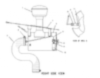 Locked diagram
Parts in this unit
Catalog descriptions with masked part numbers.
| Part number | Description |
|---|---|
| 0a***26 | Fitting; spare part 0a***26 fitting (Caterpillar) |
| 10***24 | Seal; Spare Part 10***24 Seal (Caterpillar) |
| 12***84 | Air Cleaner Group; Spare Part 12***84 Air Cleaner Group (Caterpillar) |
| 1w***13 | Indicator-air filter service; (air filter); spare part 1w***13 indicator-air filter service (Caterpillar) |
| 3b***87 | Coupling; (Pipe); Spare Part 3b***87 Coupling (Caterpillar) |
| 5l***33 | Fitting (to air cleaner); spare part 5l***33 fitting (to air cleaner) (Caterpillar) |
| 5p***48 | Connector-tube-to valve as side ports; spare part 5p***48 connector-tube-to valve as side ports (Caterpillar) |
| 5p***30 | Tube-ether fitting to manifold (8 dm); spare part 5p***30 tube-ether fitting to manifold (8 dm) (Caterpillar) |
| 6i***60 | Air Cleaner Group; Spare Part 6i***60 Air Cleaner Group (Caterpillar) |
| 6i***62 | Hose; Spare Part 6i***62 Hose (Caterpillar) |
| 8h***21 | Precleaner |
| 8t***75 | Clamp; (hose); spare part 8t***75 clamp (Caterpillar) |
D3C III serial number reference
The PIN plate on a D3C III is a metal tag riveted low on the frame in the engine compartment, on the left side near the cab - typical for Cat's small dozer classes up to D4 size. Read the first three characters as the serial prefix, which ties the machine to a production block and drivetrain (direct-drive vs Hystat); the remaining five digits are the sequential unit number within that block, e.g. 6SL00785.
| Prefix | Identifies | Notes |
|---|---|---|
| 6SL | D3C, D3C XL, D3C LGP Series III - direct-drive (powershift) | Direct-drive Series III line, clutch/brake steering, Cat 3046 6-cylinder diesel. Earliest of the direct-drive Series III prefix blocks; units with this prefix trace to 1994. |
| 7XL | D3C Series III - direct-drive (powershift) | Direct-drive Series III, same 3046 engine and clutch/brake steering as 6SL. Production block sequenced after 6SL, mid-to-late 1990s (exact date range not confirmed - confirm with dealer). |
| 9TS | D3C Series III - direct-drive (powershift) | Direct-drive Series III, Cat 3046 engine, clutch/brake steering. Later production block in the direct-drive line, late 1990s (exact date range not confirmed - confirm with dealer). |
| 4KS | D3C, D3C XL, D3C LGP Series III Hystat | Hystat (dual hydrostatic, single-lever joystick) drivetrain - each track runs off its own variable-displacement pump, no steering clutches or brakes. Cat 3046 engine, same as the direct-drive line. |
| 4TS | D3C, D3C XL, D3C LGP Series III Hystat | Hystat drivetrain, single-lever joystick steering, Cat 3046 engine. Grouped with 4KS and 5GS in the same Series III Hystat parts book. |
| 5GS | D3C, D3C XL, D3C LGP Series III Hystat | Hystat drivetrain, single-lever joystick steering, Cat 3046 engine. Listed as an active Series III Hystat build into 1999. |
Frequently asked questions
What engine does the Caterpillar D3C III use?
All D3C III configurations - Standard, XL, and LGP, in both Hystat and powershift drivetrains - use the Cat 3046, a 6-cylinder naturally aspirated diesel of 5.0 L (305 cu in) displacement, rated 78 hp (58 kW) gross and 70-71 hp (52-53 kW) net at 2400 rpm.
What is the operating weight of the D3C III?
Operating weight varies by configuration and drivetrain, from roughly 7,040 kg (15,500 lb) for a Standard clutch/brake machine up to about 7,710 kg (17,000 lb) for an LGP Hystat machine. Hystat-drivetrain machines run somewhat heavier than their powershift counterparts in the same configuration.
What replaced the Caterpillar D3C III?
The D3C III was the last of the D3C-series small dozers. Caterpillar replaced it with the D3G, introduced in 2001 on a different engine platform.
What D3C III owners discuss
What's the practical difference between the Hystat and powershift versions of the D3C III?
What's the most common gripe with the Hystat drive on this dozer?
What do owners say about the clutch/brake steering system on the powershift D3C III?
Is the Cat 3046 engine in the D3C III considered reliable?
What electrical or sensor issues come up on the D3C III?
What undercarriage wear patterns should owners expect?
What should I check before buying a used D3C III?
Compiled from owner and technician discussions across the industry — experiences vary by serial range and machine history.
Need a specific D3C III part?
Search live OEM part data, check fitment, and cross-reference alternatives with Heavy Parts AI.
Post a parts request and compare supplier quotes.