Caterpillar D3B
Specifications · fluids and capacities · maintenance intervals
Post a parts request and compare supplier quotes.
The Caterpillar D3B is a compact track-type tractor (small dozer) built from 1979 to 1987, sitting between the earlier D3 and the later D3C in Caterpillar's small-dozer lineup. It runs a naturally aspirated Cat 3204 four-cylinder diesel rated around 48.5 kW (65 hp) at 2400 rpm, displacing 5.2 L (318 cu in) with direct injection. A low-volume Special Application LGP variant (2PC serial prefix) used a turbocharged 3204 DI rated near 82 DBHP for swamp and soft-ground work. Operating weight runs 6,876-7,637 kg (15,161-16,837 lb) depending on configuration. Two main configurations were offered: Standard, with a 2.44 m (8 ft) S-blade, and LGP (Low Ground Pressure), with a wider 2.8 m (9.2 ft) blade and 635 mm (25 in) track shoes for reduced ground pressure. The D3B followed the D3 and was itself replaced by the D3C starting in 1987.
Steering and drive layout changed across the D3B's production run. Early machines (3YC and 5MC serial prefixes) used a direct-drive transmission with lever-operated steering clutches and brakes. Later machines (23Y, 24Y, 27Y, and 28Y prefixes) switched to a power-shift transmission with pedal-operated differential steering, an easier-to-operate layout closer to Caterpillar's larger dozers of the era. The 3204 engine and general chassis architecture carried through both layouts. In today's used and parts market, the D3B still works as an entry-level dozer for grading, land-clearing, and utility jobs where a compact footprint matters. Its pre-electronic design, no ECM, no diagnostic codes, just gauges and warning lights, keeps it simple to diagnose and field-repair, and it shares major driveline components with the D3 and the 931B track-type loader. Resale and parts values track undercarriage condition and steering clutch/brake wear more than any other factor, since those wear fastest and cost the most to restore.
Below: full specifications, fluids & capacities, the factory service schedule, common service parts, verified fault codes, what owners discuss, attachment guidance, the complete assembly directory, and a serial-number reference. Complete parts lists with full OEM part numbers, exploded diagrams, quantities, and fitment data are available free in Heavy Parts AI.
Caterpillar D3B specifications
Engine
| Engine model | Cat 3204, 4-cylinder inline diesel, direct injection, naturally aspirated |
| Displacement | 5.2 L (317-318 cu in) |
| Bore x stroke | 114 mm x 127 mm (4.50 in x 5.00 in) |
| Net power | 48.5 kW (65 hp) @ 2400 rpm; the LGP configuration is documented at 48 kW (64.4 hp) gross in some references — treat as the same base engine, minor rating-basis variance. |
| Emissions | Pre-emissions-regulation era engine (produced 1979-1987); no EPA/EU tier rating documented |
| Electrical system | 12V, approx. 40A alternator |
Weights
| Operating weight, Standard | approx. 6,876 kg (15,161 lb) with blade, ROPS cab |
| Operating weight, LGP | approx. 7,636 kg (16,837 lb) with blade, wide track |
| Weight note | Bare/base tractor weight (without blade or with minimal equipment) runs lower, near 5,125 kg (11,300 lb) per configuration. An outlier operating weight near 20,640 lb (9,362 kg) for Standard also appears in circulation but does not match the convergence around 15,161 lb — treat it as a likely data error. |
Dimensions
| Length with blade, Standard | 3.69 m (12 ft 1 in) |
| Length without blade, Standard | 2.77 m (9 ft 1 in) |
| Length with blade, LGP | 4.02 m (13 ft 2 in) |
| Length without blade, LGP | 2.98 m (9 ft 9 in) |
| Width over tracks, Standard | 1.78-1.80 m (5 ft 10 in - 5 ft 11 in) |
| Width over tracks, LGP | 2.29-2.32 m (7 ft 6 in - 7 ft 7 in) |
| Height to top of cab | 2.67-2.68 m (8 ft 9 in - 8 ft 10 in), both configurations |
| Ground clearance, Standard | 0.31 m (1 ft) |
| Ground clearance, LGP | 0.29-0.30 m (0.96-1.0 ft) |
| Track gauge, Standard | 1.42 m (4 ft 8 in) |
| Track gauge, LGP | 1.68 m (5 ft 6 in) |
| Track shoe width, Standard | 305 mm (12 in) |
| Track shoe width, LGP | 635 mm (25 in) |
| Length of track on ground, Standard | 1.83 m (6 ft) |
| Length of track on ground, LGP | 2.06 m (6 ft 9 in) |
Performance
| Travel speed forward, Standard | 10.6-10.9 km/h (6.6-6.8 mph), 3-speed planetary powershift |
| Travel speed reverse, Standard | 11.4-11.5 km/h (7.1 mph) |
| Travel speed forward, LGP | 10.1 km/h (6.3 mph) |
| Travel speed reverse, LGP | 10.8 km/h (6.7 mph) |
| Transmission | Planetary powershift, 3 forward / 3 reverse gears, both configurations |
| Ground pressure, Standard | approx. 6.3 psi (43 kPa) on 12 in shoes |
| Ground pressure, LGP | approx. 4.2-4.3 psi (29-30 kPa) on 25 in shoes |
| Ground contact area, Standard | approx. 1.11 sq m (1,720 sq in) |
| Ground contact area, LGP | approx. 2.61 sq m (4,046 sq in) |
| Drawbar pull | Not published in available specification sheets for this model class — consult the factory Specalog or your dealer for pull-chart data. |
| Gradeability | Not documented in available specification sources |
Blades
| Standard (S) blade width | 2.44 m (8 ft), Standard undercarriage configuration |
| Standard (S) blade height | 0.84 m (33.1 in) |
| Standard (S) blade capacity | 1.3 cu m (1.7 cu yd) |
| Standard (S) blade angle | 25 degrees, both directions |
| Standard (S) blade max cutting depth | 374 mm (14.7 in) |
| LGP blade width | 2.80-2.84 m (9.2 ft), wide blade matched to LGP undercarriage |
| Blade note | Factory brochures reference an LGP-S (low ground pressure, S-blade) variant alongside plain LGP. Angle and universal blade options are offered across the wider D3-family line, but exact D3B-specific dimensions for those blade types are not documented — verify with your dealer. |
Service Capacities
| Fuel tank | 114 L (30.2 US gal) |
| Cooling system | 20 L (5.3 US gal) |
| Engine oil (with filter) | 12 L (3.2 US gal) |
| Hydraulic system, Standard | 70 L (18.5 US gal) |
| Hydraulic system, LGP | 84 L (22.2 US gal), higher than the Standard-configuration figure — verify against dealer literature for the exact configuration. |
| Final drives (each side) | approx. 8 L (2.1-2.2 US gal) |
| Hydraulic relief pressure | 17,237 kPa (2,500 psi) |
| Hydraulic pump flow | 55 L/min (14.5-14.6 US gpm) |
Values vary by configuration, region, and serial range — confirm against your machine before planning transport or lifts.
D3B fluids & capacities
| System | Capacity | Recommended fluid |
|---|---|---|
| Engine crankcase (with filter) | approx. 12 L (3.2 US gal / 2.7 Imp gal) engine oil and filter refill | Cat DEO (Diesel Engine Oil), API CD-level diesel engine oil. SAE 30 single-grade for ambient 20 to 120°F (-7 to 49°C); use a lighter grade (10W or 10W-30) below 20°F (-7°C). |
| Cooling system | approx. 20 L (5.3 US gal / 4.4 Imp gal) | Ethylene-glycol heavy-duty antifreeze/coolant with a cooling-system corrosion inhibitor (supplemental coolant additive), mixed to the ratio suited to the expected ambient temperature. |
| Fuel tank | approx. 114 L (30.2 US gal / 25.1 Imp gal) | No. 2-D diesel fuel; switch to No. 1-D diesel fuel in cold weather for easier starting and to reduce fuel waxing. |
| Powershift transmission | reported as approx. 19 L (5 US gal) or 26.5 L (7 US gal), depending on transmission build/production run - varies by configuration; confirm against the specific machine's transmission before filling | Cat TDTO (Transmission/Drive Train Oil), TO-4 spec. SAE 30 single-grade is the typical viscosity called out for this era of powershift transmission. |
| Bevel gear / steering clutch compartment | approx. 15 L (4 US gal) | Cat TDTO, TO-4 spec, SAE 30. Some period references note CD-spec diesel engine oil was historically an acceptable fill here as well. |
| Final drives (each side) | approx. 8 L (2.2 US gal); confirm whether this is per side or a combined figure against the OMM for your serial range. | Cat TDTO, TO-4 spec, SAE 30. |
| Hydraulic system/tank | approx. 70 L (18.5 US gal) total system fill; system runs around 17 200 kPa (2500 psi) with pump flow near 55 L/min (14.5 US gpm) | Cat HYDO preferred for ambient -20 to 40°C (-4 to 104°F). If HYDO is not on hand, Cat diesel engine oil, Cat TDTO, or Cat Multipurpose Tractor Oil (MTO) are accepted alternatives. |
| Pivot shaft | not called out as a separately serviced fill point for this model. | not separately documented — check the OMM lubrication chart for this serial range before servicing. |
| Grease (track rollers, idlers, pins/bushings, blade and linkage pivots) | applied fitting by fitting on the lubrication interval; no bulk reservoir | |
| Grease (track rollers, idlers, pins/bushings, blade and linkage pivots) - recommended fluid | n/a | Cat Multipurpose Grease, NLGI 2, general service range approx -30 to 40°C (-22 to 104°F). A softer NLGI 1 or 0 grease may be called for in extreme cold per dealer guidance. |
Capacities are refill values from factory literature — always fill to the dipstick/sight gauge, not the number.
Caterpillar D3B maintenance schedule
| Service interval | Tasks |
|---|---|
| Every 10 h |
|
| Every 250 h |
|
| Every 500 h |
|
| Every 1,000 h |
|
| Every 2,000 h |
|
| Every 4,000 h |
|
| Every 6,000 h |
|
Servicing the D3B beyond the schedule
Predictive Maintenance & Fluid Analysis
Because the 3204 block has no separate cylinder liners, bore wear shows up directly in oil-sample wear-metal counts, making regular engine oil analysis the earliest warning of an approaching rebuild. Pull fuel, hydraulic, and power-train oil samples on the same interval and watch for water or fuel dilution, a common sign of a clogged fuel transfer pump screen. Track wear-gauge readings on rollers, idlers, and sprockets over time to predict undercarriage replacement before a shoe or bushing fails in the field.
Corrective & Common Repairs
The most common D3B complaint is hard starting or power loss traced to a clogged fuel transfer pump screen; clean or replace it before chasing injectors. Steering clutch and brake band adjustment doubles as service-brake adjustment on this machine, so slipping, dragging, or long pedal travel is a safety issue, not just a steering complaint. Blade drift or slow lift usually traces to a worn main relief valve, control valve spool, or tired lift-cylinder seals. Charging and starting issues are usually alternator, regulator, or battery-cable faults on this pre-electronic circuit.
Overhaul & Rebuild Points
Undercarriage condition drives D3B resale value most; budget for roller, idler, sprocket, and bushing replacement once wear-gauge limits are reached. Because the 3204 has no separate liners, a worn block generally means a full inframe rebuild or block replacement rather than a simple sleeve-and-ring job. Steering clutch and brake bands wear together and should be relined as a set, since a weak band is both a steering fault and a brake fault. Power-shift units (23Y/24Y/27Y/28Y) need clutch-pack overhaul at high hours; direct-drive units (3YC/5MC) need bevel-gear steering-clutch service.
Seasonal & Environment Servicing
The naturally aspirated 3204 has no turbo boost for cold starts; cold weather work needs glow-plug or ether aids and a coolant mix rated for the lowest expected temperature. LGP models with wide 635 mm (25 in) shoes suit soft, wet, or swampy ground and clean mud from shoe webs after wet-season work; standard-shoe machines handle firmer ground better but sink in mud. In dusty summer conditions, shorten air-cleaner intervals and check the radiator core often; a partly blocked core raises operating temperature on an already modest cooling system.
D3B common service parts
| Part number | Part | Notes | |
|---|---|---|---|
| 9L-9200 | Filter As-Oil | Lubrication service | Check fitment → |
| 6V-2219 | Kit-Gasket | Scheduled service item | Check fitment → |
Always confirm against your machine's serial number — cross-check any part in Heavy Parts AI before ordering.
D3B fault codes & troubleshooting
| Code | Meaning | Likely cause | What to do |
|---|---|---|---|
| Engine oil pressure gauge – low or zero reading | Dash gauge shows insufficient lubrication pressure; this is an analog gauge reading, not a stored diagnostic code | Low oil level, worn oil pump, clogged filter, or diesel fuel diluting the crankcase oil from a leaking injection pump or worn injector seals | Stop the engine immediately, check oil level and check for a fuel smell in the oil, inspect the oil pump and filter before restarting |
| Coolant temperature gauge – high / red zone reading | Dash gauge shows engine running above normal operating range | Low coolant level, blocked radiator core or fins, loose or worn fan belt, worn water pump | Reduce load and idle down, check coolant level and belt tension once safe to do so, clean radiator fins, inspect water pump for leakage or play |
| Charging indicator / ammeter – discharge reading | Gauge or indicator light shows the charging system is not maintaining battery voltage | Loose or worn alternator belt, failed regulator, worn alternator brushes, corroded battery cable or ground connections | Check belt tension and wiring, clean and tighten battery terminals, bench test the alternator if the condition persists |
| Fuel level gauge – low / empty reading | Dash gauge shows low fuel in the tank | Normal consumption, or a fuel leak at lines, tank, or injection pump | Refuel and bleed the fuel system if it ran dry; inspect lines, tank, and pump for leaks if consumption seems abnormal |
| No display code — hard start or slow crank after standing idle | Not an electronic fault; this machine has no fault-code display. Engine cranks slowly or fails to fire after sitting, typical of a mechanically governed, naturally aspirated engine | Sticking or carbon-fouled decompression mechanism, weak batteries or slow cranking speed, gelled or contaminated fuel, worn injectors | Exercise the decompression lever/valve before cranking, check battery condition and cranking speed, bleed the fuel system, check injector condition if hard starting continues |
| No display code — crankcase oil smells of fuel or oil level rises | Not an electronic fault; found by checking the dipstick, not by any panel indicator. Diesel fuel is entering and diluting the engine oil | Worn injection pump seals or worn injector seals allowing fuel to bypass into the crankcase | Check oil level and smell at every interval, pressure test and inspect the injection pump and injector seals, change oil and filter after repair |
Codes and remedies are general guidance for this model family — always confirm with diagnostic tooling and your dealer before major repairs.
D3B attachments & work tools
Blades
Standard dozer blade on the D3B is a straight (S-type) unit, 2.44 m (8 ft) wide, 84 cm (33.1 in) tall, about 1.3 cu m (1.7 cu yd) capacity, angling +/-25 degrees either side. LGP-fitted units carry a wider blade, roughly 2.8 m (9.2 ft), paired with 64 cm (25 in) shoes for lower ground pressure versus the standard 30 cm (12 in) shoe. Lift, tilt and angle cylinders were offered for a PAT-style 6-way blade; a true VPAT blade is not part of the D3B lineup, that feature belongs to Cat's larger dozer classes.
Rippers
Ripper options split into single-shank and multi-shank (parallelogram) styles, shared across the small-class family that includes the D3B, D3C, D4B/D4C and D5C. Single-shank units run one heavy shank/tip for hard ground, frozen soil, soft rock and root pulling; multi-shank parallelogram rippers carry several shank pockets on a hinge-style beam with a lift cylinder plus a separate tilt cylinder, better suited to loosening thinner or frozen ground over a wider pass. Either style needs an auxiliary hydraulic valve added to the base circuit, and fitting a ripper adds meaningful weight to the rear of the tractor, figure varies by configuration.
Winches
The D3B sits in the same small-dozer winch-fitment class as the D1-D3 range and the later D3K2-D5K2 machines, served by one shared cable-type towing winch line rather than a unit built specifically for this model. No line-pull or cable-capacity figures specific to the D3B are documented in available specification sources; confirm winch model and rating against the tractor's serial number with the winch supplier or dealer. The winch mounts at the rear, in place of or alongside the drawbar/counterweight group.
Drawbars/Counterweights
A rear drawbar group and a separate counterweight group are catalogued as fitment options, used for towing/implement work and to balance the tractor when a rear ripper or other heavy rear tool is fitted. Counterweight addition runs in the low hundreds of kilograms; treat the exact figure as varying by configuration and confirm against the specific parts listing for the unit in hand.
Cab/ROPS guarding (forestry/waste)
No factory 'Waste Handler' spec package is documented for the D3B; that designation belongs to Cat's larger D6-D9-class dozers. Forestry-duty D3B units of this era typically ran a ROPS/FOPS-certified cab with rear screen and belly/sweep guarding fitted through dealer or aftermarket kits rather than a catalogued factory forestry option; confirm availability for a specific serial range with your dealer.
Hydraulic arrangement (front/rear tools)
Base hydraulic system runs about 17 200 kPa (2500 psi) relief pressure with roughly 55 L/min (14.6 gpm) pump flow and about 70 L (18.5 gal) system capacity, driving blade lift/tilt/angle as standard equipment. A rear-mounted tool such as a ripper or winch needs an added auxiliary control valve tapped into this circuit, with front and rear attachment lines run as separate groups so the blade and a rear tool can be worked independently. No extra valve bank is standard; the auxiliary valve and lines are add-on equipment.
Part Book
Browse by group, subgroup and unit. Part numbers are masked and diagram thumbnails are locked.
4n0307 Air Cleaner Group 4n7914 air cleaner parts are shown on page 25
4n0307 Air Cleaner Group 4n7914 air cleaner parts are shown on page 25 is listed in the Air inlet and exhaust system / air cleaner group catalog section.
- Group
- Air Inlet and Exhaust System
- Subgroup
- Air Cleaner Group
- Unit
- 4n0307 Air Cleaner Group 4n7914 air cleaner parts are shown on page 25
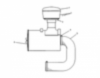 Locked diagram
Parts in this unit
Catalog descriptions with masked part numbers.
| Part number | Description |
|---|---|
| 4n***07 | Air Cleaner Group; Spare Part 4n***07 Air Cleaner Group (Caterpillar) |
D3B serial number reference
The D3B PIN/serial plate is a stamped metal plate riveted to the main frame, commonly near the operator's station or ROPS mount, with the PIN also stamped directly into the frame steel as a backup. Read the first three characters as the prefix, which identifies the build series - direct-drive vs power-shift powertrain and Std vs LGP undercarriage - and the digits that follow as the sequential unit number built under that prefix.
| Prefix | Identifies | Notes |
|---|---|---|
| 3YC | D3B Std/LGP, Direct Drive | Direct-drive powertrain with lever-operated steering clutches and brakes (dry or wet clutch pack depending on production era), not pedal steer. 5-speed forward/4-speed reverse gearbox. Naturally aspirated Cat 3204 diesel rated around 48 kW (65 hp) flywheel. Low-volume direct-drive build series, roughly a few hundred units total. |
| 5MC | D3B Std/LGP, Direct Drive | Same direct-drive 5F/4R lever/clutch-and-brake steering layout as the 3YC series, naturally aspirated 3204 diesel around 48 kW (65 hp) flywheel. Also a low-volume build series, roughly a few hundred units total. |
| 23Y | D3B Std, Power Shift | Power-shift transmission with pedal-actuated steering - each pedal engages a clutch and brake on that side, not a true differential steering unit and not the direct-drive lever layout. Naturally aspirated 3204 diesel, rated in roughly the 48-56 kW (65-75 hp) flywheel range depending on production year. Standard-gauge undercarriage. |
| 24Y | D3B LGP, Power Shift | Low ground pressure (wide-track) undercarriage version of the power-shift D3B. Pedal steer, 3-forward/1-reverse gear set on this range. Naturally aspirated 3204 diesel. |
| 27Y | D3B Std, Power Shift | Standard-gauge power-shift D3B with pedal steer, primarily a 3-forward/3-reverse gear set. A 3-forward/1-reverse gear set is also reported for this range in some records - confirm exact gearing with your dealer. Naturally aspirated 3204 diesel, roughly 48-56 kW (65-75 hp) flywheel depending on year. |
| 28Y | D3B Std/LGP, Power Shift | Later power-shift prefix. Records tie this range to both standard-gauge and LGP wide-track builds, but the exact split point between the two within the run is not consistently documented - confirm undercarriage and serial break with your dealer. Pedal steer, naturally aspirated 3204 diesel. |
| 2PC | D3B LGP SA (Special Application), Direct Drive | Special Application LGP variant with the turbocharged direct-injection 3204, notably more power than the naturally aspirated Std/LGP series - roughly 61 kW (82 hp) drawbar and 75 kW (101 hp) flywheel. 5-speed forward/4-speed reverse direct-drive gearing. Low-volume run built later in the D3B's life, mid-to-late 1980s. Confirm exact rating and build-date window with your dealer. |
Frequently asked questions
What engine does the Caterpillar D3B use?
A naturally aspirated Cat 3204 four-cylinder diesel rated about 48.5 kW (65 hp) at 2400 rpm, displacing 5.2 L (318 cu in) with direct injection. A low-volume Special Application LGP variant (2PC serial prefix) used a turbocharged 3204 DI rated near 82 DBHP.
What is the operating weight of a Cat D3B?
It depends on configuration. Standard configuration with the 2.44 m (8 ft) blade runs about 6,876 kg (15,161 lb). LGP configuration with wider shoes and the 2.8 m (9.2 ft) blade runs about 7,637 kg (16,837 lb).
What replaced the Caterpillar D3B?
The D3C succeeded the D3B starting in 1987, followed later by the D3C II, D3C III, D3G, and D3K-generation small dozers. The D3B itself had replaced the earlier D3 in Caterpillar's small track-type tractor line.
What D3B owners discuss
What powertrain quirks do D3B owners report during extended operation?
What are the known quirks of the D3B's engine?
What undercarriage wear pattern is typical on a D3B?
How do the steering clutches and brakes behave, and what fails?
What hydraulic behavior shows up on these dozers?
What electrical issues come up, given this machine predates modern engine sensors?
What should a buyer check on a used D3B?
Compiled from owner and technician discussions across the industry — experiences vary by serial range and machine history.
Need a specific D3B part?
Search live OEM part data, check fitment, and cross-reference alternatives with Heavy Parts AI.
Post a parts request and compare supplier quotes.