Caterpillar C6
Specifications · fluids and capacities · maintenance intervals
Post a parts request and compare supplier quotes.
This listing carries Caterpillar's C6 designation under the engine - machine category. No independently published Caterpillar literature documents a standalone C6 product separate from the C6.4, C6.6, and C6.7 engines, which are the confirmed members of Cat's roughly 6-liter, inline-6, electronically controlled diesel family used across construction, industrial, and generator-set applications. The parts structure attached to this job spans undercarriage, hydraulic system, work tools, operator station, and power train sections, suggesting this entry represents a specific machine or engine build within that mid-range family rather than a distinct model line of its own. Exact class, weight range, production years, and factory configurations for this precise designation are not independently confirmed. Treat any figures associated with this code as characteristic of the broader 6-liter Cat C-series rather than verified for this exact model, and confirm the exact identity from the engine or machine serial and rating plate.
Across the C6.4/C6.6/C6.7 family, Caterpillar's mid-range diesels moved through Tier 3/Stage IIIA, Tier 4 Interim/Stage IIIB, and Tier 4 Final/Stage V emissions calibrations, each step changing the fuel system, aftertreatment, and electronic controls tied to a given serial range. Because this exact C6 code is not independently documented, buyers and parts counters should not assume it shares a single generation's fuel system or displacement; the safe approach is to pull the engine or machine serial number and confirm the build against Caterpillar's own parts lookup before ordering parts or budgeting an overhaul. Machines and engines in this class remain common in the used and parts market because Cat's mid-range C-series has been fitted across a wide range of construction and industrial equipment for two decades, keeping demand steady for filters, injectors, turbochargers, and undercarriage wear parts even where the exact model designation is ambiguous.
Below: full specifications, fluids & capacities, the factory service schedule, common service parts, verified fault codes, what owners discuss, attachment guidance, the complete assembly directory, and a serial-number reference. Complete parts lists with full OEM part numbers, exploded diagrams, quantities, and fitment data are available free in Heavy Parts AI.
Caterpillar C6 specifications
Engine
| Configuration | Caterpillar C-series diesel. Naming places it in the roughly 6-liter, inline-6 class alongside the C6.4 and C6.6, but this exact engine code is a separate catalog entry from both — do not assume its bore, stroke, or displacement match either sibling. |
| Gross/net power | Not documented for this exact engine code in available spec-sheet sources. Rated power on Cat's 6-liter-class C-series engines spans roughly 90-205 bkW (120-275 bhp) depending on model and governed speed, but no source ties a specific rating to this engine code — confirm from the engine rating/serial plate. |
| Displacement / cylinders | Not independently published for this engine code. Confirm the exact displacement (6.4 L vs 6.6 L vs other) from the engine serial number and dealer parts lookup rather than assuming it from the model name. |
| Emissions tier | Not documented for this engine code. Emissions tier on Cat 6-liter-class engines has spanned Tier 3/Stage IIIA through Tier 4 Final/Stage V depending on build year — confirm from the engine emissions label. |
Weights
| Engine dry/net weight | Not published for this specific engine code. Confirm from the engine build spec or serial-plate lookup; do not carry over a sibling C-series engine's published weight. |
| Operating weight (host machine) | Not applicable at the engine level — operating weight depends on the machine this engine is installed in. Refer to that machine's own spec sheet. |
Dimensions
| Engine block length/width/height | Not documented for this exact engine code in available sources. Physical envelope on Cat 6-liter-class engines is broadly similar across the family but figures are not confirmed for this specific code — verify against the engine's installation drawing. |
Performance
| Rated/governed engine speed | Not documented for this exact engine code. Governed speed and torque curve vary by application (industrial, generator set, or machine installation) — confirm from the engine's own rating plate. |
| Machine-level performance (travel speed, drawbar, etc.) | Not applicable at the engine level — these figures belong to the host machine, not the engine, and are not covered by this engine parts catalog. |
Service capacities (summary)
| Fuel, cooling, and lubrication system capacities | Not documented for this exact engine code. Refer to the engine's Operation and Maintenance Manual for the correct serial-number range before servicing. |
Values vary by configuration, region, and serial range — confirm against your machine before planning transport or lifts.
C6 fluids & capacities
| System | Capacity | Recommended fluid |
|---|---|---|
| Engine Crankcase (with filter) | Not documented for the Caterpillar C6 designation specifically. No verifiable Caterpillar publication lists a refill capacity under this exact model code — confirm with your Cat dealer or this machine's own OMM. | Cat DEO-ULS or Cat DEO diesel engine oil. Cat's standard convention grades viscosity by ambient air temperature at start-up: lighter multigrade oils (0W-40 / 5W-40) for cold climates, mid-range (10W-30) for moderate climates, heavier (15W-40) for hot climates, per the OMM's temperature-selection chart. |
| Cooling System | Not documented for the Caterpillar C6 designation. Capacity is radiator/heat-exchanger dependent and isn't published under this exact model code — confirm with your dealer or OMM. | Cat ELC (Extended Life Coolant) preferred, or Cat DEAC (Diesel Engine Antifreeze/Coolant) as an alternative, mixed per the OMM's concentration chart. Do not run on plain water — no corrosion inhibition or freeze/boil protection. |
| Fuel Tank | Not documented for the Caterpillar C6 designation. Tank size is chassis/installation dependent and not published under this exact model code. | Diesel fuel meeting Caterpillar's distillate fuel specification (No. 1-D or No. 2-D, or EN 590 equivalent). Biodiesel blends may be accepted per the OMM depending on region and blend limit — check before fueling. |
| Hydraulic System and Tank | Not documented for the Caterpillar C6 designation. This job's own parts index lists a Hydraulic System section, but no system or tank capacity is published under this exact model code. | Cat HYDO Advanced (single- or multi-grade) is Cat's standard hydraulic fluid; Cat BIO HYDO Advanced where a biodegradable fluid is specified. Grade is selected by ambient temperature per the OMM's chart — lighter grades for cold climates, heavier for hot climates. |
| Final Drive / Travel Drive (each) | Not documented for the Caterpillar C6 designation. This job's Undercarriage section lists a travel-motor guard grouping, consistent with a travel/final-drive compartment, but no per-side capacity is published under this exact model code. | Cat TDTO (Transmission/Drive Train Oil) gear-oil family, graded by ambient temperature per the OMM's chart. |
| Swing Drive | Not documented for the Caterpillar C6 designation. This job's Undercarriage section lists a swing gear-and-bearing grouping, consistent with a swing-drive compartment, but no capacity is published under this exact model code. | Cat TDTO gear oil, same viscosity-by-climate selection as the final drives. |
| Grease (all external lubrication points) | Applied per fitting per the OMM's lubrication schedule — no bulk reservoir capacity applies. | Cat multipurpose grease, NLGI Grade 2 for general service; lighter NLGI grades (1 or 0) for cold-climate service per Cat's standard grease-selection guidance. |
Capacities are refill values from factory literature — always fill to the dipstick/sight gauge, not the number.
Caterpillar C6 maintenance schedule
| Service interval | Tasks |
|---|---|
| Every 50 h |
|
| Every 250 h |
|
| Every 500 h |
|
| Every 1,000 h |
|
| Every 2,000 h |
|
| Every 6,000 h |
|
Servicing the C6 beyond the schedule
Predictive Maintenance & Fluid Analysis
This engine code has no published spec sheet, so predictive maintenance relies on trend data, not catalog numbers. Sample engine oil, hydraulic oil, coolant, and fuel at every scheduled interval and track results over time. Rising iron, silicon, or fuel dilution signals injector, turbocharger, or piston-ring wear before it causes a failure. Check coolant for cavitation byproducts and inhibitor depletion. Since OEM limits for this exact code are not published, compare lab results against Cat's mid-range 6-liter C-series baseline and confirm reference values with a dealer using the serial plate.
Corrective & Common Repairs
Typical wear points on Cat's 6-liter-class diesels are fuel injectors, turbocharger shaft seals, and charge-air piping; watch for hard starting, smoke, or boost leaks as early warnings. On the machine side, hydraulic cylinder seals, final-drive seals, and undercarriage bushings and pins wear fastest under continuous duty. This exact C6 designation has no confirmed parts catalog published online, so verify fitment against the engine and machine serial number through a Cat dealer before ordering injectors, filters, or undercarriage parts. Do not assume cross-fit with C6.4 or C6.6 components.
Overhaul & Rebuild Points
Schedule a top-end inspection once oil analysis or falling compression points to piston, ring, or valve-train wear, typical for mid-range Cat diesels in the multi-thousand-hour range, though this code's exact interval is not published. Replace the turbocharger, injectors, and water pump as a set, not piecemeal. On the machine side, inspect final drives, travel or swing motors, and hydraulic pumps for internal wear before a rebuild. Undercarriage rollers, idlers, sprockets, and track wear on a similar cycle. Confirm rebuild kits against the serial plate, not the model name.
Seasonal & Environment Servicing
Cold climates need a block heater or ether-assist start aid, correct-viscosity oil, and a coolant mix rated for the expected low temperature; confirm against the engine's own cooling-system spec, not a generic figure. Hot, dusty sites need more frequent air filter and radiator or charge-air-cooler cleaning to prevent overheating and turbocharger wear. Wet or muddy sites accelerate undercarriage and pivot-pin wear, so shorten grease intervals. Since capacities for this designation are not independently confirmed, pull correct fluid grades and quantities from the engine's OMM for the applicable serial range.
C6 common service parts
| Part number | Part | Notes | |
|---|---|---|---|
| 1R-0751 | Filter-Fuel | Fuel system service | Check fitment → |
| 220-8678 | Seal-Ring | Fuel system service | Check fitment → |
| 326-1644 | Filter As-Water Sep & Fuel | Fuel system service | Check fitment → |
| 131-8821 | Filter Element As-Air | Air intake service | Check fitment → |
| 128-2686 | Filter Element As-Air | Air intake service | Check fitment → |
Always confirm against your machine's serial number — cross-check any part in Heavy Parts AI before ordering.
C6 fault codes & troubleshooting
| Code | Meaning | Likely cause | What to do |
|---|---|---|---|
| CID 100 – FMI 01/04 | Engine oil pressure below the expected value for current rpm | Low oil level, worn oil pump, restricted suction screen, or failed oil pressure sensor/wiring | Stop engine immediately, check oil level and condition; if level is correct, verify sensor circuit before restarting |
| CID 110 – FMI 00 | Engine coolant temperature above normal operating range | Low coolant level, blocked radiator core, failed thermostat, or fan drive fault | Reduce load, check coolant level and radiator airflow, verify thermostat operation |
| CID 190 – FMI 00 | Engine overspeed condition detected | Sudden load loss (e.g. on a down-grade) or a governor/fuel injection control fault | Ease off throttle immediately; inspect governor and injection control if the event recurs |
| Injector circuit – FMI 07 | Fuel injector not responding correctly to the commanded signal | Injector wiring fault, worn injector, or ECM unable to complete injector trim/verification (often tied to engine not yet at normal operating temperature) | Run the fuel system verification routine with a Cat ET-class tool once the engine is at normal operating temperature |
| CID 168 – FMI 03/04 | Battery or system voltage above or below normal | Failing alternator, loose or corroded battery connections, or wiring fault | Check charging system output and battery connections |
| CID 94 – FMI 03/04 | Fuel delivery pressure sensor circuit reading out of range | Corroded sensor connector, damaged wiring, or failed pressure sensor | Inspect sensor wiring and connector; replace sensor if circuit test fails |
| CID 172 – FMI 03/04 | Intake air temperature sensor signal out of expected range | Open or shorted sensor circuit, or corroded connector | Check sensor wiring and connector; replace sensor if faulty |
Codes and remedies are general guidance for this model family — always confirm with diagnostic tooling and your dealer before major repairs.
C6 attachments & work tools
Buckets
General-purpose, heavy-duty, heavy-duty power, heavy-duty rock, and ditch-cleaning buckets are offered for this class. Capacity runs roughly 0.6-2.1 m3 (0.8-2.7 yd3) depending on width and duty rating, and the exact range varies by configuration/series.
Coupler and bucket-linkage system
Buckets pin on directly or mount through a hydraulic quick coupler. Two linkage sizes are used across this weight class: a lighter linkage running roughly 80 mm pins for standard-duty buckets, and a heavier linkage running roughly 90 mm pins for higher-capacity or rock buckets. Confirm linkage size before fitting any bucket or coupler.
Ground engaging tools
Bucket teeth use a two-piece tip-and-adapter system in adjacent size classes for this machine range, with tip styles including general-purpose, penetration, penetration-plus, sharp, twin-sharp, and double-spike (ripper) tips. Bolt-on side cutters and side-bar protectors are also offered for abrasive digging.
Hydraulic hammer and auxiliary tool circuit
A factory auxiliary hydraulic option is offered in a single-action, one-way high-pressure circuit for a hammer/breaker, or a combined-function circuit that switches between one-way and two-way flow for thumbs, grapples, and compactors. This is a plumbed factory or dealer-installed kit, not a simple field splice, and pump/valve arrangement varies by configuration/series.
Boom and stick options
A standard one-piece boom, a heavy-duty boom, and a boom pre-wired for grade-control sensors are offered. Stick length options include standard, heavy-duty, and a reach/mass-excavation stick; the stick and boom combination changes working range and the rated lift capacity available for a given work tool.
Grade control
A factory or dealer-fit grade-control system (2D/3D) ties into the sensor-ready boom option, using GPS, sonic, laser, or cross-slope inputs displayed in the cab. It requires the grade-control boom and wiring option, not just a bolt-on sensor kit.
Heavy-duty guarding package
A bolt-on protection package is available for rock and demolition duty, covering the underside/belly, swing-bearing (swivel) area, and full-length track guards, plus reinforced fenders. These are typically ordered together as a guarding package rather than as separate items.
Part Book
Browse by group, subgroup and unit. Part numbers are masked and diagram thumbnails are locked.
109-9313 Air Cleaner & Mounting Group s/n a6f1-582; a8f1-842 Part of 272-4742 Installation ar-engine
109-9313 Air Cleaner & Mounting Group s/n a6f1-582; a8f1-842 Part of 272-4742 Installation ar-engine is listed in the Air inlet and exhaust system / air cleaner & mounting group catalog section.
- Group
- Air Inlet and Exhaust System
- Subgroup
- Air cleaner & mounting group
- Unit
- 109-9313 Air Cleaner & Mounting Group s/n a6f1-582; a8f1-842 Part of 272-4742 Installation ar-engine
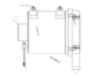 Locked diagram
Parts in this unit
Catalog descriptions with masked part numbers.
| Part number | Description |
|---|---|
| 10***13 | Air cleaner & mounting group; spare part 10***13 air cleaner & mounting group (caterpillar) |
| 12***11 | Air Cleaner Group; Spare Part 12***11 Air Cleaner Group (Caterpillar) |
| 8t***21 | Washer-Hard; (11x21x2.5-mm thk)(m10x1.50x30mm); Spare Part 8t***21 Washer-Hard (Caterpillar) |
| 8t***37 | Bolt (m10x1.50x20mm); Spare Part 8t***37 Bolt (m10x1.50x20mm) (Caterpillar) |
Frequently asked questions
What engine powers the Caterpillar C6?
No independently documented Caterpillar C6 engine exists separate from the C6.4, C6.6, and C6.7 models. Caterpillar's confirmed mid-range 6-liter-class C-series engines carry those decimal-point designations, and this exact C6 code is not tied to a published bore, stroke, or displacement in Cat literature. Confirm the exact engine model from the engine serial or rating plate, or through a Cat dealer parts lookup, rather than assuming it matches a sibling engine.
What is the operating weight of the Caterpillar C6?
Operating weight for this exact designation is not independently published. The parts structure tied to this job includes undercarriage, hydraulic, and work-tool sections consistent with a mid-size machine, but no verified weight figure ties specifically to the C6 code. Check the machine's own nameplate or a Cat dealer spec lookup for the confirmed weight of the exact unit in question.
What replaced the Caterpillar C6?
No documented predecessor or successor lineage exists for this specific model code. Caterpillar's published mid-range C-series lineup runs through C6.4, C6.6, and C6.7, but no source ties a bare C6 designation into that succession chain. If this unit is in fact one of those models under a shortened name, a Cat dealer can confirm which one from the engine or machine serial number.
What C6 owners discuss
Owners and mechanics talk about specific complaints for the "C6" engine online. Is that discussion out there?
What do techs generally say about ACERT-era Cat diesel electrical and sensor issues?
Is oil and coolant sampling worth doing on an older Cat diesel machine like this?
What undercarriage wear patterns do owners commonly flag on machines in this class?
What hydraulic system quirks come up repeatedly for Cat machines of this general type?
Are there known engine quirks tied to a specific series that owners mention?
What should a buyer check before purchasing a used machine like this?
Compiled from owner and technician discussions across the industry — experiences vary by serial range and machine history.
Need a specific C6 part?
Search live OEM part data, check fitment, and cross-reference alternatives with Heavy Parts AI.
Post a parts request and compare supplier quotes.