Caterpillar 988B
Specifications · fluids and capacities · maintenance intervals
Post a parts request and compare supplier quotes.
The Caterpillar 988B is a large articulated-frame, engine-front wheel loader built for quarry, mining, and heavy construction loading duty. It runs Caterpillar's 3408 V-8 diesel with mechanical fuel injection, rated 280 kW (375 hp) gross in standard civilian trim, driving a torque-converter powershift transmission and outboard planetary final drives. Operating weight runs approximately 43,300-43,400 kg (95,500-95,600 lb) in base configuration, more with counterweights or a heavier bucket fitted. Cat built the 988B from 1978 into the early 1990s, following the original 988 and preceding the 988F. Standard civilian machines carry a 50W-prefix serial number; a specialized military variant with a 62Y-prefix serial, the RTCH rough-terrain container handler, replaced the loader arms and bucket with a forklift mast and used a turbocharged tune of the same 3408 rated near 293 kW (393 hp) for stacking ISO shipping containers.
The 988B was a mid-life update of the original 988, keeping the same 3408 V-8 and torque-converter driveline but adding more engine power, a wider bucket lineup for general-purpose, rock, and coal work, and cab and visibility improvements. It stayed fully mechanical throughout its production run, with no onboard electronics or fault codes, so all condition monitoring depends on gauges, visual checks, and oil sampling rather than a diagnostic display. The follow-on 988F broke from that mechanical layout with a revised engine and hydraulic package, tighter emissions control, and added cab electronics. In the used and parts market, the 988B still works today in quarries, scrapyards, and mining operations worldwide because its mechanical simplicity keeps it field-repairable, and its torque converter, final drives, and 3408 engine share parts lineage with other Cat machines of the same era, keeping rebuilt components in steady supply.
Below: full specifications, fluids & capacities, the factory service schedule, common service parts, verified fault codes, what owners discuss, attachment guidance, the complete assembly directory, and a serial-number reference. Complete parts lists with full OEM part numbers, exploded diagrams, quantities, and fitment data are available free in Heavy Parts AI.
Caterpillar 988B specifications
Engine
| Engine model | Cat 3408, 65-degree V-8 four-stroke diesel |
| Gross power | 280 kW (375 hp) |
| Displacement | 18.0 L (1,098.5 cu in) |
| Cylinders | 8, V-configuration |
| Emissions tier | Mechanical fuel system, predates EPA/EU nonroad emissions tiers (no certified tier) |
Weights
| Operating weight | approx. 43,365 kg (95,600 lb) |
| Static tipping load | approx. 22,450 kg (49,500 lb) |
Dimensions
| Length with bucket on ground | 10.4 m (34.1 ft) |
| Width over tires | 3.5-3.65 m (11.5-11.6 ft) |
| Height to top of cab | 4.1-4.15 m (13.5-13.6 ft) |
| Ground clearance | 0.47-0.49 m (1.56-1.6 ft) |
| Reach at max lift and dump | 2.16 m (7.1 ft) |
| Standard tire size | 35/65-33, 24PR |
| Wheelbase / tread | Not documented across available spec sources for this model - verify with your dealer or the factory technical manual |
Performance
| Max travel speed, forward | 36.2 km/h (22.5 mph), 4 forward gears |
| Max travel speed, reverse | 41.4-41.5 km/h (25.7-25.8 mph), 4 reverse gears |
| Breakout force | approx. 356 kN (80,100 lbf) |
| Dump clearance at max raise | 3.45-3.47 m (11.3-11.4 ft) |
| Outside turning radius | approx. 7.87 m (25.8 ft) |
| Hydraulic cycle times | Raise approx. 9.4 sec, dump approx. 3 sec, lower (empty) approx. 4.5 sec |
Service capacities (summary)
| Fuel tank | approx. 625 L (165 gal) |
| Hydraulic system | approx. 246 L (65 gal) |
| Cooling system | approx. 114 L (30.0 US gal), typical for the 3408 engine family |
| Engine oil | approx. 76 L (20.0 US gal), typical for the 3408 engine family |
Values vary by configuration, region, and serial range — confirm against your machine before planning transport or lifts.
988B fluids & capacities
| System | Capacity | Recommended fluid |
|---|---|---|
| Engine crankcase (with filter) - Cat 3408 V8 diesel | approx. 76 L (20.0 US gal), typical for the 3408 engine family | Cat DEO (Diesel Engine Oil). Multigrade 15W-40 for general ambient range; straight-grade 10W or 30 and 10W-30 multigrade for cooler climates. Select grade by expected ambient temperature at start-up, per the climate chart in the OMM. |
| Cooling system (radiator + block) | approx. 114 L (30.0 US gal), typical for the 3408 engine family | Cat DEAC (Diesel Engine Antifreeze/Coolant), mixed 50/50 with water (or per full-strength option). Use only clean, low-mineral water for the mix. Check freeze protection seasonally. |
| Fuel tank | 625 L (165.2 US gal) | Clean, water-free diesel fuel meeting Cat's specified cetane and sulfur limits for the period; fill at end of shift to reduce condensation. |
| Powershift transmission and torque converter | not independently confirmed for this exact model/serial range - varies by configuration; verify with dealer or OMM | Cat TDTO (Transmission/Drive Train Oil), TO-4 performance level. Grade selected by ambient temperature range at the machine. |
| Differentials and final drives (front and rear axles) | not independently confirmed for this exact model/serial range - varies by configuration; verify with dealer or OMM | Cat TDTO (Transmission/Drive Train Oil), TO-4 performance level, same family as the transmission fill. |
| Hydraulic system (implement tank and lines) | 246 L (65.0 US gal) | Cat TDTO (Transmission/Drive Train Oil), TO-4 performance level - this generation of large wheel loader shares its drivetrain oil as hydraulic fluid rather than a separate hydraulic-only product. Grade by ambient temperature. |
| Grease points (bucket linkage, lift arm pins, articulation, steering cylinders) | spec only - not a fill volume | Cat multipurpose grease (moly-fortified EP-2 type) at pin and linkage points; plain EP-2 at points without high shock load. Follow the OMM lubrication schedule for interval and point count. |
Capacities are refill values from factory literature — always fill to the dipstick/sight gauge, not the number.
Caterpillar 988B maintenance schedule
| Service interval | Tasks |
|---|---|
| Every 10 h |
|
| Every 250 h |
|
| Every 500 h |
|
| Every 1,000 h |
|
| Every 2,000 h |
|
| Every 4,000 h |
|
Servicing the 988B beyond the schedule
Predictive Maintenance & Fluid Analysis
The 988B's mechanically governed 3408 has no ECM and throws no fault codes, so scheduled oil sampling is the main early-warning tool. Pull samples from the engine, torque-converter/transmission case, differentials and final drives, and hydraulic tank at each interval to track wear metals and catch a slipping torque-converter clutch or planetary wear before it strands the machine. Watch coolant condition and corrosion-inhibitor level given the engine's oil-cooler-cored cooling system, and trend hydraulic fluid cleanliness closely since lift, tilt, and steering circuits share one tank and pump.
Corrective & Common Repairs
Common 988B repairs center on the torque-converter/powershift package: converter lockup failure and hot-reverse slipping usually trace to the transmission control valve or worn clutch packs, requiring transmission teardown to access. Engine-oil-cooler cores foul or crack with age, causing overheating or oil-in-coolant contamination, and are a frequent replacement item on high-hour machines. Centre-hitch and articulation pins wear from constant frame-steer loading and need regular greasing to avoid slop. Mechanical injection pump and injector wear on the 3408 shows up as rough idle or smoke, corrected by pump calibration or injector replacement.
Overhaul & Rebuild Points
The 3408 is a long-lived mechanical diesel, commonly cited toward 20,000 hours before a major inframe overhaul, but valve, injector, and turbocharger (RTCH variant) work comes sooner on hard duty-cycle machines. Torque converters and powershift clutch packs are typical rebuild candidates at high hours once oil sampling shows rising wear-metal counts. Final-drive planetaries, front and rear differentials, and wheel brake discs wear steadily under loader duty and are rebuilt as a set. Center-hitch bushings, steering-cylinder seals, and loader linkage pins are the articulated frame's recurring wear points on rebuilt machines.
Seasonal & Environment Servicing
Quarry and mining dust loads the 988B's air intake and radiator/oil-cooler cores fast, so filter changes and core cleaning need to run ahead of the standard interval in abrasive environments. Cold-weather starts on the mechanically governed 3408 depend on ether or glow-plug starting aids and coolant protection, since there's no electronic cold-start strategy to fall back on. Match hydraulic and transmission oil viscosity grades to ambient temperature swings for reliable torque-converter response and lift/tilt speed. The 35/65-33 tires need regular pressure and cut inspection on rock and aggregate ground conditions.
988B common service parts
| Part number | Part | Notes | |
|---|---|---|---|
| 1R-0749 | Filter-Fuel | Fuel system service | Check fitment → |
| 129-0372 | Filter As-Water Sep & Fuel | Fuel system service | Check fitment → |
| 129-0375 | Bowl As-Water Collection | Fuel system service | Check fitment → |
| 133-5673 | Element | Fuel system service | Check fitment → |
| 141-0284 | Kit-Fuel Filter & Waterseparator | Fuel system service | Check fitment → |
Always confirm against your machine's serial number — cross-check any part in Heavy Parts AI before ordering.
988B fault codes & troubleshooting
| Code | Meaning | Likely cause | What to do |
|---|---|---|---|
| BRAKE PRESSURE (low accumulator pressure lamp + audible alarm) | Hydraulic brake accumulator charge has dropped below the safe reserve for wheel brake application. | Normal after the machine sits overnight or over a weekend while accumulators bleed down; if it stays lit while running, suspect low nitrogen precharge, a worn charging-valve check ball, or oil bypassing a failed bladder. | Run the engine at high idle with the park brake applied until the lamp and alarm clear; if they will not clear, check accumulator precharge and the charging valve before returning the machine to work. |
| ENGINE OIL PRESSURE | Engine lubrication pressure has dropped below the safe minimum for the V-8 diesel. | Low oil level, a worn or failing oil pump, a plugged suction screen, or a faulty pressure sender/switch. | Shut the engine down at once, check oil level and condition, and confirm actual pressure with a mechanical gauge before restarting. |
| COOLANT TEMPERATURE | Engine coolant temperature has risen above the normal operating range. | Low coolant level, a clogged or debris-packed radiator core, a slipping or failed fan drive, or a stuck thermostat. | Bring the engine to idle, check coolant level once it is safe to open the system, and inspect the radiator, fan drive, and thermostat. |
| TORQUE CONVERTER OIL TEMPERATURE | Powershift transmission/torque converter oil temperature has exceeded the safe operating range. | Low transmission oil level, a restricted oil cooler, prolonged converter stall against a load, or a weak transmission oil pump. | Ease off the load and let the converter cool at low idle, then check oil level and inspect the cooler core and lines for restriction. |
| TRANSMISSION OIL FILTER BYPASS | The transmission oil filter is restricted enough that its bypass valve has opened, sending unfiltered oil to the transmission. | An overdue filter change, cold thickened oil that has not warmed through yet, or a collapsing filter element. | Replace the transmission oil filter and confirm the oil grade matches ambient operating temperature. |
| ALTERNATOR (charging system) | Charging system output has fallen below battery voltage; the batteries are discharging. | A slipping or worn drive belt, a failed alternator, or a loose or corroded connection in the charging circuit. | Check belt tension and condition first, then test alternator output and battery cable connections. |
| PARKING BRAKE | Indicates the parking/secondary brake is applied. | Operator has engaged the park brake switch, or the brake system has applied it automatically in response to a low brake pressure condition. | Confirm the park brake is released before attempting to move the machine; if it applies on its own while driving, treat it as a low brake pressure event and stop. |
Codes and remedies are general guidance for this model family — always confirm with diagnostic tooling and your dealer before major repairs.
988B attachments & work tools
General-purpose and rock buckets
Heaped capacity for this class runs about 4.5-6.3 m³ (5.9-8.2 cu yd) depending on bucket type; the standard general-purpose bucket is about 5.4 m³ (7.1 cu yd) heaped / 4.5 m³ (5.9 cu yd) struck, with denser-material rock/quarry buckets sized toward the lower end. Varies by configuration.
Log and timber forks
Log forks are commonly fitted in place of the bucket for millyard and log-deck work, pinned onto the same lift-arm mount. This use is well documented in the field for this model, reflecting its common role in forestry and sawmill log handling.
Pallet and material forks
General-purpose pallet/material forks are also fitted in place of the bucket for bulk material and pallet handling. Fork capacity is generally matched to the loader's rated operating load of roughly 9.5 t (21,000 lb); exact fork ratings vary by supplier.
Tool mounting / coupler system
Standard tool mounting on this generation is pin-on (pin-and-retainer), typical of Z-bar loaders of this era; no factory hydraulic quick-coupler is documented for this model. Aftermarket hydraulic quick-coupler kits have been field-fitted to specific units to allow cab-operated changes between bucket and forks.
Loader linkage
Uses a Z-bar lift-arm linkage, a redesign from the base 988, giving strong breakout force (about 356 kN / 80,100 lbf) suited to heavy digging with buckets. Z-bar geometry favors digging power over the dump clearance and visibility that parallel-lift/multi-purpose-bucket linkages provide.
Hydraulic requirements for work tools
Non-bucket tools such as forks run off the standard loader lift/tilt hydraulic circuit. No separate factory auxiliary hydraulic kit is documented for this model; clamping/grapple-style tools requiring a dedicated auxiliary circuit are not confirmed as a factory-supported option on this generation.
Ride control
Some units of this model have been equipped with ride control, a shock-absorbing accumulator circuit in the lift cylinders that smooths load-and-carry travel over rough ground. Not confirmed as factory-standard across all units; verify equipped status per machine.
Typical duty configurations
Commonly configured either as a quarry/mining loader (rock or general-purpose bucket) for shot rock, overburden, and stockpile work, or as a forestry/millyard loader (log or material forks). Tool choice is a field/dealer-level configuration rather than a distinct factory model split.
Part Book
Browse by group, subgroup and unit. Part numbers are masked and diagram thumbnails are locked.
125-4632 Aftercooler Group-Water s/n 99c9764-up
125-4632 Aftercooler Group-Water s/n 99c9764-up is listed in the Air inlet and exhaust system / aftercooler group-water catalog section.
- Group
- Air Inlet and Exhaust System
- Subgroup
- Aftercooler Group-Water
- Unit
- 125-4632 Aftercooler Group-Water s/n 99c9764-up
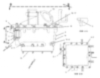 Locked diagram
Parts in this unit
Catalog descriptions with masked part numbers.
| Part number | Description |
|---|---|
| 0S***71 | Screw, cap, hexagon; tube assembly to turbocharger and elbow mounting |
| 0S***90 | Bolt; (3/8-16x2in)(clip thru spacer to bracket as) |
| 0S***19 | Bolt, machine gear retaining part of kit p/n 1w***46 |
| 0T***73 | Bolt (3/8) (63.5mm long) (on cab of cover assem.) |
| 10***73 | Seal-o-ring; (43.82mm id) |
| 10***79 | Seal-o-ring |
| 12***32 | Aftercooler group-water |
| 1B***82 | Bolt (1.25 in. long x .313 in. dia.) |
| 2W***87 | Adapter-aftercooler |
| 4N***48 | Gasket |
| 4N***95 | Gasket |
| 4W***72 | Cover-aftercooler |
| 4W***37 | Housing-aftercooler |
| 5F***99 | Bolt-head assembly to cylinder block |
| 5M***94 | Washer; bracket to tee, bracket to block, tube as. to tee, tube as. to oil cooler |
| 7C***85 | Core as-aftercooler |
| 8N***99 | Adapter-aftercooler |
| 8T***62 | Plug-pipe; (1/4-14 nptf thd)(9.52 cf sq hole) |
| 9M***74 | Washer-hard; (8.8x16x2-mm thk)(hard) |
988B serial number reference
On a 988B the PIN/serial tag is on the left side of the front frame, ahead of the cab, and is readable from ground level; the number is often also stamped into the frame steel itself as a backup if the tag is damaged. The first three characters are the letter/number prefix, which identifies the model and build arrangement; the remaining digits are the sequence number for that individual machine within the prefix run (for example, on 50W06741 the prefix is 50W and 06741 is the unit's sequence number).
| Prefix | Identifies | Notes |
|---|---|---|
| 50W | 988B wheel loader, standard production machine | Standard production serial prefix for the 988B loader chassis. Service literature splits the run into sub-ranges (early build and a later build starting around 50W6041) under the same prefix. Fitted with the Cat 3408 diesel; the engine carries its own separate build-record serial run under a different prefix, distinct from the machine PIN. Production began in 1978. |
| 62Y | 988B/DV43 rough-terrain container handler, military-spec top-handler conversion | Uses the 988B chassis and running gear with the loader linkage and bucket removed and a forklift-type container mast fitted in their place, rated around 50,000 lb (about 22.7 t) top-handler capacity. Built under a US Army contract awarded in September 1978; roughly 320 units were fielded between late 1981 and early 1985. Confirmed on multiple individual units tagged as this container-handler variant of the 988B, spanning roughly 62Y00059 through 62Y00266; exact start/end of the range isn't published, so confirm the precise PIN span with a dealer. |
Frequently asked questions
What engine does the Caterpillar 988B use?
The 988B runs Caterpillar's 3408 V-8 diesel with mechanical fuel injection, rated 280 kW (375 hp) gross in standard civilian trim. It is a pre-electronic engine with no onboard diagnostic codes. The military RTCH container-handler variant used a turbocharged tune of the same engine rated near 293 kW (393 hp).
What is the operating weight of the Caterpillar 988B?
Operating weight runs approximately 43,300-43,400 kg (95,500-95,600 lb) in standard configuration. Actual weight varies with bucket choice, counterweights, and other options, and the RTCH military conversion with its forklift mast differs further from the base loader figure.
What replaced the Caterpillar 988B?
The 988F succeeded the 988B, arriving around 1990 with a revised engine and hydraulic package, tighter emissions compliance, and updated cab electronics. The 988B itself had replaced the original 988 in 1978.
What 988B owners discuss
What's the real-world verdict on the Cat 3408 V-8 in the 988B — is it a strong engine long-term?
The loader won't drive even though the engine runs fine and the hydraulics work — where do experienced techs start looking?
Brakes feel lazy or jerky on a 988B — what's the usual cause?
Lift and tilt feel sluggish, or the hydraulics lose power intermittently — what should be checked first?
What electrical or sensor quirks show up most often on an aging 988B?
What wear patterns are typical for a machine like the 988B, and what drives them?
What should a buyer check before purchasing a used Cat 988B?
Compiled from owner and technician discussions across the industry — experiences vary by serial range and machine history.
Need a specific 988B part?
Search live OEM part data, check fitment, and cross-reference alternatives with Heavy Parts AI.
Post a parts request and compare supplier quotes.