Caterpillar 325D FM LL
Specifications · catalog references · fluids and capacities
Post a parts request and compare supplier quotes.
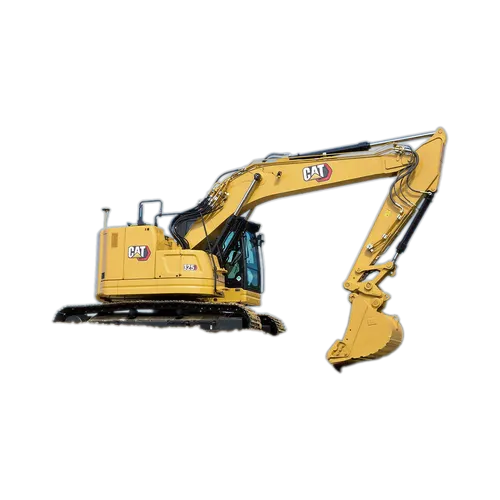
The Cat 325D FM LL is a purpose-built forestry log loader on the 325D excavator platform, running a heel-type log loading/grapple linkage instead of a digging bucket front end. Power comes from the Cat C7 ACERT, a 7.2 L six-cylinder diesel rated 152 kW (204 hp) net flywheel power, Tier 3 emissions, with an ADEM A4 ECM and HEUI fuel system. Operating weight in LL/grapple trim runs roughly 41,834 to 42,087 kg (92,229 to 92,786 lb), noticeably heavier than the General Forestry (GF) sibling configuration at about 36,952 kg (81,466 lb), reflecting the heavier grapple linkage and reinforced mounting. Serial prefixes reported for this configuration are C9M (higher confidence, roughly 2006 to 2011 production) and C8L (lower confidence - confirm against dealer records for a specific unit). Cat offered the FM line across several base-machine sizes (320D, 324D, 325D, 330D and up), with the 325D FM LL sitting in the mid-size log loader class.
The FM LL differs from a standard 325D excavator mainly in undercarriage and guarding, not core powertrain. It runs an upsized 349 HE GLT4 track chain with 216 mm (8.5 in) pitch components, plus heavy-duty guarding over the track rollers, final drives and hydraulic swivel to keep bark, chips and felling debris out of wear surfaces - a package a standard 325D excavator does not carry. No ripper attachment is documented for this platform; the factory grapple linkage (GLL family) or an optional Butt-n-Top grapple stands in for the digging bucket. In the used and parts market, the 325D FM LL matters mainly for its shared C7 ACERT engine and hydraulic-system parts commonality with the broader D-series 325D family, while forestry-specific structural parts - guarding, grapple linkage, undercarriage - are lower-volume and worth sourcing from a forestry-equipment specialist. Succession details for this exact LL/grapple configuration into later Cat forest-machine generations are not consistently documented - check current Cat forest machine offerings or your dealer for the modern equivalent.
Below: full specifications, fluids & capacities, the factory service schedule, common service parts, verified fault codes, what owners discuss, attachment guidance, the complete assembly directory, and a serial-number reference. Complete parts lists with full OEM part numbers, exploded diagrams, quantities, and fitment data are available free in Heavy Parts AI.
Caterpillar 325D FM LL specifications
Engine
| Model | Cat C7 ACERT, 6-cylinder inline diesel |
| Net flywheel power | 152 kW (204 hp), per SAE J1349 / ISO 9249 |
| Displacement | 7.2 L (440 cu in), bore 110 mm (4.30 in) x stroke 127 mm (5.00 in) |
| Emissions tier | Meets U.S. EPA Tier 3 / EU Stage IIIA equivalent for this power band. Electronic fuel control via ADEM A4 module. |
Weights
| Operating weight, Log Loader (LL) configuration | 41,834-42,087 kg (92,229-92,786 lb). Varies with boom and counterweight arrangement. |
| Operating weight, General Forestry (GF) configuration (for reference) | 36,952-37,807 kg (81,466-83,350 lb). Sibling swing-boom configuration on the same base machine; figure varies by source and boom option. |
| Ground pressure | Not published for a specific shoe width in available spec sheets. Confirm with dealer for the fitted track-shoe option. |
Dimensions
| Transport length | 14.84-15.73 m (48.7-51.6 ft), depending on log-loader boom option |
| Overall width | 3.63 m (11.9 ft) |
| Shipping height | 3.34-3.35 m (10.96-11.0 ft) |
| Height to top of cab | 4.82 m (15.82 ft) |
| Tail swing radius | 3.02-3.05 m (9.91-10.0 ft) |
| Track shoe width | 700 mm (27.6 in) triple-grouser, standard |
| Ground clearance | 0.74-0.76 m (2.43-2.5 ft) |
| Track length on ground | 4.05 m (13.29 ft) |
| Track gauge | 2.92 m (9.59 ft) |
Performance
| Max dig depth | 4.00-4.75 m (13.13-15.59 ft), depending on boom option |
| Max reach at ground level | 11.50-12.01 m (37.73-39.38 ft), depending on boom option |
| Max height / lift height | 13.20-14.02 m (43.31-45.94 ft), depending on boom option |
| Swing speed | 10 rpm |
| Travel speed | Two-speed track drive: low range about 2.5 kph (1.55 mph), high range 4.8-5.6 kph (3.0-3.5 mph) |
| Max drawbar pull | About 317 kN (71,264 lb) |
Forces
| Swing torque | 86.3 kN-m (63,664 lb-ft) |
| Max implement hydraulic pressure | 3500 kPa (5075 psi) |
| Main implement pump flow | 235 L/min (62.1 gal/min) combined, plus 36 L/min (9.5 gal/min) pilot flow |
| Bucket / stick digging force | Not published for this configuration. The log loader fitment runs a grapple, not a bucket-and-stick front end, so standard bucket/stick digging-force ratings do not apply here. |
Service capacities (summary)
| Fuel tank | 520 L (137.4 gal) |
| Hydraulic system | 260 L (68.7 gal) |
| Engine oil | 34 L (9.0 gal) |
| Cooling system | 30 L (7.9-8.0 gal) |
| Swing drive | 10 L (2.6 gal) |
Values vary by configuration, region, and serial range — confirm against your machine before planning transport or lifts.
325D FM LL fluids & capacities
| System | Capacity | Recommended fluid |
|---|---|---|
| Engine crankcase (with filter) | 34 L (9 US gal) | Cat DEO-ULS (or Cat DEO) diesel engine oil. SAE 15W-40 covers general/moderate ambient range; Cat guidance shifts to 10W-30 or 0W-40 in cold climates. Engine meets Tier 3/Stage IIIA emissions and runs on ultra-low-sulfur-compatible oil chemistry. |
| Cooling system | 30 L (7.9 US gal) | Cat ELC (Extended Life Coolant), factory premixed 50/50 concentration. Cat DEAC accepted as an alternate on this engine family. |
| Fuel tank | Standard tank 520 L (137.4 US gal). Optional auxiliary right-front tank adds about 410 L (108.3 US gal). Optional counterweight-integrated tank adds about 490 L (129.5 US gal). Maximum fuel with all optional tanks fitted: 1420 L (375.2 US gal). | Ultra-low-sulfur diesel (ULSD) fuel matching the engine's Tier 3/Stage IIIA emissions certification. |
| Hydraulic system total / hydraulic tank | Total system (including tank) runs 245-260 L (64.7-68.7 US gal) depending on source/manual revision; hydraulic tank alone about 145 L (38 US gal). | Cat HYDO Advanced 10 for cold-to-moderate climates (roughly -20C to 40C / -4F to 104F); Cat HYDO Advanced 30 for sustained hot climates above about 40C (104F). Cat TDTO and Cat DEO share compatible base chemistry and appear as cross-usable fills for this hydraulic circuit in Cat's lubricant guidance. |
| Final drive (each) | 8 L (2 US gal) per side | Cat TDTO gear oil. SAE 10W for winter operation (about -20C to 10C / -4F to 50F), SAE 30 for summer operation (0C to 35C / 32F to 95F), or Cat TDTO TMS multi-season blend to cover the full range without a seasonal change. |
| Swing drive | 10 L (2.6 US gal) | Cat TDTO gear oil, same SAE 10W/30 (or TDTO TMS) climate-based selection used on the final drives. |
| Pilot/other circuits | Cab-tilt hydraulic circuit (Forest Machine-specific) holds about 7.2 L (1.9 US gal). Not broken out as its own line on Cat's public specification sheet. | Same hydraulic-system-grade oil as the main circuit (Cat HYDO Advanced, selected by climate as above). The pilot pump runs independent of the main implement pumps and feeds front linkage, swing, and travel valve functions from the shared hydraulic fill. |
| Grease (spec only) | Consumption item at grease points/nipples and swing-gear teeth, not a fixed sump fill. | Cat Multipurpose Grease, NLGI 2, EP-rated, for standard chassis and pin/bushing grease points. Cat Prime Application (moly-fortified) grease is the preferred option for heavy-load boom/stick/bucket linkage pins under sustained shock loading. Machine can be optioned with a central automatic lubrication system feeding the same grease points. |
Capacities are refill values from factory literature — always fill to the dipstick/sight gauge, not the number.
Caterpillar 325D FM LL maintenance schedule
| Service interval | Tasks |
|---|---|
| Every 10 h |
|
| Every 250 h |
|
| Every 500 h |
|
| Every 1,000 h |
|
| Every 2,000 h |
|
| Every 3,000 h |
|
| Every 6,000 h |
|
Servicing the 325D FM LL beyond the schedule
Predictive Maintenance & Fluid Analysis
The HEUI fuel system relies on engine oil pressure to actuate the injectors, so S·O·S engine oil sampling every 250 hours catches injector-actuation wear before it causes a failure. Sample hydraulic oil and swing/final drive oil each service interval - grapple duty cycles run the swing and boom circuits harder than bucket digging, accelerating hydraulic and gear-oil degradation. Track coolant condition closely given the C7 ACERT's shunt cooling design and the radiator debris loading typical of forestry sites.
Corrective & Common Repairs
Grapple linkage pins, bushings and rotate/tilt cylinder seals wear faster than standard bucket linkage under repetitive log-handling cycles - inspect and re-grease every shift. Track guarding on the final drives, track rollers and hydraulic swivel takes direct impact from felled timber and debris; repair dents or cracks before they compromise sealing. HEUI injectors and the high-pressure oil pump need Cat-trained diagnostics if cold-start smoke or misfire appears - not a field fix.
Overhaul & Rebuild Points
Undercarriage wear - the upsized 349 HE GLT4 track with 216 mm (8.5 in) pitch - is the first major rebuild item on a log loader logging high swing hours over ground travel; measure sprocket, roller and idler wear every 1000 to 2000 hours. The C7 ACERT top end (turbocharger, injectors, HEUI pump) typically needs rebuild attention at mid-life hours; budget injector and pump reconditioning alongside any major engine overhaul. Swing bearing and gear wear from continuous grapple rotation is a common structural rebuild point.
Seasonal & Environment Servicing
Clean bark, sawdust and debris from the radiator, aftercooler and hydraulic oil cooler daily - forestry duty packs cooling fins faster than earthmoving work, and the C7 ACERT's reversing fan needs clear screens to do its job. Before cold-weather logging, verify cold-start/glow system operation and confirm coolant and hydraulic oil are the correct viscosity grade for ambient temperature. In wet ground conditions, flush undercarriage guarding of packed mud and organic debris to protect the sealed track rollers and idlers from accelerated wear.
325D FM LL common service parts
| Part number | Part | Notes | |
|---|---|---|---|
| 220-8678 | Seal-Ring | Fuel system service | Check fitment → |
| 326-1644 | Filter As-Water Sep & Fuel | Fuel system service | Check fitment → |
| 1R-0762 | Filter As-Fuel | Fuel system service | Check fitment → |
| 132-7165 | Filter Element As-Air | Air intake service | Check fitment → |
| 6I-2503 | Filter Element As-Air | Air intake service | Check fitment → |
Always confirm against your machine's serial number — cross-check any part in Heavy Parts AI before ordering.
325D FM LL fault codes & troubleshooting
| Code | Meaning | Likely cause | What to do |
|---|---|---|---|
| MID 036 CID 0110 FMI 03/04 | Engine coolant temperature sensor circuit reading out of range (voltage above normal on FMI 03, below normal on FMI 04). | Open or shorted sensor wiring, corroded connector, or a failed coolant temperature sensor. | Inspect sensor connector and harness for corrosion or damage, check sensor resistance against spec, replace sensor if wiring checks out good. |
| MID 036 CID 0102 FMI 03/04/07 | Boost (intake manifold) pressure sensor circuit fault, or sensor signal not responding to an expected pressure change. | Sensor wiring fault, a pinched or disconnected pressure sense line, or a failed sensor; can also surface alongside a real turbo boost problem. | Check the sensor and its pressure line for damage or blockage, verify wiring continuity and supply voltage, replace sensor if signal stays out of range. |
| MID 036 CID 0190 FMI 02/08 | Engine speed/timing sensor signal erratic or at an abnormal frequency. | Loose or damaged sensor, incorrect sensor air gap, damaged timing wheel, or a wiring/connector fault. | Check sensor mounting and air gap, inspect wiring and connector for damage, reseat or replace the sensor as needed. |
| MID 036 CID 0164 FMI 03 | Injector actuation pressure circuit reading voltage above normal. | Open circuit or short to battery voltage in the injector actuation pressure sensor circuit. | Inspect sensor connector and harness for damage or corrosion, verify sensor supply voltage, replace sensor if wiring tests good. |
| MID 036 CID 0111 FMI 11/14 | Low or very low engine coolant level detected by the coolant level sensor. | Coolant leak, low coolant fill level, or a faulty level sensor/float. | Check coolant level and top off, inspect the cooling system for external or internal leaks, test the level sensor if fill level is correct. |
| MID 036 CID 0168 FMI 00 | Electrical system (battery) voltage reading above the normal charging range. | Faulty voltage regulator or alternator, loose battery connections, or a wiring fault on the ECM power circuit. | Check charging system output and battery terminal connections, verify ECM power and ground circuits, correct the overcharging condition before further operation. |
| MID 036 CID 0094 FMI 01 | Fuel delivery (rail) pressure reading below normal. | Plugged fuel filter or strainer, air in the fuel system, or a weak fuel transfer pump. | Check fuel filter condition and fuel level, inspect lines and fittings for air leaks, test transfer pump output pressure. |
| MID 036 CID 0100 FMI 01/03/04 | Engine oil pressure below normal, or the oil pressure sensor circuit voltage is out of range. | Low oil level, worn oil pump or bearings, or a faulty sensor/wiring. | Stop the engine and check oil level right away, inspect sensor wiring, verify actual oil pressure with a mechanical gauge before returning the machine to service. |
Codes and remedies are general guidance for this model family — always confirm with diagnostic tooling and your dealer before major repairs.
325D FM LL attachments & work tools
Buckets
Buckets apply to the General Forestry (GF) front only; the Log Loader (LL) front runs a dedicated grapple linkage instead of a bucket. GF buckets mount on CB2 pin-on linkage, roughly 90 mm pin class, in general-duty and heavy-duty grades from about 0.9 m3 (1.2 yd3) at 600 mm (24 in) width up to about 1.2 m3 (1.6 yd3) at 790 mm (31 in) width, consistent with the wider 325-class bucket range. No factory quick coupler is documented for this platform; bucket changes are pin-on.
Hydraulic hammers
No hammer is published as a factory fitment for the FM front. Operating weight of roughly 37,900-42,100 kg (83,500-92,800 lb) puts the machine in the mid-size breaker class matched to 130-160 class hammers, rated carrier range near 19,000-40,000 kg (42,000-88,000 lb), oil flow near 120-230 L/min (32-60 gpm), impact energy in the 3,000-8,500 ft-lb class. Breaker duty is realistic only on a GF (bucket-linkage) front, not the dedicated LL grapple linkage.
Quick couplers
Not confirmed as factory-standard on the 325D FM in either GF or LL trim; forestry linkage stays pin-on because of the high shock-cycle loads from grappling and processing work. Where a dealer fits one for GF bucket or thumb work, it follows the 325-class hydraulic pin-grabber-style coupler on roughly 90 mm pins. Treat coupler fitment as dealer-configured, not a standard spec.
Thumbs/grapples
GF front: hydraulic pin-on thumb plus clamshell and clearing grapples for road building, stumping, and slash piling. LL front: factory heel-type log loader linkage with a continuously rotating (360 degree) hydraulic grapple from the GLL family, roughly 1,320-1,400 mm (52-55 in) jaw-opening class, plus a Butt-n-Top grapple option for shovel logging and millyard work.
Rippers
No ripper option is documented for the 325D FM in either GF or LL configuration. Both fronts are built around bucket, grapple, and thumb work rather than ground-engaging tillage; a ripper is non-standard for this platform and availability should be confirmed with the dealer if genuinely needed.
Hydraulic kit notes
Implement circuit relief runs about 35,000 kPa (5,075 psi). The FM front uses a dual variable-displacement pump circuit rated near 235 L/min (62 gpm) per circuit, combining to roughly 470 L/min (124 gpm) for high-flow grapple rotation and heel functions, well above a bolt-on medium-pressure kit. Boom and stick regeneration circuits are standard, cutting cycle time and pressure loss versus the base 325D excavator circuit.
Part Book
Browse by group, subgroup and unit. Part numbers are masked and diagram thumbnails are locked.
257-3013 Air Cleaner ar s/n c9m1-up an attachment
257-3013 Air Cleaner ar s/n c9m1-up an attachment is listed in the Air inlet and exhaust system / air cleaner ar catalog section.
- Group
- Air Inlet and Exhaust System
- Subgroup
- Air Cleaner ar
- Unit
- 257-3013 Air Cleaner ar s/n c9m1-up an attachment
No catalog diagram available for this unit
Parts in this unit
Catalog descriptions with masked part numbers.
| Part number | Description |
|---|---|
| 23***27 | Air cleaner group; spare part 23***27 air cleaner group (Caterpillar) |
| 25***13 | Air Cleaner ar; spare part 25***13 air cleaner ar (Caterpillar) |
| 27***81 | Hood group; -precleaner |
325D FM LL serial number reference
On the 325D FM LL the PIN plate sits on the upper-frame structure at the right side of the machine, low near the base of the cab/boom-foot area (standard Cat excavator location). Open the cab door and check the frame rail beside it if not visible from outside. The PIN reads as a three-character prefix identifying the specific model and production run, followed by a sequential unit number. Match the prefix against dealer or parts-manual references to pin down the build era and configuration.
| Prefix | Identifies | Notes |
|---|---|---|
| C9M | 325D FM LL Forest Machine, D-series, log loader arrangement, high/wide undercarriage | Serial prefix documented on parts and schematic manuals specifically titled for the 325D FM LL excavator. Tier 3 emissions, production window roughly 2006-2011. Powered by the Cat C7 with ACERT (air-to-air aftercooled, HEUI fuel system), a power increase over the prior 3126B-powered forest machine. Factory-fitted with the heel-type log loader linkage and grapple for truck loading, butt-n-top loading, and millyard work. |
| C8L | 325D FM LL Forest Machine (Butt-N-Top Log Loader configuration), D-series, high/wide undercarriage | Parts and service manuals list this prefix under the full configuration name Forest Swing Machine, Butt-N-Top Log Loader, High Wide Undercarriage, C8L00001-UP, powered by the C7 engine - same log loader arrangement and engine platform as C9M. Multiple real units carrying this prefix have sold specifically as log loaders. Exact production window and whether it runs before or after C9M is not independently confirmed - confirm with your dealer. |
Frequently asked questions
What engine does the Caterpillar 325D FM LL use?
A Cat C7 ACERT six-cylinder diesel, 7.2 L displacement, rated 152 kW (204 hp) net flywheel power. It is Tier 3 emissions-certified with an ADEM A4 electronic control module and a HEUI fuel system.
What is the operating weight of the Caterpillar 325D FM LL?
Roughly 41,834 to 42,087 kg (92,229 to 92,786 lb) in the LL/grapple configuration. The lighter General Forestry (GF) bucket-capable sibling runs about 36,952 kg (81,466 lb) - weight varies by configuration and factory options.
What replaced the Caterpillar 325D FM LL?
Cat continued building forest-machine log loader configurations in later engine and chassis generations, but a single confirmed direct successor for this specific LL/grapple configuration is not well documented. Check with a Cat dealer or the current forest-machine lineup for the closest modern equivalent.
What 325D FM LL owners discuss
What's the reputation of the C7 ACERT engine in the 325D FM, and does it have known quirks?
Why do these machines run hot on the engine and hydraulics, and what usually fixes it?
What hydraulic symptoms come up most, and what do they usually point to?
How does undercarriage wear on a log loader differ from a standard digging excavator?
What electrical or sensor issues come up on this generation?
Is the swing system under more stress on a grapple/log-handling machine than on a digging excavator?
What should a buyer check on a used 325D FM LL before making an offer?
Compiled from owner and technician discussions across the industry — experiences vary by serial range and machine history.
Need a specific 325D FM LL part?
Search live OEM part data, check fitment, and cross-reference alternatives with Heavy Parts AI.
Post a parts request and compare supplier quotes.