Caterpillar 325B
Specifications · fluids and capacities · maintenance intervals
Post a parts request and compare supplier quotes.
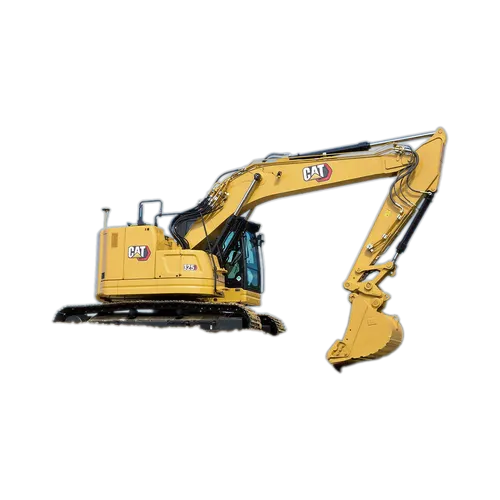
The Caterpillar 325B is a mid-size crawler hydraulic excavator built through the second half of the 1990s into the early 2000s. It runs a Cat 3116TA diesel, a turbocharged and aftercooled inline-six displacing 6.6 liters (403 cu in), rated at roughly 125 kW (168 hp) net at 2000 rpm. Standard operating weight runs about 25.5-26 tonnes (56,000-57,100 lb); the long-undercarriage 325B L climbs to roughly 27.5 tonnes (60,600 lb) and the narrow-gauge 325B LN sits near 26.5 tonnes, so exact weight varies by configuration. The 325B succeeded Caterpillar's original 325/325 L/325 LN series and was itself replaced by the 325C. Beyond the standard excavator front, Caterpillar also offered factory Log Loader and road-building fronts on the same base machine.
Across its production run the 325B carried Caterpillar's B-series platform update forward from the earlier 325, sharing swing-frame and undercarriage architecture with siblings like the 320B and 322B while keeping the same 3116TA powertrain from launch to end of production. Caterpillar closed out the generation by moving to the 3126B engine and updated electronics in the following 325C. In the used and parts market, the 325B still matters because the 3116 diesel was fitted across trucks, generators, and marine applications as well as excavators, so engine parts stay in wide circulation. Its mechanical fuel system and conventional hydraulics make it a straightforward rebuild candidate, and well-maintained units still see steady demand for general excavation, demolition, and forestry work.
Below: full specifications, fluids & capacities, the factory service schedule, common service parts, verified fault codes, what owners discuss, attachment guidance, the complete assembly directory, and a serial-number reference. Complete parts lists with full OEM part numbers, exploded diagrams, quantities, and fitment data are available free in Heavy Parts AI.
Caterpillar 325B specifications
Engine
| Engine model | Cat 3116TA, 6-cylinder, turbocharged and air-to-air aftercooled diesel |
| Gross power | 132 kW (177 hp) @ 2000 rpm |
| Net power | 125.3 kW (168 hp) @ 2000 rpm |
| Displacement | 6.6 L (403 cu in) |
| Bore x stroke | 105-107 mm x 127 mm (4.1-4.2 in x 5.0 in) (sources vary slightly on bore, 105 vs 107 mm) |
| Emissions tier | Not documented for this production run (1996-2007, predates modern Tier 4 requirements) - verify with your dealer for the specific serial range |
Weights
| Operating weight, standard (325B) | 25,900 kg (57,100 lb) |
| Operating weight, long-undercarriage variant (325B L) | 27,488 kg (60,600 lb) - longer track-on-ground and wider track gauge than the standard machine |
| Ground pressure | Not found in available spec sources for this model - verify with your dealer |
| Transport weight | Not documented separately from operating weight in available sources |
Dimensions
| Transport length | 10.29-10.30 m (33 ft 9 in) |
| Transport width (over tracks), standard | 2.99-3.02 m (9 ft 10 in) |
| Transport width (over tracks), 325B L | 3.39 m (11 ft 2 in) |
| Transport height (to cab top) | 3.27-3.29 m (10 ft 9 in) |
| Tail swing radius | 3.05 m (10 ft) |
| Track shoe width | 800 mm (31.5 in) triple grouser shown in most listings; 600 mm and 700 mm shoes also offered for this platform |
| Ground clearance | 0.51-0.52 m (1 ft 8 in) |
| Undercarriage (track-on-ground) length, 325B L | 3.80 m (12 ft 6 in) |
Performance
| Max dig depth, standard boom/stick | 7.09-7.10 m (23 ft 3 in), boom 6.15 m / stick 3.20 m configuration |
| Max dig depth, short stick | Approx. 6.0-7.1 m depending on stick length; shorter 2.70 m stick gives less depth than the 3.20 m stick |
| Max reach at ground level | 10.52-10.55 m (34 ft 6 in to 34 ft 8 in) |
| Max dump/loading height | 7.10-7.13 m (23 ft 4 in) |
| Max cutting height | 9.96-9.97 m (32 ft 8 in) |
| Swing speed | Not documented in available spec sources for this model |
| Travel speed, max | 5.0 km/h (3.1 mph) |
| Gradeability | Not documented in available spec sources for this model |
| Drawbar pull | Approx. 215 kN (48,300-48,350 lb) |
| Swing torque | Approx. 76,000 N·m (56,000-56,080 lb-ft) |
Forces
| Bucket digging force | Not documented across verified sources for this model. An unverified figure near 115 kN (about 25,850 lbf) appears in some references; confirm with your dealer or the OEM spec sheet before relying on it. |
| Stick/arm digging force | Not documented in available spec sources for this model. Cat offered two booms and three stick lengths for the 325B, so arm force varies by stick configuration - verify with your dealer. |
Service capacities (summary)
| Fuel tank | 420 L (111 gal) |
| Hydraulic system (tank + circuit) | 310 L (81.9 gal) |
| Engine oil | 20 L (5.3 gal) |
| Cooling system | 31.5-31.8 L (8.3-8.4 gal) |
| Swing drive | Approx. 10 L (2.6-2.7 gal) |
Values vary by configuration, region, and serial range — confirm against your machine before planning transport or lifts.
325B fluids & capacities
| System | Capacity | Recommended fluid |
|---|---|---|
| Engine crankcase (with filter) | 20 L (5.3 US gal) | Cat DEO (Diesel Engine Oil), mechanical 3116/3116TA engine, pre-dates DEO-ULS low-sulfur/aftertreatment formulations. SAE 15W-40 for general and warm-climate use (roughly -9.5C to 50C / 15F to 122F). SAE 10W-30 for wider cold-weather range (roughly -18C to 40C / 0F to 104F). Select grade by expected ambient range at the oil change, not just current season. |
| Cooling system | 31.4-31.8 L (8.3-8.4 US gal) | Cat ELC (Extended Life Coolant) premixed 50/50 water-glycol, or Cat DEAC (Diesel Engine Antifreeze/Coolant) with Cat SCA on standard-interval fill. ELC extends the interval between coolant changes versus conventional DEAC. Use a 1:1 water-to-concentrate mix unless a premix is used. |
| Fuel tank | 420 L (111 US gal) | No. 2-D diesel fuel (or No. 1-D in cold climates for easier starting/lower cloud point); use ultra-low-sulfur diesel where required by the engine's emissions certification. |
| Hydraulic system, total (incl. tank) | 310 L (81.9-82 US gal) | Cat HYDO Advanced 10, 20, or 30 (viscosity chosen by ambient temperature), or Cat BIO HYDO Advanced where a biodegradable fluid is required. If Cat HYDO is unavailable, Cat TDTO or Cat MTO are acceptable provided the oil meets Cat's minimum anti-wear (zinc) requirement for hydraulic pumps. Keep cross-contamination with the prior fluid below 10% on a changeover. |
| Hydraulic tank (reservoir only) | Not published as a separate figure; the 310 L (82 US gal) system capacity above includes the tank | Same fluid as hydraulic system total above (Cat HYDO Advanced / Cat BIO HYDO Advanced). |
| Final drive, each | 8 L (2.1 US gal) | Cat TDTO (Transmission/Drive Train Oil) meeting Cat TO-4 spec. SAE 30 for moderate climates (summer highs not above roughly 27C/80F), SAE 50 for hot climates. Cat TDTO-TMS synthetic multigrade covers a wide ambient band (about -20C to 40C / -4F to 104F) without seasonal changeover. |
| Swing drive | 9.8-10.2 L (2.6-2.7 US gal) | Cat TDTO meeting Cat TO-4 spec, same grade selection as final drive (SAE 30 / SAE 50, or Cat TDTO-TMS synthetic for wide ambient range). |
| Grease (spec only) | Per grease fitting; no bulk system capacity | Cat Multipurpose Grease (lithium complex, NLGI 2) for general pin and bushing points, rated roughly -30C to 40C (-22F to 104F). Cat Extreme Application grease for high-load, high-heat joints such as bucket linkage where duty cycle is severe. |
Capacities are refill values from factory literature — always fill to the dipstick/sight gauge, not the number.
Caterpillar 325B maintenance schedule
| Service interval | Tasks |
|---|---|
| Every 50 h |
|
| Every 250 h |
|
| Every 500 h |
|
| Every 1,000 h |
|
| Every 2,000 h |
|
| Every 4,000 h |
|
| Every 6,000 h |
|
Servicing the 325B beyond the schedule
Predictive Maintenance & Fluid Analysis
Run scheduled oil sampling on the 3116TA engine, hydraulic tank, and both swing and final drive gearcases; track iron and copper trends to catch injector, turbo, and gear wear before failure. Watch fuel dilution in engine oil, a common early flag on mechanical unit-injector diesels like the 3116. Sample hydraulic oil for water and particulate contamination, since pump and valve wear on this class of excavator shows up as gradual response lag long before a hard failure. Log coolant condition to catch cavitation corrosion in the wet-liner block early.
Corrective & Common Repairs
Hard starting and rough idle on the 3116TA usually trace to worn injectors or a weak lift pump, not the turbo. Check for hydraulic pump and main control valve seal leakage as hours climb; it is the most common source of lost cycle time on aging 325B units. Swing bearing wear shows up as play at the house-to-undercarriage joint. Inspect travel motor cross-leakage if the machine pulls to one side on flat ground, and check track link and bushing wear on high-hour tracked units.
Overhaul & Rebuild Points
Plan a top-end rebuild on the 3116TA (injectors, turbocharger, valve work) once compression or blow-by readings drift, typically well into the second half of service life. Hydraulic pump and swing motor rebuilds follow oil-sample trends rather than a fixed hour count. Final drive travel motors and the swing drive gearbox are the next major driveline rebuild items. Undercarriage wear (chains, rollers, idlers, sprockets) is usually the largest single rebuild cost on a 325B bought for continued production work.
Seasonal & Environmental Servicing
The 325B's standard intake air heater helps cold starts on the 3116TA; check its element and wiring before winter. Switch to a lower-viscosity engine and hydraulic oil grade for cold climates, and verify coolant freeze protection each season. In wet or muddy conditions, drain the fuel water separator more often and inspect track tension more frequently, since mud packing accelerates undercarriage wear. In hot, dusty environments, clean the radiator and hydraulic oil cooler cores often to prevent overheating derates.
325B fault codes & troubleshooting
| Code | Meaning | Likely cause | What to do |
|---|---|---|---|
| 164-2 | Injection actuation pressure signal erratic, intermittent, or incorrect | Corroded or loose injection actuation pressure sensor connector, chafed sensor wiring, or genuinely unstable HEUI rail pressure from the actuation pressure control valve | Inspect and clean the sensor connector and harness, compare desired vs actual actuation pressure on the service tool, then test or replace the control valve before the sensor |
| 164-11 | Injection actuation pressure system fault; actual pump pressure will not match commanded pressure | Worn or sticking injection actuation pressure control valve, low or contaminated engine oil supplying the HEUI pump, or air trapped in the actuation oil circuit | Check engine oil level and condition first since the HEUI pump draws actuation oil from the sump, then test the control valve response on the service tool before replacing the HEUI pump |
| 1-5 | Number 1 cylinder injector solenoid circuit open | Broken or disconnected injector harness wiring at the valve cover, or a failed injector solenoid coil | Check injector harness continuity and connector pins at the valve cover and engine ECM, repair the harness or replace the injector as needed |
| 100-1 | Engine oil pressure below the normal operating range for current engine speed | Low oil level, worn oil pump, plugged suction screen, or a failing pressure sensor reporting falsely low | Shut the engine down, check oil level and condition, and verify actual pressure with a mechanical gauge before returning the machine to service |
| 110-0 | Engine coolant temperature above the normal operating range | Low coolant level, plugged radiator core, failed thermostat, or a slipping or damaged fan drive | Reduce load and let the engine idle down, check coolant level and radiator fins, and confirm fan operation before resuming full load work |
| 168-2 | Electrical system (battery) voltage erratic, intermittent, or incorrect | Loose or corroded battery terminals, worn alternator brushes, or a chafed main harness ground | Check battery terminal and ground connections, test charging system output, and repair the harness as needed |
| 91-8 | Throttle/engine speed control signal abnormal frequency or pulse width | Faulty throttle position sensor, binding electronic throttle motor linkage, or a wiring fault at the throttle actuator | Check the throttle motor linkage for binding and verify sensor signal on the service tool before replacing the throttle motor assembly |
| Flash Code 55 | No faults detected since the ignition key switch was last turned on; not an actual fault | Normal condition, or an intermittent fault that is not currently active | No repair needed for this code alone; if a symptom persists, connect the electronic service tool to check logged (inactive) codes, which the flash-lamp sequence cannot show |
Codes and remedies are general guidance for this model family — always confirm with diagnostic tooling and your dealer before major repairs.
325B attachments & work tools
Buckets
GD, HD, and rock/HDR buckets are offered across roughly 1.07-1.91 m³ (1.4-2.5 cu yd), with about 1.15 m³ (1.5 cu yd) as the common reference size for general excavation. Typical widths for this weight class run about 600-1,500 mm (24-60 in) depending on duty class. Standard mount is pin-on; the 325B was also built with pin-grabber quick-coupler linkage, so coupler-mount buckets fit as well.
Hydraulic hammers
Cat's H120-class medium hammer (roughly 1,300 kg service weight, about 4,067 J / 3,000 ft-lbf impact energy) is rated for carriers in the 17,000-26,000 kg bracket, which covers the 325B's 25.5-25.9 t operating weight near the top end of that range. Verify the exact hammer size against the current dealer carrier-weight chart, since some charts frame that bracket closer to the 320-323 class and would push a slightly heavier hammer class onto the 325B.
Quick couplers
The 325B was built with either B-linkage (80 mm pin) or C/CB-linkage (90 mm pin) pin-grabber couplers depending on machine configuration and boom/stick arrangement; both pin sizes show up on cross-reference charts for this model. Coupler center-to-center pin spread varies by linkage and brand, roughly 350-530 mm, so match the coupler to the machine's actual linkage rather than assuming one pin size.
Thumbs/grapples
Pin-on hydraulic thumb kits sized for an 80 mm main pin are cataloged across the 318-325 Cat family and mount on the same pivot as the bucket or coupler. Demolition and rotating grapples for this size class use a 90 mm pin, matching the C/CB-linkage coupler option.
Rippers
A stick-mounted single-shank ripper is available for this weight bracket; aftermarket shank ratings covering roughly 22,700-37,000 kg (50,000-82,000 lb) carriers span the 325B's operating weight. Cat's own ripper line was built mainly for track-type tractors, so a ripper on the 325B is an aftermarket stick-mounted attachment rather than a factory Cat work tool.
Hydraulic kit notes
Main implement pump delivers up to about 214 L/min (56.5 gpm) combined flow at roughly 343 bar (34,300 kPa / 4,980 psi) relief, enough for a single-circuit hammer, thumb, or grapple line. Factory/dealer-installed hammer-and-thumb auxiliary piping was offered as an option on the 325B. Continuous-rotation tools such as rotating grapples or mulchers need a dedicated high-flow circuit, which is not part of the base machine's standard hydraulics.
Part Book
Browse by group, subgroup and unit. Part numbers are masked and diagram thumbnails are locked.
1342357 Aftercooler Group-Treated Water Part of 1313803-Page 13
1342357 Aftercooler Group-Treated Water Part of 1313803-Page 13 is listed in the Air inlet and exhaust system / aftercooler group-treated water catalog section.
- Group
- Air Inlet and Exhaust System
- Subgroup
- Aftercooler Group-Treated Water
- Unit
- 1342357 Aftercooler Group-Treated Water Part of 1313803-Page 13
No catalog diagram available for this unit
Parts in this unit
Catalog descriptions with masked part numbers.
| Part number | Description |
|---|---|
| 13***57 | Aftercooler Group-Treated Water; (Treated Water); Spare Part 13***57 Aftercooler Group-Treated Water (Caterpillar) |
325B serial number reference
The PIN plate is a riveted metal tag on the upper structure, usually on the front-right side near the cab entry step or boom base; some machines repeat it on a plate inside the cab near the operator's seat. The Product Identification Number ends in an 8-character serial number: the first 3 characters are the machine prefix (ties to model/configuration), the last 5 digits are the sequential unit number. Match the 3-character prefix against known 325B prefixes to confirm configuration, and verify with a dealer if it does not match a documented range.
| Prefix | Identifies | Notes |
|---|---|---|
| 8GM | 325B (standard/base undercarriage configuration) | Serial prefix documented for the base Cat 325B hydraulic excavator, separate from the 325B L and 325B LN long/narrow-undercarriage builds. Machines in this prefix range carry the Cat 3116TA turbocharged, aftercooled diesel (about 125 kW / 168 hp net flywheel power). Exact build-year window is not documented for this specific prefix; the 325B family as a whole runs roughly from the mid-1990s into the mid-2000s, so treat any year estimate as approximate and confirm against the PIN with a dealer. |
| 8RR | 325B (standard config); factory parts/service documentation for this same prefix block also covers the 325B L | Serial prefix documented for the base 325B excavator. The same prefix range is also referenced in 325B L service documentation, so standard and long-undercarriage machines were not split into separate prefix blocks for this production run - check the full PIN and machine configuration rather than the prefix alone to tell them apart. Same Cat 3116TA turbocharged/aftercooled diesel as other 325B builds. Exact build-year window not documented; confirm against the full PIN with a dealer. |
Frequently asked questions
What engine does the Caterpillar 325B excavator use?
The 325B runs a Cat 3116TA, a turbocharged and aftercooled inline-six diesel displacing 6.6 liters (403 cu in), rated at roughly 125 kW (168 hp) net at 2000 rpm. This engine carried across the whole 325B production run; the following 325C switched to the 3126B.
What is the operating weight of the Caterpillar 325B?
Standard 325B operating weight runs about 25.5-26 tonnes (56,000-57,100 lb). The long-undercarriage 325B L is heavier, around 27.5 tonnes (60,600 lb), and the narrow-gauge 325B LN sits near 26.5 tonnes, so exact weight depends on configuration and attachments.
What replaced the Caterpillar 325B?
Caterpillar replaced the 325B with the 325C, which carries the 3126B engine and updated electronics. The 325 nameplate continued afterward through the 325D, 325F, and the current Next Generation 325.
What 325B owners discuss
What engine powers the Cat 325B, and how do owners rate it?
Why does the machine bog down and blow black smoke running stick and bucket together?
The swing drifts on a slope, or won't swing at all with oil pushed out the dipstick — what's happening?
Travel speed sticks in low range, or the machine stalls splitting the tracks to turn — is that normal wear?
What undercarriage wear should I expect on a machine this size?
What electrical or sensor issues come up on these machines?
What should I check before buying a used 325B?
Compiled from owner and technician discussions across the industry — experiences vary by serial range and machine history.
Need a specific 325B part?
Search live OEM part data, check fitment, and cross-reference alternatives with Heavy Parts AI.
Post a parts request and compare supplier quotes.