Caterpillar 320D LN
Specifications · fluids and capacities · maintenance intervals
Post a parts request and compare supplier quotes.
The Caterpillar 320D LN is a mid-size crawler excavator in Cat's 20-22 tonne class, built on the 320D L platform with a long-reach boom and stick paired to a narrow-gauge undercarriage for confined-site and utility work. It runs the Cat C6.4 engine with ACERT technology (Tier 3/Stage IIIA equivalent, net power around 103 kW/140 hp at 1800 rpm); some regional literature lists the same platform with the Cat C6.6 ACERT engine at comparable output, so confirm the engine rating plate before ordering engine parts. Operating weight on the 320D L platform runs roughly 21,200-21,900 kg (46,700-48,300 lb), though the LN's boom and undercarriage combination shifts that figure by build. Caterpillar offered the 320D generation in multiple factory configurations, standard-gauge, long (L), and long-narrow (LN), and the family followed the 320C/320C L, preceding the 320E series.
The Cat C6.4 ACERT engine is the confirmed powertrain for this platform; some regional literature lists a C6.6 ACERT variant on the same 320D/320D L platform, so verify the engine rating plate on a specific unit rather than assuming by serial prefix. Core hydraulics, undercarriage, and structure carried over largely unchanged through the model’s run. In the used and parts market, the long-reach-narrow combination fills a specific niche: pipeline, utility, and confined-site digging where a standard-gauge 320D can't fit. Because it shares its engine family, hydraulics, and most of its structure with the far more common 320D and 320D L, parts support stays strong even though the LN build itself was a lower-volume configuration.
Below: full specifications, fluids & capacities, the factory service schedule, common service parts, verified fault codes, what owners discuss, attachment guidance, the complete assembly directory, and a serial-number reference. Complete parts lists with full OEM part numbers, exploded diagrams, quantities, and fitment data are available free in Heavy Parts AI.
Caterpillar 320D LN specifications
Engine
| Engine model | Cat C6.4 with ACERT. Confirmed as the engine fitted to the 320D LN chassis (prefix WBN) as well as the 320D L. An earlier-build 320D used the prior Cat 3066 ATAAC engine before the C6.4 ACERT switch; the 320D LN's later serial-prefix production ties it to the C6.4 ACERT unit. |
| Cylinders | 6, in-line, turbocharged and aftercooled |
| Displacement | 6.4 L (389 cu in); bore 102 mm (4.1 in), stroke 130 mm (5.2 in) |
| Net power (ISO 9249 @ 1800 rpm) | 103 kW (140 hp) |
| Net flywheel power | 110 kW (148 hp); some regional spec sheets for this power class list 103 kW (138 hp) net flywheel power, so treat as varies by region/rating standard |
| Emissions certification | Meets U.S. EPA Tier 3 and EU Stage IIIA emissions requirements |
Weights
| Operating weight, standard undercarriage | 20 330 kg (44,820 lb) |
| Operating weight, long undercarriage configuration | 21 570 kg (47,554 lb). The LN (long, narrow-gauge) undercarriage shares this longer-frame weight class; an exact published figure isolating the narrow-gauge track option alone was not found, so treat the narrow-gauge weight as close to but not confirmed identical to this long-undercarriage figure |
| Operating weight range across stick/boom options | 21 200 to 21 900 kg reported for long-undercarriage configurations, depending on stick length and counterweight fitted |
| Ground pressure | Not documented in available sources for this exact configuration — verify with your dealer |
Dimensions
| Transport length (shipping length) | 9.44 to 9.46 m (31.0 ft), varies by boom/stick combination |
| Transport width | 3.18 m (10.44 ft) |
| Transport (shipping) height | 3.44 m (11.3 ft) |
| Height to top of cab | 2.95 m (9.67 ft) |
| Tail swing radius | 2.75 m (9.0 ft) |
| Track shoe width | 600 mm (24 in) standard |
| Ground clearance | 450 mm (1.5 ft) |
| Track gauge | 2.20 m (7.25 ft) |
| Track length on ground | 3.27 m (10.75 ft) |
| Counterweight clearance | 1.02 m (3.35 ft) |
Performance
| Max digging depth | 6.30 to 7.66 m (20.67 to 25.17 ft) depending on stick length; the 3.9 m long stick gives the deepest figure of about 7.66 m (25.17 ft) |
| Max reach at ground level | 9.46 to 10.76 m (31.0 to 35.33 ft) depending on stick length; commonly quoted mid-range figure is 9.83 m (32.25 ft) |
| Max cutting height | 9.29 to 9.94 m (30.5 to 32.58 ft) depending on stick length |
| Max loading (dump) height | 6.93 m (22.75 to 22.8 ft), reference configuration |
| Swing speed | 11.5 rpm |
| Max travel speed | 5.5 to 5.7 km/h (3.4 to 3.5 mph); low/high range figures vary slightly by source |
| Drawbar pull | 205 kN (46,086 to 46,311 lb) |
| Gradeability | Not documented in available sources — verify with your dealer |
Forces
| Bucket digging force | 137.5 kN (SAE) / 155.6 kN (ISO) reference figures for this power/weight class; treat as approximate for the 320D LN since a dedicated LN-specific figure was not independently found |
| Stick digging force, standard stick | 105.6 kN SAE (23,740 lb) / 109.9 kN ISO (24,710 lb) |
| Stick digging force, long stick | Not separately documented — long-stick configurations typically reduce stick force versus the standard stick, but no confirmed figure was found for this exact stick option |
Service capacities (summary)
| Fuel tank | 410 L (108 gal) |
| Hydraulic system | 260 L (69 gal) |
| Engine oil | 30 L (8 gal) |
| Cooling system | 25 L (6.6 gal) |
| Swing drive | 8 L (2.1 gal) |
Values vary by configuration, region, and serial range — confirm against your machine before planning transport or lifts.
320D LN fluids & capacities
| System | Capacity | Recommended fluid |
|---|---|---|
| Engine crankcase (with filter) | 30.3 L (8.0 US gal) | Cat DEO-ULS or Cat DEO diesel engine oil (API CJ-4 / CI-4). SAE 10W-30 for -18°C to 40°C (0°F to 104°F). SAE 15W-40 for -10°C to 50°C (14°F to 122°F). Cat DEO-ULS SYN SAE 5W-40 for -30°C to 50°C (-22°F to 122°F). Cat DEO Cold Weather SAE 0W-40 down to -40°C (-40°F) for extreme cold starts. |
| Cooling system | 25.0 L (6.6 US gal) | Cat ELC (Extended Life Coolant), 50/50 premix with water, preferred. Freeze protection to -37°C (-34°F); service life 12,000 hours or 6 years, with ELC Extender added at 6,000 hours. Cat DEAC conventional coolant is an acceptable alternative on a 3,000 hour / 3 year interval with regular supplemental additive top-ups. Never run the system on plain water. |
| Fuel tank | 409 L (108 US gal) | No. 2-D distillate diesel fuel meeting Cat's distillate fuel specification. Low Sulfur Diesel is acceptable on pre-emission-controlled machines; Ultra Low Sulfur Diesel is required on machines with exhaust aftertreatment or wherever mandated locally. |
| Hydraulic system, total (including tank) | 261 L (69 US gal) | Cat HYDO Advanced 10, SAE 10W, factory fill and preferred, for -20°C to 40°C (-4°F to 104°F). Cat HYDO Advanced 20 SAE 20W for -5°C to 45°C (23°F to 113°F). Cat HYDO Advanced 30 SAE 30 for 0°C to 50°C (32°F to 122°F). Cat Bio HYDO Advanced (ISO 46, biodegradable) for -30°C to 45°C (-22°F to 113°F) where required. Second-choice oils: Cat TDTO, Cat DEO-ULS, or Cat MTO SAE 10W-30 (-20°C to 40°C) or SAE 15W-40 (-10°C to 50°C); Cat TDTO Cold Weather SAE 0W-20 for extreme cold down to -40°C (-40°F). |
| Hydraulic tank (reservoir only) | 121 L (32 US gal) | Same oil recommendation as the hydraulic system total, above. |
| Final drive (each) | 8.0 L (2.1 US gal) | Cat TDTO (Transmission/Drive Train Oil), SAE 30 factory fill. Grade by climate: SAE 0W-20 Cold Weather down to -40°C (-40°F), SAE 10W for -30°C to 0°C (-22°F to 32°F), SAE 30 for -30°C to 35°C (-22°F to 95°F), SAE 50 for -15°C to 50°C (5°F to 122°F). Cat TDTO-TMS multigrade is an alternative across roughly -25°C to 25°C (-13°F to 77°F). |
| Swing drive | 8.0 L (2.1 US gal) | Same Cat TDTO grade selection as the final drives, above; the swing drive and final drives share one oil specification on this machine. |
| Pilot / other hydraulic circuits | Not separately itemized | Pilot and control circuits draw from the main hydraulic tank and run the same hydraulic oil listed for the hydraulic system; no standalone refill capacity is published for this circuit. |
| Grease (pin joints, swing gear, linkages) | Spec only, no published total volume | Cat Prime Application Grease, NLGI 2 (moly-fortified), for medium-duty pin joints and the swing gear/swing bearing race, -20°C to 40°C (-4°F to 104°F). Cat Extreme Application Grease NLGI 1 or 2 (heavier moly content) for heavy-load, high-impact joints across roughly -35°C to 50°C (-31°F to 122°F) depending on grade. Cat Utility Grease NLGI 2 for light-duty points, -30°C to 40°C (-22°F to 104°F). Favor a tacky, moly-fortified grease on the swing gear teeth so the film clings to the near-vertical surface. |
Capacities are refill values from factory literature — always fill to the dipstick/sight gauge, not the number.
Caterpillar 320D LN maintenance schedule
| Service interval | Tasks |
|---|---|
| Every 50 h |
|
| Every 250 h |
|
| Every 500 h |
|
| Every 1,000 h |
|
| Every 2,000 h |
|
| Every 3,000 h |
|
| Every 6,000 h |
|
| Every 12,000 h |
|
Servicing the 320D LN beyond the schedule
Predictive Maintenance & Fluid Analysis
Pull an engine oil sample every oil change on the C6.4/C6.6 ACERT engine (250 hours during break-in, 500 hours after) and route it through Cat's S·O·S fluid analysis program to catch fuel dilution or soot loading early, a known ACERT injection-system flag. Sample final drive and swing drive oil at scheduled changes; the long-reach boom loads the swing drive harder than a standard-configuration 320D, so trend swing gear wear metals closely. Sample hydraulic oil before pushing past the standard 2000-hour drain toward the 3000-hour extended interval.
Corrective & Common Repairs
ACERT-generation C6.4/C6.6 engines are sensitive to fuel quality; dirty or watered fuel fouls injectors fast, showing up as hard starts, black smoke, and power loss. Drain the fuel water separator daily and don't skip fuel filter changes. Slow hydraulic response after warm-up usually traces to a sticking valve spool or an overheating pump, not the engine. The narrow-gauge undercarriage carries the same weight on a smaller ground contact patch than standard 320D track, so expect faster shoe, bushing, and sprocket wear on this configuration.
Overhaul & Rebuild Points
The long-reach boom and stick multiply leverage on the swing bearing and swing drive gear train; inspect for backlash and bearing play before it shows up in the cab. Final drives and travel motors work harder on the narrow undercarriage's tighter track loading, so plan travel-motor and final-drive rebuilds around oil-sample wear trends rather than a fixed hour number. At high hours, budget for hydraulic pump and main control valve overhaul, plus turbocharger and injector rebuild kits matched to whichever ACERT engine, C6.4 or C6.6, the unit carries.
Seasonal & Environment Servicing
In cold climates, use an engine block heater and cold-weather-grade fuel to avoid gelling in the C6.4/C6.6 fuel system, and drain the water separator more often as condensation increases. Long-reach-narrow units common on pipeline and utility jobs pick up more mud and debris in the narrow track group; check tension and clean sprockets more often than a standard-gauge 320D. In dusty or high-debris sites, service engine and cab air filters ahead of the standard interval, and keep swing bearing and boom pin grease points topped off.
320D LN common service parts
| Part number | Part | Notes | |
|---|---|---|---|
| 1R-0751 | Filter-Fuel | Fuel system service | Check fitment → |
| 220-8678 | Seal-Ring | Fuel system service | Check fitment → |
| 326-1644 | Filter As-Water Sep & Fuel | Fuel system service | Check fitment → |
| 128-2686 | Filter Element As-Air | Air intake service | Check fitment → |
| 131-8821 | Filter Element As-Air | Air intake service | Check fitment → |
Always confirm against your machine's serial number — cross-check any part in Heavy Parts AI before ordering.
320D LN fault codes & troubleshooting
| Code | Meaning | Likely cause | What to do |
|---|---|---|---|
| 261-11 | Engine Timing Offset - camshaft-to-crankshaft timing correlation falls outside the value the ECM learned during its initial calibration. | Injectors reinstalled out of their original cylinder position after service, a damaged or misaligned engine speed/timing sensor, or timing gear train wear. | Confirm each injector is back in its original bore, inspect the engine speed/timing sensor wiring and air gap, then run the ECM timing calibration procedure with the diagnostic tool. |
| 91-8 | Throttle Position Sensor - signal abnormal, erratic, or out of the expected range. | Faulty or misadjusted throttle/speed dial potentiometer, or damaged wiring or connector at the operator station. | Check the throttle dial wiring and connector, verify sensor voltage against spec with the diagnostic tool, replace the sensor if the signal stays erratic. |
| 248-12 | Cat Data Link failure - loss of communication between the engine ECM and the machine (implement) ECM. | Damaged, corroded, or loose data link wiring or connectors between control modules, or a failed control module. | Inspect the data link harness and connectors for damage or corrosion, check for other active data-link codes first, verify module power and ground before considering a module replacement. |
| 1639-9 | Machine Security System - module communication update rate abnormal, or system not communicating with the main ECM. | Machine Security System armed, a wiring fault at the MSS module, or lost communication between the MSS and engine/machine ECM. | Check MSS status on the cab monitor and disarm it if active, inspect MSS module connectors and wiring, cycle the key and recheck before further diagnosis. |
| 164-2 / 164-3 | Fuel (injector actuation) rail pressure sensor circuit - signal erratic or voltage above normal. | Faulty rail pressure sensor, damaged sensor wiring, or a common-rail fuel system component out of calibration. | Check sensor wiring and the connector, compare actual versus commanded rail pressure with the diagnostic tool, run the fuel system verification test before replacing components. |
| 168-2 / 168-4 | System (battery/alternator) voltage - erratic or below normal. | Weak or failing battery, loose or corroded battery cable, worn alternator brushes or belt, or a charging circuit fault. | Load-test the battery, check charging voltage at the alternator output and battery terminals, inspect cables and ground straps for corrosion. |
| N-05 / N-06 (N = cylinder 1-6) | Cylinder injector solenoid circuit - current below normal (open circuit) or current above normal (short circuit) on the numbered cylinder. | Failed injector solenoid, damaged injector harness or connector, or an injector whose trim calibration was lost. | Run the injector solenoid and cutout tests with the diagnostic tool, inspect injector wiring, replace the injector as needed and confirm its trim code is reprogrammed. |
Codes and remedies are general guidance for this model family — always confirm with diagnostic tooling and your dealer before major repairs.
320D LN attachments & work tools
Buckets
Dig buckets use the 320D-class B-linkage stick/link with 80 mm pins, pin-on or coupler-mount. General-purpose buckets run roughly 600 to 1,500 mm (24-60 in) wide with capacities from about 0.5 m3 up to roughly 1.36 m3 for the widest heavy-duty profile. Severe-duty rock buckets trade width for wall thickness, spanning about 0.46-1.19 m3 across the same 24-48 in width range; capacity and width vary by brand and profile, so treat these as class ranges, not fixed figures.
Hydraulic hammers
This machine sits in the 20-21 tonne excavator class (same breaker class as competitor 20-21 t machines), so it pairs with a medium-duty breaker rated roughly 1.2-2.2 tonne operating weight and an impact-energy class in the low-thousands of joules. Typical oil demand for this hammer class runs about 120-170 L/min at 160-180 bar, delivered through the machine's one-way high-pressure attachment circuit. Exact breaker size still depends on brand and duty cycle, so confirm against the breaker maker's excavator-weight chart.
Quick couplers
Standard interface is the hydraulic pin-grabber quick coupler for the B-linkage/80 mm pin family shared across the 318-323 size range, cab-switch controlled for drop-and-pick attachment changes. Mechanical pin-lock, pin-puller and wedge-style couplers are also offered for this size class where hydraulic quick-attach isn't specified. Coupler choice does not change bucket or tool pin sizing (80 mm) within this class.
Thumbs/grapples
Hydraulic progressive (rotating) thumbs mount to the bucket linkage or pin-grabber coupler and are sized to the bucket width in use (commonly matched to 900 mm-class buckets on this machine). Demolition and sorting grapples for this excavator class are rated for roughly 20-25 tonne carriers, with full open jaw widths around 1.9 m, and run on the machine's medium/high-pressure auxiliary circuit for clamping force.
Rippers
A single-shank, pin-on ripper using the same B-linkage/80 mm pin interface as the bucket is available for this size class, intended for breaking rock, frozen ground or pavement ahead of digging. It mounts in place of the bucket and needs no auxiliary hydraulic circuit since it is a mechanical (non-powered) tool.
Hydraulic-kit notes
An auxiliary/attachment control valve is standard, supporting high- and medium-pressure work tools (hammers, compactors, grapples, shears, pulverizers). A single-function, one-way-flow circuit (combining both pumps) covers hammers and vibratory plate compactors. A Tool Control System option adds double-function and rotating-tool support at medium pressure with selectable preset flow/pressure profiles for multiple Cat and non-Cat tools, operator-selectable from the cab.
Part Book
Browse by group, subgroup and unit. Part numbers are masked and diagram thumbnails are locked.
109-9313 Air Cleaner & Mounting Group s/n gdp1-up; pcx1-up Part of 324-4151, 324-4207 Installation ar-engine
109-9313 Air Cleaner & Mounting Group s/n gdp1-up; pcx1-up Part of 324-4151, 324-4207 Installation ar-engine is listed in the Air inlet and exhaust system / air cleaner & mounting group catalog section.
- Group
- Air Inlet and Exhaust System
- Subgroup
- Air cleaner & mounting group
- Unit
- 109-9313 Air Cleaner & Mounting Group s/n gdp1-up; pcx1-up Part of 324-4151, 324-4207 Installation ar-engine
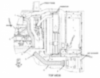 Locked diagram
Parts in this unit
Catalog descriptions with masked part numbers.
| Part number | Description |
|---|---|
| 10***13 | Air Cleaner & Mounting Group; Spare Part 10***13 Air Cleaner & Mounting Group (Caterpillar) |
| 14***67 | Clamp; (hose); spare part 14***67 clamp (Caterpillar) |
| 27***07 | Hose-air; spare part 27***07 hose-air (Caterpillar) |
| 28***11 | Valve cover, hose-air; spare part 28***11 hose-air (Caterpillar) |
| 8t***86 | Clamp; (hose); spare part 8t***86 clamp (Caterpillar) |
| 9x***01 | Clamp; (hose); spare part 9x***01 clamp (Caterpillar) |
320D LN serial number reference
The PIN plate sits on the right side of the machine frame near the base of the cab (right-side exterior wall, below the cab window on most D-series excavators); Cat also stamps the same number in at least one or two backup locations on the frame as a cross-check. Read the plate left to right: manufacturer/model code, then the 3-letter prefix, then the sequential machine serial number - the prefix is the part that ties a given machine to its exact model/configuration and production run, so quote it (not just "320D LN") when ordering parts or pulling a service manual.
| Prefix | Identifies | Notes |
|---|---|---|
| WBN | 320D LN | Long-undercarriage (narrow-gauge) configuration of the 320D medium excavator, part of the D-series production run (roughly 2006-2013, before the D2 refresh). Fitted with the Cat C6.4 ACERT engine; C6.6 ACERT is used on the same 320D/320D L platform in some regions. This prefix is tied specifically to the LN designation in dedicated model-to-prefix documentation and separate parts/service listings. |
| PCX | 320D LN | Long-undercarriage (narrow-gauge) configuration of the 320D medium excavator, same D-series generation window as other 320D LN prefixes. Fitted with the Cat C6.4 ACERT engine. Multiple independent listings title this prefix specifically to the LN designation (not plain 320D L). |
| KAF | 320D LN | Listed as a 320D LN prefix on a dedicated model-to-prefix reference alongside WBN and PCX, sharing the same long-undercarriage configuration and C6.4 ACERT engine family. No independent second listing found tying this specific prefix to the LN designation - confirm with dealer before ordering parts against it. |
Frequently asked questions
What engine does the Caterpillar 320D LN use?
The 320D LN runs the Cat C6.4 engine with ACERT technology (Tier 3/Stage IIIA equivalent), rated around 103 kW (140 hp) net at 1800 rpm. Some regional literature lists the same platform with the Cat C6.6 ACERT engine at comparable output, so confirm the engine rating plate on a specific unit before ordering parts.
What is the operating weight of the Caterpillar 320D LN?
The 320D L platform the LN is built on runs roughly 21,200-21,900 kg (46,700-48,300 lb) depending on counterweight and undercarriage. The LN's long-reach boom/stick and narrow-gauge undercarriage shift that figure further, and no single published weight covers every build, so verify against the specific counterweight and boom/stick combination fitted to your machine.
What replaced the Caterpillar 320D LN?
The 320D family, including the LN configuration, gave way to the 320E series with the Cat C7.1 ACERT engine starting around 2012. Caterpillar later replaced that generation with its next-generation 320 medium excavator line.
What 320D LN owners discuss
What engine problems come up most in field discussion about the 320D LN's ACERT engine, and how are they usually traced?
Why do the tracks or swing feel stiff and slow once a 320D LN has been running a while and everything is warm?
What wear pattern should owners expect on the long, narrow-gauge undercarriage fitted to this configuration, and how should it be maintained?
What causes oil weeping from the swing drive or final drives, and how urgent is it?
What does a throttle or acceleration fault code mean on this engine, and what should be checked first?
How do owners handle cold starts on this machine, and is starting fluid safe to use?
What should a buyer check before purchasing a used 320D LN?
Compiled from owner and technician discussions across the industry — experiences vary by serial range and machine history.
Need a specific 320D LN part?
Search live OEM part data, check fitment, and cross-reference alternatives with Heavy Parts AI.
Post a parts request and compare supplier quotes.