Caterpillar 320B U
Specifications · fluids and capacities · maintenance intervals
Post a parts request and compare supplier quotes.
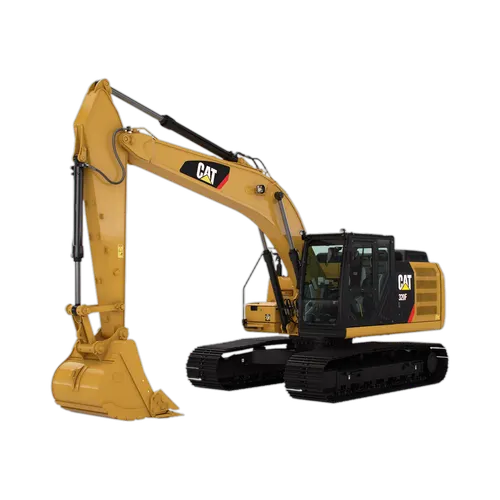
The Caterpillar 320B U is a hydraulic crawler excavator in the 20 to 23 tonne class, part of the second-generation Cat 320 platform built through the mid-to-late 1990s into the early 2000s. Every 320B variant, including the U, uses the Cat 3066T turbocharged diesel: a mechanically governed inline-injection engine displacing 6.4 liters, rated around 128 hp (95 kW) net and 134 hp gross. Operating weight across the 320B family runs roughly 19.4 to 20.6 tonnes (about 42,800 to 45,500 lb) in standard trim, and configurations with longer sticks, wider shoes, or added counterweight push toward the top of the class. The 320B followed the original 320/320 L series and was later succeeded by the 320C generation. Caterpillar sold the 320B under several factory undercarriage and boom-stick configurations, including L for transport-focused versatility, LL for extended reach, N and S for narrow-gauge and severe-duty ground conditions, and U for another dedicated configuration within that same model family.
Changes across the 320B run centered on undercarriage width, counterweight, and boom-stick pairing rather than a new engine or hydraulic architecture. The 3066T and Caterpillar's mechanical monitoring panel, with basic four-digit fault codes instead of a modern ECM, carried through the whole series. What moved the platform from the original 320 to the 320B was mainly refined hydraulic pumps and control valves plus a heavier-duty swing and travel drivetrain; the later jump to 320C brought revised electronics and moved the engine lineup toward tighter emissions control. In the used and parts market today, 320B-family machines like the U stay in service because their mechanical fuel system and simple monitoring panel are easy to diagnose and rebuild without dealer-only electronic tools, and because the platform shares a large parts base with the rest of the 320/322/325B family, which keeps components available long after Caterpillar stopped building new units on this chassis.
Below: full specifications, fluids & capacities, the factory service schedule, common service parts, verified fault codes, what owners discuss, attachment guidance, the complete assembly directory, and a serial-number reference. Complete parts lists with full OEM part numbers, exploded diagrams, quantities, and fitment data are available free in Heavy Parts AI.
Caterpillar 320B U specifications
Engine
| Engine model | Cat 3066T, 6-cylinder inline diesel, turbocharged, direct injection |
| Gross power | 100 kW (134 hp) |
| Net power | 95 kW (128 hp) at 1800 rpm |
| Displacement | 6.4 L (389 cu in) |
| Cylinders | 6, inline |
| Emissions tier | No tier rating on this engine; it is a pre-emissions-tier design dating to the early-to-mid 1990s, before nonroad diesel emissions regulation applied |
Weights
| Operating weight, standard undercarriage | 19.4-20.6 t (42,770-45,460 lb) |
| Operating weight, long/narrow/severe-duty undercarriage configs | 20.6-22.5 t (45,460-49,670 lb); varies by undercarriage and counterweight fitted, and no figure specific to this configuration is confirmed in available sources |
| Ground pressure | Not documented for this configuration in available sources |
| Transport weight | Not separately documented; verify with your dealer for the exact shipping weight of this configuration |
Dimensions
| Transport length | 9.3-9.4 m (30.5-30.9 ft), varies by boom/stick option |
| Transport width, over tracks | 2.8-3.2 m (9.2-10.4 ft), varies by track gauge/shoe width |
| Transport height, top of cab | 2.9-3.0 m (9.65-9.7 ft) |
| Tail swing radius | 2.75-2.77 m (9.03-9.1 ft) |
| Track shoe width | 600-800 mm (23.6-31.5 in), varies by undercarriage configuration |
| Ground clearance | 0.475-0.49 m (1.56-1.6 ft) |
| Undercarriage length, track on ground | 3.3-3.65 m (10.7-12.0 ft), varies by standard vs long undercarriage |
Performance
| Max dig depth | 7.58-7.59 m (24.87-24.9 ft), standard boom/stick option |
| Max reach at ground level | 10.63-10.69 m (34.88-35 ft) |
| Max dump/loading height | 6.93-7.0 m (22.74-23 ft) |
| Max cutting height | 9.75-9.8 m (31.99-32 ft) |
| Swing speed | Not documented in available sources |
| Travel speed | 5.5-6.4 km/h (3.4-4 mph) |
| Gradeability | Not documented in available sources |
| Drawbar pull | 177 kN (39,800 lb) |
Forces
| Bucket digging force | Not documented in available sources for this platform |
| Stick/arm digging force | Not documented in available sources for this platform |
Service capacities (summary)
| Fuel tank | 340 L (89.9-90 gal) |
| Hydraulic system | 220 L (58-58.2 gal) |
| Engine oil | 19-21 L (5.1-5.5 gal) |
| Cooling system | 25 L (6.6-6.7 gal) |
Values vary by configuration, region, and serial range — confirm against your machine before planning transport or lifts.
320B U fluids & capacities
| System | Capacity | Recommended fluid |
|---|---|---|
| Engine crankcase (with filter) | 19–20.5 L (5.1–5.4 gal) | Cat DEO (Diesel Engine Oil), API CG-4/CH-4 service class, for the Cat 3066T turbocharged diesel. SAE 10W-30 for ambient -20°C to 40°C (-4°F to 104°F); SAE 15W-40 for -15°C to 50°C (5°F to 122°F) in warmer climates. |
| Cooling system | 25 L (6.6 gal) | Cat DEAC (conventional heavy-duty antifreeze/coolant) as a 50/50 water-glycol premix; Cat ELC (Extended Life Coolant) usable on later production. Full-strength glycol only for extreme cold below -37°C (-34°F). |
| Fuel tank | 340 L (90 gal) | No. 2-D diesel fuel. Use a winter-blend or cold-flow fuel conditioner below -7°C (20°F) to prevent wax gelling in the filters and lines. |
| Hydraulic system total (incl. tank) | 220 L (58 gal) | Cat HYDO Advanced (or equivalent anti-wear hydraulic oil). SAE 10W below 0°C (32°F); SAE 10W-30 multigrade for wide ambient range; SAE 30 above 10°C (50°F) in hot climates. |
| Hydraulic tank | Not broken out separately from the system total — falls within the 220 L (58 gal) figure above | Same Cat HYDO Advanced fluid as the hydraulic system total, graded by ambient per the chart above. |
| Final drive (each) | 10 L (2.6 gal) per side | Cat TDTO (Transmission/Drive Train Oil). SAE 30 above 0°C (32°F); SAE 10W below -20°C (-4°F). |
| Swing drive | 6 L (1.6 gal) | Cat TDTO, same ambient-based grade selection as the final drives. |
| Pilot/servo circuit | No separate reservoir — pilot oil is drawn from the main hydraulic tank | Same Cat HYDO Advanced fluid as the main hydraulic system. |
| Grease (spec only) | N/A — applied per lubrication point, not a bulk fill | Cat Multipurpose Grease (Cat MPGM), NLGI 2 lithium-complex, for pins, bushings, and the swing bearing. Step down to NLGI 1 or 0 in sustained sub-zero service. |
Capacities are refill values from factory literature — always fill to the dipstick/sight gauge, not the number.
Caterpillar 320B U maintenance schedule
| Service interval | Tasks |
|---|---|
| Every 10 h |
|
| Every 250 h |
|
| Every 500 h |
|
| Every 1,000 h |
|
| Every 2,000 h |
|
| Every 6,000 h |
|
Servicing the 320B U beyond the schedule
Predictive Maintenance & Fluid Analysis
With no electronic ECM on board, the 320B U's Cat Monitoring System panel gives only basic four-digit alerts, so scheduled S·O·S sampling of engine, hydraulic, swing drive, and final drive oil is the real early-warning system on this machine. Watch crankcase samples for fuel dilution and soot, a sign of injection pump or ring wear on the 3066T. Sample coolant regularly for liner and radiator core condition, and track hydraulic oil cleanliness closely, since the mechanical pump and valve group have no self-diagnostics to flag wear early.
Corrective & Common Repairs
Surging idle or inconsistent RPM on the 3066T usually traces to governor linkage wear or a gummed injection pump bore, not an electronic fault; clean and reseal the pump before condemning it. Weak swing power points to a worn swing motor or a tired swing bearing rather than the engine. Slow boom or track response often comes from worn main pump swash plates or barrels, not valve blockage. Keep the undercarriage clear of packed debris; it pushes travel motor face seals out of place and causes final drive leaks.
Overhaul & Rebuild Points
High-hour 320B U units typically need the swing gear and bearing rebuilt before the final drives, since constant load cycling wears the ring gear and bearing race faster than travel components. Final drive motors and reduction gearing come next, followed by the main hydraulic pump and control valve group once swash plates and spools wear past tolerance. The 3066T's mechanical fuel system and cast iron cylinder liners are straightforward to overhaul without dealer electronics, making a top-end rebuild practical once compression drops and oil consumption climbs.
Seasonal & Environment Servicing
In cold climates, check coolant freeze protection and use a winter-grade fuel blend to keep the mechanical injection pump from gelling; the 3066T has no electronic cold-start assist, so glow plug or ether-start aids need regular inspection. In hot, dusty sites, clean the radiator and hydraulic oil cooler cores more often and shorten air filter service intervals, since a plugged filter starves the turbocharged engine of boost. In wet or muddy conditions, wash packed material from the undercarriage regularly to protect travel motor seals and track components.
320B U fault codes & troubleshooting
| Code | Meaning | Likely cause | What to do |
|---|---|---|---|
| 1302 | Engine oil pressure is too low for current engine speed. | Low oil level, plugged oil filter, worn oil pump, or a faulty oil pressure sensor/switch. | Shut the engine down, check oil level and filter condition, and verify sensor wiring before restarting. |
| 1303 | Engine coolant temperature is too high. | Low coolant level, a clogged radiator core, a stuck thermostat, a slipping fan drive, or a faulty coolant temperature sensor. | Idle the engine to cool it down, check coolant level and radiator fins for debris, and inspect the fan drive and thermostat before returning to work. |
| 1304 | Hydraulic oil temperature is too high. | Low hydraulic oil level, a clogged oil cooler, a failed cooling fan, a relief valve stuck open, or sustained heavy load in hot ambient conditions. | Reduce load and let the hydraulic system cool, check oil level and cooler fins for blockage, and confirm the cooling fan is turning. |
| 1305 | Inlet filter element is blocked beyond the allowable restriction limit. | A dirty or collapsed air filter element from dusty operating conditions, or a faulty restriction sensor. | Inspect and replace the filter element, then confirm the restriction warning clears. |
| 2201 | System/battery voltage is abnormal. | A weak or failing battery, loose or corroded battery terminals, a faulty alternator, or a bad voltage regulator. | Test battery voltage and charging voltage at the terminals, check connections for corrosion, and inspect alternator output. |
| 2202 | Governor actuator feedback sensor circuit is open or shorted to battery voltage. | A damaged or corroded governor connector/harness, chafed wiring, or a failed feedback sensor in the governor actuator. | Inspect the governor actuator connector and harness for damage or corrosion, check circuit voltage against spec, and repair or replace as needed. |
| 2302 | Governor actuator feedback signal is erratic or unstable. | A worn or sticking governor actuator, a binding throttle linkage or cable, a corroded feedback sensor connector, or out-of-spec supply voltage at the actuator connector. | Disconnect the governor connector and check supply/signal voltages at the pins against spec, inspect linkage for binding, and recalibrate the governor actuator after any repair. |
| 2304 | Governor actuator does not move when commanded. | A seized or mechanically jammed actuator, a broken or disconnected throttle cable/linkage, or a failed actuator motor. | Check linkage and cable for binding or breakage, verify actuator motor operation, and replace the actuator if it still fails to respond with linkage confirmed free. |
| 3201 | Calibration data error in the monitor/governor system. | Lost stored calibration after a control module or battery disconnect, corrupted memory, or an incomplete prior calibration procedure. | Recalibrate the governor actuator and monitor system per the machine's calibration procedure and confirm the code clears. |
Codes and remedies are general guidance for this model family — always confirm with diagnostic tooling and your dealer before major repairs.
320B U attachments & work tools
Buckets
General-purpose and heavy-duty buckets for this size class run roughly 0.9-1.5 m3 (1.2-2.0 yd3) heaped, in widths of about 900 to 1370 mm (36-54 in). Severe-duty rock buckets are narrower and smaller, roughly 0.45-1.0 m3 (0.6-1.3 yd3) in 600 to 1070 mm (24-42 in) widths for harder digging. Buckets use the 320B-family (B-linkage) bucket pivot with 80 mm bucket pins; pin-on mounting is the base configuration, with a matching pin-grabber quick coupler available for tool-less changes.
Hydraulic hammers
Operating weight for this platform runs roughly 20-23 t, placing it in the medium Cat GC-hammer class (H115 GC to H120 GC range, recommended carrier weight roughly 13-26 t depending on model). The H120 GC runs a service weight near 1,300 kg, rated flow of about 80-125 l/min, and operating pressure near 14 MPa (2,030 psi), with blow rate around 350-620 bpm. Non-Cat breakers pitched at this size class run similar tool-weight and flow ranges; confirm flow and pressure against the actual auxiliary circuit before fitting a hammer at the top of the class.
Quick couplers
A pin-grabber hydraulic coupler sized to the 80 mm bucket pins and B-linkage bucket geometry is the standard fit for this class, letting the operator swap bucket, hammer, thumb, and grapple without driving pins. Ear spacing and pin-center dimensions vary by coupler brand/series (reported roughly 300-320 mm ear spacing, 445-470 mm pin centers), so match the coupler to the specific bucket and tool set being run rather than assuming one fixed dimension.
Thumbs/grapples
Pin-on hydraulic thumb kits sized to the 80 mm bucket pin and matching bucket width are available for this class and clamp using the machine's auxiliary work-tool hydraulic circuit; mechanical (manual-clamp) thumbs are also common on this size of carrier. Hydraulic grapples, including demolition/sorting and rotating types, are offered for this class for material handling and demolition work. The machine's own hydraulic system carries a dedicated grapple/tool-control valve group, confirming factory provision for running a grapple or similar clamp-type tool off the auxiliary circuit.
Rippers
Single-shank, single-tooth rippers built to the 320B B-linkage pin-on system are offered for this class, used to pre-rip hard or frozen ground, pull roots or rock, or do light demolition work ahead of bucket digging.
Hydraulic circuit / work-tool kit notes
The factory hydraulic system includes a dedicated auxiliary/work-tool supply line group, a work-tool-supply relief valve, and a hydraulic-activation-control valve/solenoid group, so single- and double-acting tools (thumb, grapple, hammer) run off a built-in circuit rather than needing off-machine plumbing. Main system relief runs in the 31-34 MPa (4,500-4,950 psi) class; a hammer or other high-flow tool near the top of this carrier's weight class may still call for a higher-flow auxiliary kit beyond the base tool circuit -- verify actual circuit flow and pressure before ordering a tool at the upper end of the range.
Part Book
Browse by group, subgroup and unit. Part numbers are masked and diagram thumbnails are locked.
1601965 Air Cleaner Group Part of 1601865-page 49
1601965 Air Cleaner Group Part of 1601865-page 49 is listed in the Air inlet and exhaust system / air cleaner group catalog section.
- Group
- Air Inlet and Exhaust System
- Subgroup
- Air Cleaner Group
- Unit
- 1601965 Air Cleaner Group Part of 1601865-page 49
No catalog diagram available for this unit
Parts in this unit
Catalog descriptions with masked part numbers.
| Part number | Description |
|---|---|
| 16***65 | Air cleaner group |
320B U serial number reference
On the 320B U the PIN plate is riveted to the right-hand side of the main frame, just ahead of the cab base near the fuel tank. Read the first 3 letters as the serial prefix (identifies the build series) and the digits that follow as the machine's sequence number. On machines carrying a full 17-character PIN, the same 3-letter prefix and sequence number sit inside the last 8 characters.
| Prefix | Identifies | Notes |
|---|---|---|
| BAN | 320B U | Serial prefix used for 320B U production machines fitted with the Cat 3066 diesel (turbocharged air intake/exhaust hardware per the machine's own build record). Parts-revision breakpoints show this range still active through at least mid-2000. Frame, undercarriage and cooling groups are cataloged separately from the 320B L, LL and LU siblings, so don't cross-apply their part numbers. |
| BBG | 320B U | Second serial prefix used for 320B U production, paired with BAN throughout the machine's own parts catalog across fuel injection, cooling arrangement, engine arrangement and track-link listings. One external reference associates this code with the 320B LU sibling instead, so the two variants may share coverage on a common boom/stick option in places - confirm with your dealer before ordering parts unique to this range. |
Frequently asked questions
What engine powers the Caterpillar 320B U?
The 320B U uses the Cat 3066T, a turbocharged, mechanically governed diesel displacing 6.4 liters and rated at approximately 128 hp (95 kW) net, 134 hp gross. It runs a mechanical fuel injection system with a basic Caterpillar Monitoring System panel rather than a full electronic ECM.
What is the operating weight of the Caterpillar 320B U?
Operating weight across 320B-family configurations runs from about 19.4 to roughly 20.6 tonnes (42,800 to 45,500 lb) in standard trim, and can run higher toward the top of the 20 to 23 tonne class depending on undercarriage, counterweight, and boom/stick selection. Exact figures vary by configuration.
What replaced the Caterpillar 320B U?
Caterpillar moved the 320 platform to the 320C generation as the direct successor to the 320B family. The 3066-based engine architecture and mechanical monitoring approach used on the 320B U were phased out as later 320 generations adopted revised electronics and updated emissions-tier engines.
What 320B U owners discuss
How does the hydraulic system typically behave as a 320B U ages, and what do mechanics check first?
What engine quirks come up with the powertrain used in this series?
What causes stalling or power loss under load, and how is it usually chased down?
What undercarriage or track wear patterns show up most on this machine type?
What swing-system problems come up, and is there a safety-critical item to flag?
What electrical or sensor issues come up most in owner and mechanic discussions?
What should a buyer check before purchasing a used 320B U?
Compiled from owner and technician discussions across the industry — experiences vary by serial range and machine history.
Need a specific 320B U part?
Search live OEM part data, check fitment, and cross-reference alternatives with Heavy Parts AI.
Post a parts request and compare supplier quotes.