Caterpillar 320B N
Specifications · fluids and capacities · maintenance intervals
Post a parts request and compare supplier quotes.
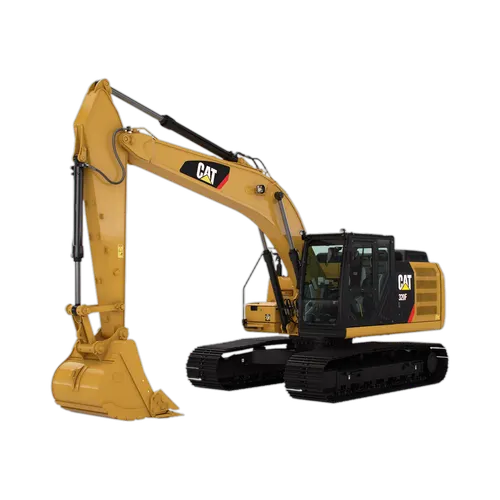
The Caterpillar 320B N is a mid-size hydraulic crawler excavator in Caterpillar's 20-ton class, built as the narrow-gauge-undercarriage trim of the 320B family. It runs the Cat 3066T turbocharged inline-six diesel, rated around 128 hp (95 kW) net, driving a load-sensing hydraulic system through a variable-displacement piston pump. Operating weight lands near 19,930 kg (43,938 lb) for the N configuration, though the wider 320B lineup spans roughly 19,800 kg to 21,300 kg (43,700 lb to 47,000 lb) depending on trim (standard, L long-undercarriage, N narrow-gauge, S severe-duty). Caterpillar built the 320B family from the early-to-mid 1990s into the early 2000s, replacing the original Cat 320 and later giving way to the 320C. Buyers could spec the 320B N with a choice of boom and stick lengths and a range of buckets, matched to the same narrowed 2200 mm (7.22 ft) track gauge and 2500 mm (8.2 ft) shipping width that define the N trim.
Where the base 320B and 320B L carry a standard-width undercarriage for maximum stability and lift capacity, the 320B N substitutes a narrower track frame and gauge, built for jobsites with restricted access, such as mountainous terrain, utility corridors, or transport-restricted routes, while keeping the same engine, hydraulics, and upper structure as its siblings. The follow-on 320C kept the same 3066T engine family but added revised electronics and cooling, a sign of how incremental the B-to-C transition was on the powertrain side. In the used and parts market today, the 320B N holds value for its mechanically governed engine and analog controls, straightforward to diagnose and rebuild without proprietary electronic diagnostics, and for sharing its major driveline, hydraulic, and engine components with the broader 320B line. What sets it apart for parts sourcing is the narrow-gauge undercarriage itself: track frames, rollers, idlers, and shoes sized for the N's tighter gauge are not interchangeable with standard or L-trim 320B undercarriages, so buyers shopping used units or parts need to confirm gauge and shoe width before ordering.
Below: full specifications, fluids & capacities, the factory service schedule, common service parts, verified fault codes, what owners discuss, attachment guidance, the complete assembly directory, and a serial-number reference. Complete parts lists with full OEM part numbers, exploded diagrams, quantities, and fitment data are available free in Heavy Parts AI.
Caterpillar 320B N specifications
Engine
| Engine model | Cat 3066T diesel, 6-cylinder, turbocharged |
| Gross power | 134 hp (99.9 kW) at 1800 rpm — shared 3066T rating across the 320B family |
| Net power | 128 hp (95.5 kW), rated to ISO 9249 / SAE J1349 / EEC 80/1269 — this is the figure published directly for the N configuration |
| Displacement / bore & stroke | 6.4 L (389-390.6 cu in); bore 104 mm (4.1 in) x stroke 132 mm (5.2 in) |
| Emissions tier | Not documented for this specific model. Production falls inside the nonroad Tier 1 phase-in window (mid-to-late 1990s); no certified tier rating is published in available spec sheets for the 320B N — verify with a dealer if compliance documentation is needed |
Weights
| Operating weight (N / narrow-gauge undercarriage) | 19,930 kg (43,938 lb) |
| Ground pressure | Not published specifically for the narrow-gauge (N) configuration. The long-undercarriage 320B variant with reach boom and HD bucket runs 35.7-38.4 kPa (5.2-5.6 psi) depending on counterweight; the N's narrower 500 mm shoes (vs 602 mm on the long-undercarriage variant) would read higher for a comparable operating weight |
| Transport weight | Not separately documented; shipping condition uses the same operating weight figure above |
Dimensions
| Height, top of cab | 2.94-2.96 m (9.65-9.70 ft) |
| Width over tracks | 2.50-2.53 m (8.21-8.30 ft) |
| Tail swing radius | 2.75-2.77 m (9.03-9.10 ft) |
| Track shoe width | 500 mm (19.69 in) |
| Track gauge | 2.20-2.23 m (7.22-7.30 ft) |
| Ground clearance | 0.475-0.49 m (1.56-1.60 ft) |
| Undercarriage length (track on ground) | 3.27 m (10.72 ft) |
| Transport (shipping) length | 9.0 m (29.53 ft) with the short mass boom and stick fitted; shipping height in that configuration is 3.05 m (10.01 ft). Shipping length is not separately published for the reach-boom configurations |
Performance
| Max digging depth | 5.20-7.58 m (17.07-24.87 ft), varies by boom/stick option — six factory boom-and-stick combinations are offered |
| Max reach along ground | 8.30-10.63 m (27.24-34.88 ft), varies by boom/stick option |
| Max cutting height | 8.54-9.73 m (28.02-31.93 ft), varies by boom/stick option |
| Max loading (dump) height | 5.69-6.93 m (18.67-22.74 ft), varies by boom/stick option |
| Max vertical-wall digging depth | 4.43-6.80 m (14.54-22.31 ft), varies by boom/stick option |
| Max travel speed | 5.5 km/h (3.42-3.50 mph) |
| Drawbar pull | 177 kN (39,800 lb) |
| Hydraulic system relief pressure / pump flow | Relief valve 34,336 kPa (4,980 psi); combined pump flow 370 L/min (97.8 gal/min) |
| Swing speed | Not documented in available spec sheets for this model — verify with a dealer if needed |
| Gradeability | Not documented in available spec sheets for this model — verify with a dealer if needed |
Forces
| Bucket digging force | Not documented in available period spec sheets for the 320B/320B N family — verify with a dealer or shop manual if needed |
| Stick (arm) digging force | Not documented in available period spec sheets for the 320B/320B N family — verify with a dealer or shop manual if needed |
| Swing torque | 57 kN·m (42,050 lb-ft) — published for the shared swing drive across the 320B family |
Service capacities (summary)
| Fuel tank | 340 L (89.9-90 gal) |
| Hydraulic system, including tank | 220 L (58-58.2 gal) |
| Engine oil | 19.3-20.8 L (5.1-5.5 gal) |
| Cooling system | 25-25.4 L (6.6-6.7 gal) |
| Swing drive | 6.1 L (1.6 gal) |
| Final drive, each side | 9.8 L (2.6 gal) |
Values vary by configuration, region, and serial range — confirm against your machine before planning transport or lifts.
320B N fluids & capacities
| System | Capacity | Recommended fluid |
|---|---|---|
| Engine crankcase (with oil filter) | 19.3–20.5 L (5.1–5.4 US gal) — figure varies slightly by source/config | Cat DEO or DEO-ULS diesel engine oil. Standard grade SAE 15W-40; select viscosity by ambient starting temperature — SAE 10W-30 covers a wider cold range, with a cold-weather multigrade for extreme low temperatures. |
| Cooling system | 25.0 L (6.6 US gal) | Cat DEAC (Diesel Engine Antifreeze/Coolant) as a 50/50 premix with clean water for standard freeze and boil protection. Cat ELC (Extended Life Coolant) is a compatible alternative; neither needs a separate supplemental coolant additive when used as the factory-spec product. |
| Fuel tank | 340.3–340.7 L (89.9–90 US gal) | No. 2-D diesel fuel meeting Cat's diesel fuel specification. Use a winterized/low-temperature blend in cold climates to prevent fuel gelling and filter plugging. |
| Hydraulic system, total including tank | 219.5–220 L (58 US gal) total system fill; hydraulic tank alone is not broken out separately in the available spec sheets | Cat HYDO Advanced hydraulic oil is the preferred fill; Cat TDTO (TO-4 Transmission/Drive Train Oil) is an accepted alternate for the hydraulic tank. Grade is selected by ambient operating temperature per Cat's hydraulic oil viscosity guidance. |
| Final drive (each) | 9.84–9.9 L (2.6 US gal) per side | Cat TDTO (TO-4 Transmission/Drive Train Oil). Standard grade is SAE 10W; heavier SAE 30 or SAE 50 grades apply in sustained high ambient temperatures per Cat's TDTO viscosity-by-temperature guidance. |
| Swing drive | 6.06–6.1 L (1.6 US gal) | Cat TDTO (TO-4 Transmission/Drive Train Oil), same grade selection logic as the final drives. |
| Grease (spec only) | Not a fill-volume item; applied at pin and bushing grease fittings per the lube schedule | Cat multipurpose NLGI-2 moly grease (Cat Prime Application Grease) for standard-duty pins and bushings. Cat Extreme Application grease is specified for high-load or high-temperature pivot points. |
Capacities are refill values from factory literature — always fill to the dipstick/sight gauge, not the number.
Caterpillar 320B N maintenance schedule
| Service interval | Tasks |
|---|---|
| Every 10 h |
|
| Every 250 h |
|
| Every 500 h |
|
| Every 1,000 h |
|
| Every 2,000 h |
|
| Every 4,000 h |
|
Servicing the 320B N beyond the schedule
Predictive Maintenance & Fluid Analysis
The 3066T's mechanical governor and injection pump carry no ECM fault codes, so scheduled S·O·S sampling of engine oil, hydraulic tank oil, swing drive, and final drive gear oil is the main early-warning system on a 320B N. Trend iron and silicon counts against the narrow-gauge undercarriage's higher wear rate from reduced ground contact width. Watch coolant condition and additive concentration to catch water pump and liner cavitation issues before they reach the block. Track hydraulic oil cleanliness closely; the load-sensing pump and valve stack are unforgiving of contamination.
Corrective & Common Repairs
Common 320B N repairs center on the travel motor and final drive duo-cone (floating face) seals; once they weep gear oil, contamination follows fast and the planetary hub wears out. The narrower track frame sees more twisting load than standard-gauge 320B undercarriages, accelerating roller, idler, and sprocket wear and loosening track adjuster grease seals. On the engine side, expect injector and injection-pump wear by mid-life, showing up as hard starting and smoke. Pilot system pressure switches and hydraulic hose chafing around the narrow undercarriage are frequent electrical and leak points.
Overhaul & Rebuild Points
Major rebuild points on a 320B N arrive predictably between 8,000 and 12,000 hours: swing bearing and gear wear opens up backlash, main pump and travel/swing motor efficiency drops enough to warrant a teardown, and the 3066T typically needs a top-end or inframe overhaul as compression and blow-by worsen. Because the undercarriage runs narrower than standard 320B trims, full track chain, roller, idler, and sprocket replacement tends to come sooner and costs more per set to match the N's gauge. Budget turbocharger and injection pump rebuilds alongside the engine work.
Seasonal & Environment Servicing
320B N units built for confined and mountainous sites pick up more mud and debris packed into the narrower track frame and rollers than standard-gauge machines; wash out the undercarriage regularly to keep track adjusters and rollers from seizing. In cold climates, switch to a winter-grade hydraulic oil and verify the ether or glow-plug starting aid on the 3066T before freezing weather hits. Check coolant freeze protection each fall. In hot, dusty applications, clean radiator, oil cooler, and aftercooler fins more often than the standard interval to prevent overheating.
320B N fault codes & troubleshooting
| Code | Meaning | Likely cause | What to do |
|---|---|---|---|
| 2302 | Governor actuator feedback signal is unstable or deviates from the expected value. | Faulty governor actuator, damaged wiring or a corroded connector at the actuator, or a marginal engine speed control module. | With the key off, disconnect the governor actuator connector and check reference voltage at the connector (normal range is roughly 4.5-5.5 V DC); out-of-range voltage points to wiring, in-range voltage points to the actuator or control module. |
| 1302 | Engine oil pressure has dropped below the acceptable threshold. | Low engine oil level, a plugged oil filter, a worn oil pump, or a faulty oil pressure sender. | Shut the engine down, check oil level and top up with the correct-grade Cat engine oil, inspect for leaks and filter condition, then test the pressure sender if oil and filter check out. |
| 1303 | Engine coolant temperature has exceeded the normal operating range. | Low coolant level, a plugged radiator core, a slipping or failed fan drive, or a faulty coolant temperature sensor. | Let the engine cool before opening the cooling system, check coolant level, inspect the radiator fins and fan drive for debris or slippage, then verify the temperature sensor if the cooling components are sound. |
| 1304 | Hydraulic oil temperature has exceeded the normal operating range. | Low hydraulic oil level, a plugged hydraulic oil cooler, sustained high-load operation, or a failing cooler fan. | Reduce load and let the machine idle to cool, check hydraulic oil level and cooler fins for debris, confirm the cooler fan turns, then verify the temperature sender if the cooling circuit checks out. |
| 1305 | Engine air intake filter element is restricted or blocked. | A dirty or clogged primary air filter element, or a faulty restriction sensor/switch. | Inspect and replace the primary air filter element as needed; check the restriction sensor and its wiring if the code persists with a known-clean filter. |
| 2201 | Battery or system voltage is outside the normal operating range. | A weak or failing battery, loose or corroded battery cable connections, or a faulty alternator/charging circuit. | Check battery state of charge and terminal connections, inspect charging system output at the alternator, and repair or replace components as needed. |
| 4101 | Monitor system memory (RAM) fault detected in the machine's monitor/controller. | An internal monitor panel or controller fault, or a transient power interruption that corrupted monitor memory. | Cycle the key switch off and back on to clear a transient fault; if the code returns, the monitor panel or controller likely needs a dealer-level check, reset, or replacement. |
| 3201 | Calibration data error in the machine's electronic monitor/control system. | Lost or corrupted calibration parameters in the controller, often following a battery disconnect or power interruption. | Have a dealer technician recalibrate or reprogram the affected controller with the proper service tool, and verify battery connections are secure to prevent recurrence. |
Codes and remedies are general guidance for this model family — always confirm with diagnostic tooling and your dealer before major repairs.
320B N attachments & work tools
Buckets
General-duty buckets for this 20-ton class run about 0.8-1.0 m3 (1.0-1.3 yd3); heavy-duty rock buckets top out near 1.2-1.36 m3 (1.6-1.8 yd3). Typical widths span roughly 600 mm to 1500 mm (24 to 60 in). Buckets use the 320B family's B-linkage two-pin mount with 80 mm (3.15 in) pins, fitted either pin-on or through a B-linkage quick coupler.
Hydraulic hammers
The 320B N sits in the roughly 20 metric-ton breaker size class based on its operating weight. Hammers built for this class run a tool/chisel diameter near 125-140 mm (5-5.5 in), auxiliary flow around 120-180 l/min (32-48 gpm), and working pressure near 155-175 bar (2250-2550 psi). Impact rate is roughly 350-650 bpm, varies by hammer make and box- vs top-mount design.
Quick couplers
Machines in this class take a hydraulic pin-grabber quick coupler built to the B-linkage, engaging the same 80 mm (3.15 in) bucket pins used by pin-on tools. The coupler is cab-controlled from a dash switch and includes a mechanical backup lock that holds the attachment if hydraulic pressure is lost.
Thumbs/grapples
Hydraulic thumb kits for this class mount either pin-on or through the quick coupler and are sized to match roughly 900 mm to 1500 mm (36 to 60 in) buckets, using a 2-tine pin-grabber design run off its own cylinder on the auxiliary circuit. Orange-peel and demolition grapples sized for the 14-31 ton excavator range fit this machine's weight class, running off the same medium/high-pressure auxiliary circuit.
Rippers
A single-shank ripper is available on the B-linkage, pin-mounted with 80 mm (3.15 in) pins. Typical overall length runs near 1.5 m (59 in) with a shank length near 1.1 m (43 in). It's used for breaking rock, frozen ground, or pavement beyond what the bucket can manage, and for shallow ripping passes.
Hydraulic-kit notes
Factory auxiliary hydraulics on this excavator class add a dedicated attachment circuit, with cab-selectable flow presets to match tool type. Hammers and grapples run on a medium-pressure setting (roughly 150-180 bar); shears and pulverizers need the high-flow/high-pressure setting instead. Confirm the machine's actual auxiliary valve and relief setting against the tool maker's spec sheet before pairing any attachment.
Part Book
Browse by group, subgroup and unit. Part numbers are masked and diagram thumbnails are locked.
1099313 Mounting Group-Air Cleaner 1241711-page 52
1099313 Mounting Group-Air Cleaner 1241711-page 52 is listed in the Air inlet and exhaust system / air cleaner & mounting group catalog section.
- Group
- Air Inlet and Exhaust System
- Subgroup
- Air cleaner & mounting group
- Unit
- 1099313 Mounting Group-Air Cleaner 1241711-page 52
No catalog diagram available for this unit
Parts in this unit
Catalog descriptions with masked part numbers.
| Part number | Description |
|---|---|
| 10***13 | Air Cleaner & Mounting Group; Spare Part 10***13 Air Cleaner & Mounting Group (Caterpillar) |
320B N serial number reference
The PIN plate is a riveted metal tag on the machine frame, usually on the right side of the upper structure near the operator's cab, at or below window height; some earlier units carry a duplicate plate inside the cab near the seat or right foot area. The first three characters of the PIN are the serial number prefix, which ties the machine to a specific model/configuration production run; the digits after that are the sequential build number within that run. Because the 320B family splits into several undercarriage/configuration variants (320B, 320B L, 320B LN, 320B N, 320B S, and others) that share the same engine but carry different prefix blocks, match the full prefix against a 320B-family reference rather than assuming by engine or body style alone.
| Prefix | Identifies | Notes |
|---|---|---|
| 2AS | 320B N (narrow-gauge undercarriage) | PIN prefix 2AS00001-UP is documented under the 320B N nameplate in factory-style supplementary service/final-drive reference material, distinct from the base 320B, 320B L, 320B LL, 320B LU, and 320B S prefix blocks. Runs the 320B family's 3066T turbocharged diesel. |
| 4NR | 320B N (narrow-gauge undercarriage) - confirm with dealer | 4NR00001-UP is listed under the 320B N nameplate in some parts-prefix references, but the same prefix is also listed under the plain 320B nameplate elsewhere. Treat as unconfirmed for the N variant specifically; verify against the machine's own PIN plate or a dealer lookup before ordering N-specific parts (final drive, undercarriage). |
Frequently asked questions
What engine does the Caterpillar 320B N use?
The 320B N runs the Caterpillar 3066T, a turbocharged inline-six diesel rated at roughly 128 hp (95 kW) net. It is mechanically governed with a Cat fuel injection pump, shared across the 320B, 320B L, and 320B N, and carried forward in updated form into the following 320C.
What is the operating weight of the Caterpillar 320B N?
The 320B N has an operating weight of about 19,930 kg (43,938 lb) in its standard configuration. Other 320B trims range from about 19,800 kg to 21,300 kg (43,700 lb to 47,000 lb) depending on undercarriage and boom/stick setup, so confirm the exact configuration when matching parts or attachments.
What replaced the Caterpillar 320B N?
Caterpillar replaced the 320B family, including the N trim, with the 320C, introduced around 2001 and built into the mid-2000s. The 320C kept the same 3066T engine family but added revised electronics and cooling. This lineage is unrelated to the reintroduced Cat 320 nameplate Caterpillar used on its 2018-and-later Next Generation excavators, which is a different machine despite reusing the model number.
What 320B N owners discuss
What engine does the 320B N actually run, and does the narrow-gauge undercarriage change the powertrain?
Why does the whole hydraulic system go soft or sluggish at once instead of one function at a time?
What usually causes a 320B N to run hot after a few hours of work?
One track pulls weak or the machine won't track straight — is that the travel motor?
What undercarriage wear pattern should an owner expect on this machine?
What's behind intermittent electrical faults and sensor codes on the 320B N?
What should a buyer check before purchasing a used 320B N?
Compiled from owner and technician discussions across the industry — experiences vary by serial range and machine history.
Need a specific 320B N part?
Search live OEM part data, check fitment, and cross-reference alternatives with Heavy Parts AI.
Post a parts request and compare supplier quotes.