Caterpillar 160M
Specifications · fluids and capacities · maintenance intervals
Post a parts request and compare supplier quotes.
The Cat 160M is a large wheeled motor grader in Caterpillar's M Series lineup, sized above the mid-size 140M and below the heavier 16M, built for road construction, fine grading, and site maintenance work. It runs a Cat C9 ACERT six-cylinder diesel rated 159 kW (213 hp) net at 2000 rpm in base (1st gear) form, with Cat's VHP Plus power management raising output to roughly 200 kW (268 hp) in higher travel gears; emissions are certified to U.S. EPA Tier 3/EU Stage IIIA, with a dedicated Environment Canada Tier 3 calibration also offered. Operating weight varies by configuration, spanning roughly 15.9-23.9 t (35,060-52,795 lb), with a typically-equipped machine running about 19.7-20.6 t (43,500-45,400 lb). Cat built the 160M from 2007 into the late 2010s, offered as a standard rear-tandem-drive machine or as the 160M AWD with hydraulic front-wheel assist, with moldboard width options from 3.7 m up to 4.9 m (12-16 ft). It replaced the earlier 160H and was itself succeeded by the 160M2.
The M Series update brought ACERT emissions engines, electro-hydraulic joystick-assist controls, and the optional AWD front-wheel-drive system with Cat's Steering Compensation System for powered turns to the 160-class grader for the first time. The follow-on 160M2 swapped in a Cat C9.3 ACERT with a Clean Emissions Module for Tier 4 Interim/Stage IIIB compliance, and the current 160M3 runs a C9.3B ACERT with full DPF/DOC/SCR aftertreatment and automatic regeneration for Tier 4 Final/Stage V. Because the 160M predates that aftertreatment hardware, it remains in demand on the used and parts market among buyers who want a fully electronic, ACERT-era grader without DPF regeneration or SCR/DEF upkeep - a common pick for municipal, county, and export fleets, and a steady source of circle/drawbar, transmission clutch pack, and tandem final-drive parts off machines that logged heavy hours during the 2007-2015 road-building years.
Below: full specifications, fluids & capacities, the factory service schedule, common service parts, verified fault codes, what owners discuss, attachment guidance, the complete assembly directory, and a serial-number reference. Complete parts lists with full OEM part numbers, exploded diagrams, quantities, and fitment data are available free in Heavy Parts AI.
Caterpillar 160M specifications
Engine
| Engine model | Cat C9 ACERT (VHP Plus variable-horsepower design), 6-cylinder diesel. Fitted across both the 160M and 160M AWD configurations (2007-2019 production run); the smaller C7 ACERT shown on shared M-Series grader literature applies to other models in that lineup, not the 160M. |
| Net power, base (1st gear) | 159 kW (213 hp) at 2000 rpm |
| VHP Plus power range (AWD engaged, across gears) | 159-200 kW (213-268 hp) |
| Displacement | 8.8 L (537 cu in) |
| Bore x stroke | 111.8 mm x 149.9 mm (4.4 in x 5.9 in) |
| Maximum torque | 1237 Nm (912 lb-ft) standard; up to 1343 Nm (991 lb-ft) at 1650 rpm with AWD engaged |
| Emissions certification | Equivalent to U.S. EPA Tier 3 / EU Stage IIIA (non-current tier); a dedicated Environment Canada Tier 3 variant was also offered for the Canadian market |
Weights
| Operating weight, standard machine | 15,903 kg (35,060 lb) total - front axle 4,389 kg (9,677 lb), rear axle 11,514 kg (25,383 lb) |
| Operating weight, typically equipped | 19.7-20.6 t (43,464-45,432 lb); varies by configuration/series (standard vs AWD) |
| Gross vehicle weight, base configuration (AWD) | 17.8 t (39,271 lb) total - front 4,985 kg (10,992 lb), rear 12,827 kg (28,278 lb) |
| Gross vehicle weight, maximum configuration | about 23.9 t (52,794-52,795 lb) total - front approx. 7,663 kg (16,894 lb), rear approx. 16,284 kg (35,900 lb) |
| Shipping weight | not published as a distinct figure for this model; standard operating weight above approximates minimum shipping condition |
| Ground pressure | not published for this wheeled machine class |
Dimensions
| Overall length (front tire to rear axle) | 8.71-8.75 m (28.6 ft / 343-345 in); minor variation by series |
| Transport length (moldboard push plate to ripper, retracted) | 9.82 m (386.5 in / 32.2 ft) |
| Width over tires | 2.49-2.51 m (8.17-8.24 ft / 98-98.9 in) |
| Height to top of cab | 3.29-3.38 m (10.8-11.1 ft / 129.6-133 in); varies by cab configuration |
| Wheelbase | 6.12 m (20.08 ft / 241 in) |
| Ground clearance, front axle | 0.60 m (1.96-2.00 ft / 23.5-24 in) |
| Ground clearance, rear axle | 0.34 m (1.10-1.13 ft / 13.3-13.6 in) |
Performance
| Maximum travel speed, forward | 47.4 km/h (29.5 mph), 8th gear |
| Maximum travel speed, reverse | 37.4 km/h (23.3 mph), 6th gear |
| Turning radius (outside front tires) | 7.6 m (25 ft) |
| Moldboard width | 3.7 m (12 ft) standard; 4.3 m (14 ft) and 4.9 m (16 ft) offered as options |
| Hydraulic system flow/pressure | electro-hydraulic load-sensing, closed-center circuit; approx. 211 L/min (55.7 gal/min) at 24,100 kPa (3500 psi) |
| Gradeability / drawbar pull | not published for this machine class |
Service capacities (summary)
| Fuel tank | 397-416 L (105-110 gal); varies by configuration/series |
| Hydraulic system | 64 L (16.9 gal) |
| Engine oil (with filter) | 30 L (7.9 gal) |
| Cooling system | 40 L (10.6 gal) |
Values vary by configuration, region, and serial range — confirm against your machine before planning transport or lifts.
160M fluids & capacities
| System | Capacity | Recommended fluid |
|---|---|---|
| Engine crankcase (with filter) | 30 L (7.9 US gal) | Cat DEO or DEO-ULS multigrade diesel engine oil. SAE 10W-30 is the preferred grade for the C9 engine between -18°C (0°F) and 40°C (104°F); SAE 15W-40 covers -9.5°C (15°F) up to 50°C (122°F). For colder starts step down through 5W-40, 0W-40, or 0W-30 as ambient minimums approach -40°C (-40°F). |
| Cooling system | 40 L (10.6 US gal) | Cat ELC (Extended Life Coolant) is the factory fill, giving freeze protection to -35°C (-30°F) as standard equipment. Cat DEAC conventional heavy-duty antifreeze/coolant is an accepted alternative. Mix 1:1 with clean water (minimum 30 percent glycol); raise the glycol concentrate for deeper cold protection, down to about -52°C (-62°F) if required. |
| Fuel tank | 416 L (110 US gal) | Ultra-low sulfur distillate diesel fuel (15 ppm sulfur or less) meeting Cat's distillate diesel fuel specification. Biodiesel blends are permitted up to B20 for this engine family provided the blend stock meets Cat's biodiesel requirements; higher blends need dealer consultation. |
| Transmission, differential and final drives (combined refill) | 65 L (17.2 US gal) | Cat TDTO (TO-4 spec) transmission/drive-train oil. SAE 30 covers general use; step up to SAE 50 for hot, continuous-duty operation, or down to SAE 0W-20/0W-30/10W synthetic-blend grades (Cat Arctic TDTO, Cat TDTO-TMS) for cold starts approaching -40°C (-40°F). |
| Tandem housing (each) | 80 L (21.1 US gal) | Same Cat TDTO (TO-4 spec) oil family as the transmission/differential circuit, selected by the same viscosity-by-temperature guidance. |
| Hydraulic system tank | 64 L (16.9 US gal) | Cat HYDO Advanced 10 (SAE 10W) is the preferred hydraulic oil for this machine's hydraulic system between 0°C (32°F) and 40°C (104°F); Cat HYDO SAE 10W is an accepted second choice. For colder climates use SAE 0W-20 or 0W-30 grades (Cat Arctic TDTO or Cat Arctic DEO SYN) rated down to -40°C (-40°F). |
| Circle drive housing | 7 L (1.8 US gal) | Cat GO (Gear Oil) or Cat Synthetic GO. SAE 85W-140 or 75W-140 cover a wide temperature span; SAE 90 suits warm climates from 0°C to 40°C (32°F to 104°F). |
| Front wheel spindle bearing housing | 0.5 L (0.13 US gal) | Sealed "live spindle" front axle design lubricated with a light-weight spindle oil per the machine's operation and maintenance manual; the exact grade is not broken out in the general fluids guide, so confirm with a dealer before service. |
| Grease (chassis and pin joints, spec only) | Not a refill volume - serviced via grease gun or automatic lubrication points | Cat Ultra 5Moly Grease for high-load pin joints and drawbar/circle wear surfaces (usable to about -35°C/-31°F); Cat Advanced 3Moly Grease for medium-duty points (to about -30°C/-22°F); Cat Multipurpose Grease (NLGI 2) for light-duty points (to about -20°C/-4°F); Cat High Speed Ball Bearing Grease for fan drive bearings. |
Capacities are refill values from factory literature — always fill to the dipstick/sight gauge, not the number.
Caterpillar 160M maintenance schedule
| Service interval | Tasks |
|---|---|
| Every 50 h |
|
| Every 250 h |
|
| Every 500 h |
|
| Every 1,000 h |
|
| Every 2,000 h |
|
| Every 6,000 h |
|
| Every 12,000 h |
|
Servicing the 160M beyond the schedule
Predictive maintenance & fluid analysis
Run S.O.S sampling on the C9 ACERT engine oil, the combined transmission/differential/final-drive fill, each tandem housing, and the circle drive case - wear-metal trends catch a failing clutch pack or tandem bearing long before it shows on a dipstick. Sample coolant condition against the Cat ELC service life, and track hydraulic oil cleanliness given the machine's electro-hydraulic load-sensing circuit. On AWD units, watch front-wheel-drive pump and motor performance for early hydrostatic wear, and pull stored ECM fault codes at every service instead of waiting for a shutdown.
Corrective & common repairs
Most 160M repair calls trace to the grading end or electronic controls, not the engine. Expect play in the moldboard slide rail, circle, and lift-cylinder pins as the top wear complaint, fixed by adjusting or replacing wear strips before a full circle rebuild. On the powershift transmission, erratic shifting or a stall between gears usually means worn clutch packs or low clutch pressure, not a bad solenoid. Steering faults and mid-articulation shutdowns often trace to a corroded steering-position sensor connector near the pivot - clean and recheck before replacing parts.
Overhaul & rebuild points
Plan a circle and drawbar rebuild around wear-strip and gear-tooth condition rather than a fixed hour number - shimmed strips buy time, but a worn circle segment or drawbar ball-and-socket needs a full teardown. Inspect tandem housing planetary gears and bearings once oil analysis shows rising wear metals. On the C9 ACERT, budget for an inframe overhaul (turbocharger, injectors, top end) as hours climb into the low five figures, and check the articulation hitch bearing and transmission clutch packs at the same time to avoid repeat downtime.
Seasonal & environment servicing
Cold-weather starts need the correct viscosity step-down across the engine, TDTO, and hydraulic circuits, plus a working block heater and an ELC freeze-point check before winter work. In snow, mud, or loose material, AWD adds real traction but also a front-wheel hydraulic circuit to inspect for leaks and pump/motor wear after heavy use. In hot, dusty, abrasive terrain, clean the hydraulic-demand fan core and radiator more often, shorten circle/drawbar/articulation grease intervals, and inspect the moldboard cutting edge and circle wear strips ahead of the normal interval.
160M common service parts
| Part number | Part | Notes | |
|---|---|---|---|
| 220-8678 | Seal-Ring | Fuel system service | Check fitment → |
| 326-1644 | Filter As-Water Sep & Fuel | Fuel system service | Check fitment → |
| 245-6375 | Filter Element-Air | Air intake service | Check fitment → |
| 245-6376 | Filter Element As-Air | Air intake service | Check fitment → |
| 149-1912 | Filter Element-Cab Air | Air intake service | Check fitment → |
Always confirm against your machine's serial number — cross-check any part in Heavy Parts AI before ordering.
160M fault codes & troubleshooting
| Code | Meaning | Likely cause | What to do |
|---|---|---|---|
| E560 (3) | Secondary steering pump test failed - the ECM commands the backup steer pump and does not see enough pump pressure come up, so the machine calls for an immediate safe shutdown. | Electrical fault in the secondary steer pump motor circuit, or a mechanical pump problem such as a worn pump, low hydraulic oil, or air in the circuit. | Check hydraulic oil level and the pump motor wiring/connector first, then verify actual pump output pressure before condemning the secondary steer pump. |
| E192 (3) | Steering system malfunction - the chassis/implement ECMs stop receiving valid steering position feedback and the machine calls for an immediate safe shutdown. | A faulty steering handle or steering-cylinder position sensor, or a wiring/connector fault feeding that signal to the ECM. | Inspect steering sensor wiring and connectors for corrosion or damage, check sensor signal with a meter, then recalibrate steering through the onboard diagnostic tool. |
| 2200-3 | Left steering cylinder position sensor signal voltage reads above the normal range. | Damaged or corroded sensor wiring/connector, or a failed position sensor; this is one of the codes that can trigger an E192 steering malfunction shutdown. | Check the sensor harness and connector for chafing or corrosion and confirm sensor supply voltage before replacing the position sensor. |
| E1375 | Steering system malfunction tied to unexpected or unwanted activation of the secondary (backup) steering system. | A wiring fault in the secondary steering circuit causing a false activation signal, reported as a recurring harness issue across M-Series grader wiring. | Inspect secondary steer wiring and connectors for chafe points or moisture intrusion, and check for related active diagnostic codes before replacing components. |
| 110-0 | Engine coolant temperature reads above the normal operating range at the most severe level (high coolant temperature). | Low coolant level, a plugged radiator core, a slipping or failed fan drive/thermostat, or less often a faulty coolant temperature sensor. | Check coolant level and radiator core cleanliness first, confirm fan engagement, then verify the sensor reading against a shop gauge before replacing it. |
| 100-3 | Engine oil pressure sensor circuit voltage reads above normal (open circuit or short to a power source), so the ECM loses a valid oil pressure reading. | Sensor wiring shorted toward a power source, a corroded connector, or a failed oil pressure sensor. | Confirm actual oil level and pressure with a mechanical gauge first, then check sensor wiring for a short before replacing the sensor. |
| 102-2 | Boost (turbocharger/intake manifold) pressure sensor signal erratic. | A faulty boost pressure sensor or damaged/intermittent sensor wiring; the same component identifier also covers low-signal, high-voltage, low-voltage, and sensor-not-responding faults under other failure modes. | Check the sensor connector and wiring for intermittent contact, compare the sensor reading to a calibrated gauge, and replace the sensor if the fault persists. |
Codes and remedies are general guidance for this model family — always confirm with diagnostic tooling and your dealer before major repairs.
160M attachments & work tools
Moldboard / blade options
Standard moldboard is 3.7 m (12 ft) wide, 610 mm (24 in) high, 22 mm (0.87 in) thick, with a curved DH-2 steel cutting edge. Optional wider boards include a 4.3 m (14 ft) blade in 610 mm or 686 mm heights, and, for the 160M/160M AWD only, a 4.9 m (16 ft) x 686 mm (27 in) x 25 mm (1 in) moldboard. A 610 mm (2 ft) left-hand blade extension is also offered.
Front-mounted work tool group
A bolt-on push plate or a hydraulic front lift group mounts ahead of the front axle. The front lift group accepts either a front dozer (bull) blade or a front V-type scarifier for combined moldboard/front-tool work, and needs its own hydraulic valve arrangement to run.
Rear ripper/scarifier
Standard rear ripper carries three shanks in a five-shank holder frame (holder spacing 533 mm/21 in), rated for up to about 428 mm (16.8 in) ripping depth with roughly 9.3 t (20,500 lb) penetration force and about 11.9 t (26,300 lb) pryout force on this class. The same frame converts to a 9-tooth rear scarifier giving 2.3 m (91 in) working width and up to 266 mm (10.5 in) scarifying depth. Ripper tips come in a reversible centerline style for balanced wear or an aggressive penetration style for breaking through hard surfaces.
Mid-mount scarifier
Optional V-type mid-mount scarifier package uses an 11-shank holder frame (116 mm/4.6 in spacing), giving about 1.18 m (46.6 in) working width and up to 292 mm (11.5 in) depth. Mounted between the front axle and moldboard, it gives better depth control and visibility than a front scarifier and needs its own hydraulic valve arrangement.
Front scarifier
V-type front scarifier hangs off the front lift group with 5- or 11-tooth shank holder frames (116 mm/4.6 in spacing), about 1.2 m (47.4 in) working width and up to 467 mm (18.4 in) depth. It shares the lift group's raise/lower hydraulics, making it the lowest-cost scarifying option, best suited to lighter work.
Snow removal package
An optional Snow Arrangement equips the machine for winter work, and a frame-ready snow wing mounting bracket is offered as a factory option. Mast-type wings throw deep drifted snow; mastless wings bench and clear shoulder drifts, ramping up to roughly 40 degrees of bench angle. The front lift group can also carry a straight blade or V-plow for road clearing, and each wing or plow circuit adds its own hydraulic valve arrangement.
Ground engaging tools / cutting edges
Standard curved DH-2 steel cutting edges are 152 x 16 mm (6 x 5/8 in) with 19 mm (3/4 in) mounting bolts; end bits use the same steel spec at 16 mm (5/8 in) thickness. Cat Work Tools also offers overlay end bits and graderbits in the same mounting pattern for extended wear life.
Hydraulic kit / valve arrangements
Base machine ships with electrical/hydraulic valves and lines for the standard implement functions, run off a 210 L/min (55.7 gal/min) load-sensing piston pump at 24 150 kPa (3,500 psi) max system pressure. Extra hydraulic valve arrangements are ordered per attachment, for the rear ripper, front dozer blade, snow wing, front lift group, and mid-mount scarifier circuits.
Mounting / coupler system
Motor grader tools bolt to dedicated mounting groups (front lift group frame, rear ripper/scarifier shank-holder beam, moldboard rail) rather than a universal quick coupler like a loader or skid steer uses. A separate AccuGrade Attachment Ready Option (ARO) package of sensor mounts, wiring, and a moldboard sideshift position-sensing cylinder can be factory- or dealer-installed to speed later fitment of Cat Grade Control / AccuGrade 2D or 3D kits; it is a grade-control readiness option, not a tool-change coupler.
Guarding and factory configuration options
Optional guard packages include an articulation guard, axle hose guard, front and rear fenders, a bottom sound guard, and a transmission guard. Blade Lift Accumulators are an optional shock-absorbing feature for the moldboard lift cylinders, and All Wheel Drive (AWD) is offered as a factory drivetrain configuration for soft or slippery underfoot conditions, adding up to about 26 kW (35 hp) of additional power to the ground.
Part Book
Browse by group, subgroup and unit. Part numbers are masked and diagram thumbnails are locked.
231-2311 Aftercooler Group-Air s/n b9t1-up Part of 268-6570 Cooling ar
231-2311 Aftercooler Group-Air s/n b9t1-up Part of 268-6570 Cooling ar is listed in the Air inlet and exhaust system / aftercooler group-air catalog section.
- Group
- Air Inlet and Exhaust System
- Subgroup
- Aftercooler group-air
- Unit
- 231-2311 Aftercooler Group-Air s/n b9t1-up Part of 268-6570 Cooling ar
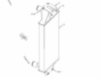 Locked diagram
Parts in this unit
Catalog descriptions with masked part numbers.
| Part number | Description |
|---|---|
| 12***07 | Mount as-resilient; spare part 12***07 mount as-resilient (Caterpillar) |
| 19***77 | Washer-hard; (11x25x10-mm thk); spare part 19***77 washer-hard (Caterpillar) |
| 23***11 | Aftercooler group-air; spare part 23***11 aftercooler group-air (Caterpillar) |
| 24***63 | Aftercooler as; Spare part 24***63 aftercooler as (Caterpillar) |
| 24***76 | Bracket as; Spare part 24***76 bracket as (Caterpillar) |
| 7x***29 | Washer; (11x25x3-mm thk); spare part 7X***29 washer (Caterpillar) |
| 8t***85 | Bolt (m10x1.5x50mm); (m10x1.5x50-mm); Spare Part 8t***85 Bolt (m10x1.5x50mm) (Caterpillar) |
| 8t***95 | Capscrew; (hex hd) (m10 x 1.50 x 30l gr 10.9); spare part 8T***95 capscrew (Caterpillar) |
| 8t***96 | Capscrew; (Hex Hd) (m10 x1.5 x 35, gr10.9, z); Spare Part 8t***96 Capscrew (Caterpillar) |
| 8t***26 | Washer; (plated) (10.5x45x3mm thk); spare part 8t***26 washer (Caterpillar) |
160M serial number reference
The Cat PIN plate on a 160M-family motor grader is riveted to the machine's main frame, commonly on the right side near the front/cab area, and the number is often restamped into the frame steel itself as a backup per standard Cat practice. Read the first three characters as the serial prefix, which identifies the model generation (160M, 160M2, or 160M3), the driveline (standard/2WD vs all-wheel-drive), and the engine fitted - Cat C9 ACERT on the first-generation 160M, Cat C9.3 ACERT on 160M2 and 160M3. The five digits that follow are the sequential unit number within that prefix run.
| Prefix | Identifies | Notes |
|---|---|---|
| B9E | 160M (first-generation M Series), standard/2-wheel-drive | Runs the Cat C9 ACERT engine, certified to Environment Canada Tier 3 standards. Listed as B9E00001 and up in 160M service and parts documentation, used on base (non-AWD) 160M units. |
| B9T | 160M (first-generation M Series), all-wheel-drive | Same C9 ACERT engine and Tier 3 certification as the standard machine. Listed as B9T00001 and up in 160M parts documentation. Verify configuration with dealer before relying on it. |
| D9T | 160M (first-generation M Series), all-wheel-drive | Same platform as B9T, likely a later production run within the same generation, used on 160M AWD units with sequential serials in this range. Not related to the separate Cat D9T track-type tractor, which carries its own unrelated prefix - the shared three characters are coincidental, not a shared identity. |
| M9E | 160M2 (M Series 2), standard/2-wheel-drive | Listed as M9E00001 and up in 160M2 service and parts documentation. Cat's own current product documentation for the 160M2 platform lists the C9.3 ACERT engine (Tier 4 Interim/EU Stage IIIB) for this generation, though older parts-manual listings tied specifically to this early prefix describe a C9 engine. Engine spec may vary by build date within this generation - confirm the exact engine for this serial range with dealer. |
| M9K | 160M2 (M Series 2), all-wheel-drive | Listed as M9K00001 and up in 160M2 parts documentation, matching a 160M2 AWD unit on record. Runs the C9.3 ACERT engine (Tier 4 Interim/EU Stage IIIB) per Cat's 160M2 AWD product documentation. |
| R9L | 160M2 (M Series 2), standard/2-wheel-drive | Tied to 160M2 parts groups (starting motor, battery/wiring) in parts documentation. Seen on a 160M2 unit carrying no AWD designation, consistent with the standard driveline. Runs the C9.3 ACERT engine per Cat's 160M2 product documentation. Likely a later production run than M9E in the same standard configuration. |
| R9T | 160M2 (M Series 2), all-wheel-drive | Tied to 160M2 ripper hydraulic line parts groups in parts documentation, tagged '160M2 AWD' on record. Runs the C9.3 ACERT engine per Cat's 160M2 AWD product documentation. Likely a later production run than M9K in the same AWD configuration. |
| R3D | 160M2 (M Series 2) | Tied to a 160M2 transmission hydraulic control group in parts documentation; driveline configuration is not stated - confirm with dealer. |
| N9E | 160M3 (M Series 3), non-all-wheel-drive | Runs the C9.3 ACERT engine (Tier 4 Final/EU Stage IV per Cat's 160M3 product documentation). Parts documentation explicitly labels the front wiring group for this prefix as non-AWD. Listed as N9E00001 and up. |
| N9L | 160M3 (M Series 3), likely non-all-wheel-drive | Runs the C9.3 ACERT engine (Tier 4 Final/EU Stage IV). Appears across scarifier, wheel/tire and clean-emissions-module parts groups for the 160M3. Driveline label is inferred rather than stated outright - confirm with dealer. |
| N9K | 160M3 (M Series 3), all-wheel-drive | Runs the C9.3 ACERT engine (Tier 4 Final/EU Stage IV). Parts documentation ties brake accumulator, hydraulic manifold and front AWD axle-line groups to this prefix, used on 160M3 AWD units in a later production window within the generation than N9T. |
| N9T | 160M3 (M Series 3), all-wheel-drive | Runs the C9.3 ACERT engine (Tier 4 Final/EU Stage IV). Documented as the AWD 160M3 across hydraulic filter, cab fan and seat parts groups, used on 160M3 AWD units in an earlier production window within the generation than N9K. |
Frequently asked questions
What engine does the Cat 160M motor grader use?
The 160M runs a Cat C9 ACERT six-cylinder diesel. Base (1st gear) net power is 159 kW (213 hp) at 2000 rpm, and Cat's VHP Plus power management raises that to roughly 200 kW (268 hp) in higher gears. It is certified to U.S. EPA Tier 3/EU Stage IIIA, with a dedicated Environment Canada Tier 3 calibration also offered.
What is the operating weight of the Cat 160M?
It varies by configuration. A standard machine runs about 15.9 t (35,060 lb); a typically-equipped 160M lands around 19.7-20.6 t (43,500-45,400 lb); a maximum-ballast configuration can reach nearly 23.9 t (52,795 lb).
What replaced the Cat 160M motor grader?
The Cat 160M2, which introduced a Cat C9.3 ACERT engine with a Clean Emissions Module for Tier 4 Interim/Stage IIIB compliance. The current 160M3 followed with a C9.3B ACERT and full DPF/DOC/SCR aftertreatment for Tier 4 Final/Stage V.
What 160M owners discuss
What engine actually sits under the hood of a 160M, and does that change across the series?
What's the most-discussed powertrain complaint on the 160M's electronic transmission?
Steering feels heavy or the machine faults out mid-articulation - what's the usual cause?
Any other electrical or sensor gremlins owners flag on M-series graders like the 160M?
What wears out fastest on a 160M's grading end, and how do owners keep it in check?
Does crab steering affect tire wear, and what do operators say about it?
What should I check before buying a used 160M?
Compiled from owner and technician discussions across the industry — experiences vary by serial range and machine history.
Need a specific 160M part?
Search live OEM part data, check fitment, and cross-reference alternatives with Heavy Parts AI.
Post a parts request and compare supplier quotes.