Caterpillar 140H NA
Specifications · fluids and capacities · maintenance intervals
Post a parts request and compare supplier quotes.
The Caterpillar 140H NA is a mid-size, articulated-frame motor grader in the roughly 14 to 15 tonne class, built for road maintenance, site grading, and general earthmoving. Factory documentation for the NA-spec machine, covering serial prefixes 2ZK built in the United States, 9TN in Brazil, and 9ZN in Australia, ties it to the Cat 3306 DIT/DITA: a mechanical six-cylinder turbocharged diesel with Engine Power Management, rated around 138 kW (185 hp) net in the upper gears and 123 kW (165 hp) in the lower gears. Standard operating weight on factory tires with full fluids and an operator runs close to 14.7 t (32,460 lb); factory-fit rippers, scarifiers, and push blades add to that base figure, and no single maximum-configuration weight is published for this engine arrangement. Documented NA-prefix serial ranges span roughly the mid-1990s through the early 2000s. The 140H line replaced the long-running 140G and was itself eventually succeeded by the 140M. Beyond the NA spec covered here, Cat also built the 140H under a separate ES electrical package and, later, a Global-spec build on the electronically governed 3176C engine. Attachment configurations across the line include a rear ripper-scarifier, front blade or push block, mid-mount scarifier, snow wings, a moldboard extension, and open or enclosed ROPS/FOPS cabs.
Within the NA lineup the electrical package stayed built around the mechanical 3306: no engine ECM, straightforward gauge-and-lamp monitoring, and only the powershift transmission running its own electronic controls. Cat's wider 140H family moved on from there, shifting later production under separate, non-NA prefixes to the electronically governed 3176C engine with its own ECM and diagnostics, a different machine to service despite sharing the 140H name and much of the same chassis, circle, and tandem hardware. That split is a large part of why the NA-spec 140H still holds a following in the used and parts market today: no emissions aftertreatment, no proprietary engine electronics to fail, and a fuel system a competent diesel shop can rebuild on the bench. Decades of 3306 use across Cat's truck, generator, and marine lines keep parts and know-how widely available, and the well-documented wear points on this platform (circle and drawbar wear strips, articulation-hitch wiring, wheel-lean cylinders, the parking-brake O-ring) are straightforward for independent shops to chase down. That combination keeps NA-spec 140H units earning their keep on road-maintenance and aggregate-site duty long after cheaper contemporaries have been parted out.
Below: full specifications, fluids & capacities, the factory service schedule, common service parts, verified fault codes, what owners discuss, attachment guidance, the complete assembly directory, and a serial-number reference. Complete parts lists with full OEM part numbers, exploded diagrams, quantities, and fitment data are available free in Heavy Parts AI.
Caterpillar 140H NA specifications
Engine
| Engine model | Cat 3306 DIT (Direct Injection Turbocharged), four-stroke, six-cylinder diesel with Engine Power Management (EPM). Factory parts and service literature for the NA-prefix serial ranges (2ZK - United States, 9TN - Brazil, 9ZN - Australia) specifies this 3306 powertrain for the 140H NA configuration. |
| Gross power | Gears 4-8 forward / 3-6 reverse: 148 kW (199 hp) at 1900 rpm. Gears 1-3 forward / 1-2 reverse: 133 kW (179 hp) at 1900 rpm. |
| Net power | Gears 4-8 forward / 3-6 reverse: 138 kW (185 hp) at 1900 rpm (Caterpillar, ISO 9249 and EEC 80/1269 basis; 137 kW / 183 hp per SAE J1349). Gears 1-3 forward / 1-2 reverse: 123 kW (165 hp), same basis (122 kW / 163 hp per SAE J1349). Engine Power Management automatically lowers rated power in the lower, traction-limited gears to cut fuel use and tire slippage. |
| Peak torque | 902 N.m (665 lb-ft) at 1200 rpm in gears 4-8 forward / 3-6 reverse; 804 N.m (593 lb-ft) at 1200 rpm in gears 1-3 forward / 1-2 reverse. 30% torque rise in both ranges. |
| Displacement | 10.45 L (638 cu in); bore 121 mm (4.75 in) x stroke 152 mm (6.00 in) |
| Cylinders | 6, in-line, turbocharged (no aftercooling on this 3306 arrangement) |
| Emissions tier | Documented as a low-emissions 3306 DIT arrangement meeting European Union emissions regulations in effect at time of manufacture (spec sheet dated late 1998). No separate U.S. EPA tier rating is stated for this arrangement. |
Weights
| Operating weight - standard configuration | 14,724 kg (32,460 lb) total - front axle 4,223 kg (9,310 lb), rear axle 10,501 kg (23,150 lb). Based on standard 14.00-24 10PR (G-2) tires, full fuel tank, coolant, lubricants and operator aboard. |
| Weight variants | Factory-fitted options add to base weight: rear-mounted ripper-scarifier about +961 kg (2,119 lb); front push plate about +919 kg (2,025 lb); optional 17.5-25 tires and other attachments shift weight further. No separate maximum-configuration total is published for this 3306-engine arrangement. |
| Shipping weight | Not published separately. The operating weight above already reflects full fluids and operator aboard, the standard convention used for shipping/gross weight in this literature. |
| Ground pressure | Not published. Ground pressure figures are not part of the factory spec sheet for this wheeled motor grader class. |
Dimensions
| Overall length | 8,604 mm (28 ft 3 in), front tire to rear of frame, base machine on standard tires. Add 1,207 mm (4 ft) for a rear-mounted ripper-scarifier, or 201 mm (7.9 in) for a front push plate. Some transport-dimension listings show a longer overall figure near 10 m (about 32 ft 10 in), likely reflecting the full drawbar-circle-moldboard envelope rather than the tire-to-frame measurement; treat as source/method dependent. |
| Overall width | 2,464 mm (8 ft 1 in) outside front tires; 2,442 mm (8 ft 0 in) outside rear tires. Add 253 mm (10.0 in) for optional 17.5-25 tires. |
| Overall height | 3,120 mm (10 ft 3 in) to top of standard low-profile cab. Add 225 mm (8.9 in) for the optional full-height cab. Without ROPS, exhaust and seat back, height is about 3.05 m (10 ft 0 in). |
| Wheelbase | About 6.1 m (20 ft), front axle to center of tandem. Figures across factory literature for this configuration range 6,086-6,169 mm; use as approximate. |
| Tandem wheelbase (axle spacing) | 1,523 mm (5 ft 0 in) between tandem wheel axles. |
| Ground clearance | 625 mm (24.6 in) at the front axle. Rear/transmission-case clearance not published for this 3306 arrangement. |
| Moldboard (blade) dimensions | Standard moldboard 3,658 mm (12 ft) long x 610 mm (24 in) high x 22 mm (0.87 in) thick, arc radius 413 mm (16.25 in). Optional 4,267 mm (14 ft) moldboard available. |
Performance
| Travel speed - forward | 8 forward gears, 3.5-41.1 km/h (2.2-25.5 mph) at rated rpm on standard 14.00-24 tires. |
| Travel speed - reverse | 6 reverse gears, 2.8-32.4 km/h (1.7-20.2 mph). |
| Turning radius | 7.4 m (24 ft 3 in) outside front tires, using front-wheel steering plus frame articulation with the differential unlocked. |
| Steering and articulation | Front-wheel steering range 50 degrees left/right; frame articulation 20 degrees left/right. |
| Blade lift, reach and depth of cut | Maximum lift above ground about 480 mm (18.9 in); maximum depth of cut about 715 mm (28.1 in); maximum shoulder reach outside tires roughly 1.9-2.0 m (74.6-77.9 in) right/left; blade tip range 90 degrees total (40 degrees forward, 5 degrees backward). |
| Drawbar pull / gradeability | Not published as a standalone figure for this configuration. Motor grader spec sheets of this era generally omit drawbar-pull and gradeability ratings common on dozers or loaders. |
Service capacities (summary)
| Fuel tank | 341 L (90 US gal) standard. A 454 L (120 US gal) tank is available as an option. |
| Hydraulic system | 80 L (20.8 US gal) total system, of which 38 L (9.9 US gal) is the hydraulic tank/reservoir. |
| Engine oil (crankcase) | 27 L (7.0 US gal). |
| Cooling system | 40 L (10.4 US gal). |
| Driveline (summary) | Transmission, differential and final drives combined 47 L (12.2 US gal); each tandem housing 65 L (16.9 US gal); circle drive housing 7 L (1.8 US gal). |
Values vary by configuration, region, and serial range — confirm against your machine before planning transport or lifts.
140H NA fluids & capacities
| System | Capacity | Recommended fluid |
|---|---|---|
| Engine crankcase, with filter | 27-29 L (7.1-7.7 US gal) - Cat 3306 DITA diesel, the engine fitted to the 140H NA (2ZK/9TN/9ZN prefix) configuration | Cat DEO (Diesel Engine Oil), API CF-4/CG-4 diesel engine oil. SAE 15W-40 for temperate ambient; SAE 10W-30 below 0 C (32 F); SAE 30 for sustained hot climates, per Cat's viscosity-by-temperature chart for diesel engine oil |
| Cooling system | 38-40 L (10.0-10.6 US gal) | Cat ELC (Extended Life Coolant) or Cat DEAC (Diesel Engine Antifreeze/Coolant), mixed 50/50 with water. Factory fill rated to -35 C (-31 F). ELC service life runs to 6,000 hours with one ELC Extender addition at 3,000 hours; DEAC needs shorter, more frequent supplemental coolant additive (SCA) top-ups |
| Fuel tank | 341 L (90 US gal) standard; 454 L (120 US gal) high-capacity tank offered as a factory option | No. 2-D diesel fuel (ULSD where required by local emissions rules). No. 1-D or a winter-blended diesel is recommended in cold ambient to prevent fuel waxing/gelling |
| Transmission, differential and final drive case (combined power train compartment) | 47 L (12.4 US gal) | Cat TDTO (Transmission/Drive Train Oil), meets Cat TO-4 spec. SAE 10W in cold ambient, SAE 30 in moderate climates, SAE 50 in sustained hot climates |
| Tandem drive housings, each side | 64-65 L (16.9-17.2 US gal) per side | Cat TDTO (TO-4), same climate-graded viscosities as the power train case: SAE 10W cold, SAE 30 moderate, SAE 50 hot |
| Circle drive housing | 7 L (1.8 US gal) | Cat TDTO (TO-4), same oil family as the rest of the power train |
| Hydraulic system, total (tank, lines and cylinders) | 80 L (21.1 US gal) | Cat HYDO (Hydraulic Oil), standard factory fill. SAE 10W in cold ambient, SAE 30 in warm climates. Cat TDTO (TO-4) is Caterpillar's listed acceptable alternate for this circuit |
| Hydraulic tank (reservoir only) | 38 L (10.0 US gal) | Same fluid family as the hydraulic system: Cat HYDO (SAE 10W cold / SAE 30 warm) or Cat TDTO (TO-4) as the accepted alternate |
| Front axle wheel spindle bearing housings, each side | 0.5 L (0.13 US gal) per side | Cat TDTO (TO-4) oil-bath fill; small volume, topped off at scheduled front-axle checks rather than drained on every service interval |
| Grease points (circle and drawbar ball-and-socket, articulation hitch, blade lift/tilt cylinder pins, tie-rod ends) | Not a fill reservoir - applied via grease fittings per the OMM lubrication schedule, no volumetric capacity specified | Cat Multipurpose Grease (Cat MPGM), NLGI Grade 2 for normal ambient service; drop to NLGI Grade 1 or 0 for sustained cold below -20 C (-4 F). Cat Advanced 3Moly Grease or Cat Extreme Application Grease is the listed heavier-duty alternate for the circle and drawbar pin joints |
Capacities are refill values from factory literature — always fill to the dipstick/sight gauge, not the number.
Caterpillar 140H NA maintenance schedule
| Service interval | Tasks |
|---|---|
| Every 10 h |
|
| Every 250 h |
|
| Every 500 h |
|
| Every 1,000 h |
|
| Every 2,000 h |
|
| Every 4,000 h |
|
| Every 6,000 h |
|
Servicing the 140H NA beyond the schedule
Predictive Maintenance & Fluid Analysis
Run S·O·S oil sampling on the 3306 crankcase, the transmission/differential/final-drive case, each tandem housing, and the hydraulic tank to catch wear metal before it reaches the powershift clutches or circle drive. Watch the transmission oil-temperature trend closely. A logged over-temperature condition usually traces back to low TDTO, a plugged cooler core, or a fan fault rather than the transmission itself. Track parking-brake release pressure too. A slow-bleeding air tank at key-on flags the O-ring failure this platform is known for before it strands the machine.
Corrective & Common Repairs
Powershift hunting or dropping to neutral under load on this direct-drive transmission usually starts at the TDTO level and the shift-solenoid connectors, not the valve body. The wiring harness crossing the articulation hitch fatigues from years of flexing and is a recurring source of intermittent lighting and sensor faults. Hydraulic oil running hot points to a plugged cooler core or a sticking relief valve more often than the pump. Reseal wheel-lean cylinders that drift or creep, and chase steering-cushion-valve noise on full-lock turns before it becomes a steering failure.
Overhaul & Rebuild Points
The mechanical 3306 DIT/DITA is a long-running engine that can log tens of thousands of hours before an inframe overhaul if oil and coolant sampling stay current; the injection pump is usually the first component needing a bench rebuild. On the powertrain side, circle-drive wear shoes, drawbar wear plates and shims, and moldboard end bits and slide strips are the recurring rebuild-kit items that restore factory blade tolerance. The circle-drive slip clutch shim pack, tandem planetary gearing, and powershift clutch packs are the major overhaul points at high hours.
Seasonal & Environment Servicing
Grade the TDTO and HYDO by ambient temperature: SAE 10W for cold starts, 30 for moderate climates, 50 for sustained heat, and drop to a lighter NLGI grease grade below about -20 C. Run a straight 50/50 ELC or DEAC coolant mix rated to -35 C for winter service areas. In dusty or abrasive grading work, shorten circle, drawbar, and articulation-hitch greasing intervals, and keep any auto-lube system actually running, since starved pins accelerate wear across the whole drawbar-circle-moldboard system.
140H NA common service parts
| Part number | Part | Notes | |
|---|---|---|---|
| 1D-4540 | Bolt,Machine Fuel Filter Mounting | Fuel system service | Check fitment → |
| 1R-0750 | Filter As-Fuel | Fuel system service | Check fitment → |
| 6I-0273 | Filter Element As-Air | Air intake service | Check fitment → |
| 6I-0274 | Filter Element As-Air | Air intake service | Check fitment → |
| 231-4486 | Filter Element As-Cab Air | Air intake service | Check fitment → |
Always confirm against your machine's serial number — cross-check any part in Heavy Parts AI before ordering.
140H NA fault codes & troubleshooting
| Code | Meaning | Likely cause | What to do |
|---|---|---|---|
| 081-0643-05 | Transmission ECM: shift solenoid 3 circuit open or current below normal. | Broken or disconnected solenoid wiring, a corroded connector at the transmission valve body, or a failed solenoid coil. | Check harness continuity to solenoid 3, test coil resistance at the solenoid, confirm the ECM connector pins are seated and dry, then replace the solenoid if it stays out of spec. |
| 081-1484-03 | Transmission ECM: inching (declutch) pedal switch signal reading voltage above normal. | Switch shorted to battery voltage, chafed wiring, or a stuck or misadjusted pedal switch. | Inspect pedal switch wiring for a short to power, verify the switch opens and closes through full pedal travel, and adjust or replace it if it does not. |
| 081-0627-03 | Transmission ECM: parking brake pressure switch signal reading voltage above normal, which sets off the park brake alarm. | Wiring shorted to power, a failed pressure switch, or loss of brake release pressure from a worn parking brake seal. | Check switch wiring for a short, verify release pressure at the brake accumulator, and inspect the parking brake seal for leakage before replacing the switch. |
| 081-0177-03 | Transmission ECM: transmission oil temperature sensor circuit fault, or an actual over-temperature condition on the powershift transmission. | Low transmission fluid, a plugged or fouled oil cooler, a cooling fan problem, or a failed sensor or its wiring. | Check transmission fluid level and condition, inspect the cooler core for blockage, and test sensor resistance against the temperature chart before replacing it. |
| 081-0668-02 | Transmission ECM: shift lever (direction and speed selector) signal erratic or intermittent. | Worn or misaligned shift lever position sensor, an intermittent harness connection, or contamination in the selector switch. | Inspect the shift lever sensor and connector, cycle the lever through its full range while watching the signal, and repair or replace the sensor as needed. |
| 081-0669-02 | Transmission ECM: transmission input (turbine) speed sensor signal erratic or incorrect. | Damaged or contaminated sensor tip, incorrect sensor air gap, or an intermittent wiring fault. | Inspect and clean the speed sensor tip, reset the air gap to specification, and check the harness for chafing before replacing the sensor. |
| 081-1405-05 | Transmission ECM: shift solenoid 5 circuit open or current below normal. | Open or disconnected solenoid wiring, a failed solenoid coil, or a bad ECM driver output. | Check wiring continuity to solenoid 5, test coil resistance, and inspect the transmission ECM connector before replacing the solenoid. |
| 081-0549-02 | Transmission ECM: throttle lock switch input signal erratic or incorrect. | Faulty throttle lock switch, intermittent wiring, or contamination at the switch contacts. | Test the throttle lock switch for a clean on/off signal, inspect wiring and connector, and replace the switch if it fails to switch cleanly. |
Codes and remedies are general guidance for this model family — always confirm with diagnostic tooling and your dealer before major repairs.
140H NA attachments & work tools
Scarifiers
Offered as a front-mount unit that hooks to the front lift group for light surface work, or as a mid-mount (belly) unit bolted to the main frame ahead of the front axle for deeper, better-controlled fracturing of harder material. Both use a multi-shank frame with replaceable shanks and tips.
Rippers
Rear-mounted, multi-shank ripper/scarifier bolts to a drawbar-mounted rear frame behind the tandems. This class is offered with an Offset Single-Point Ripper (OSPR) tooth arrangement that lets the point track off-center for corner/wall ripping while keeping shank size down for maximum breakout force.
Front blade / push block
A bolt-on front blade, available fixed or tiltable (hydraulic tilt cylinders), mounts to the front lift-group linkage ahead of the front axle for spreading, ditch and corner work, and light dozing. A push-block/plate variant is offered for pile pushing on the same mount.
Snow equipment
Mast-type and mastless snow wings mount ahead of the front axle alongside the moldboard. Mast-type wings throw deeply drifted snow; mastless wings bench and ramp shoulder snow at a lower angle. Bench heights vary roughly 1.0-1.5 m (40-60 in) by supplier/configuration. A moldboard extension adds about 600 mm (24 in) of blade length for wider single-pass coverage.
Moldboard and cutting edges
Standard moldboard width for this size class is 3.66 m (12 ft), with roughly 800 mm cutting depth and up to about 30 degrees of blade tilt. Cutting edges and end bits are offered in double-bevel curved or flat, serrated or plain profiles, with tungsten-carbide-insert options for abrasive ground; end bits are through-hardened overlay steel for corner wear.
Drawbar-circle-moldboard (DCM) system
Y-frame drawbar with nylon-composite wear inserts between drawbar/circle and support shoes/circle, plus hardened circle-drive teeth. A circle-drive slip clutch protects the drawbar, circle, and moldboard from shock when the blade end strikes a buried object. A top-adjust drawbar option is available for finish-grade work needing tighter blade control.
Mounting and coupling
No universal quick-attach coupler is used on this class. Front tools (blade, front scarifier, snow wing) pin/bolt to the front lift-group linkage; the rear ripper/scarifier bolts to a drawbar-mounted rear frame; the mid-mount scarifier bolts to the main frame. Swapping tool types is a bolt-up job rather than a pin-and-latch quick coupler.
Hydraulic kit requirement
Scarifier and ripper cylinders are not plumbed from the factory as standard equipment. Running them requires adding an auxiliary hydraulic valve section plus hoses and machine plumbing, typically ordered as a separate kit from the tool itself.
Cab and guarding options
Open ROPS (OROPS) or enclosed ROPS/FOPS cab (EROPS) with heat and air conditioning, a transmission guard, and fenders are offered as factory or dealer-fit options for this class. Heavier screen/guard packages for forestry or quarry duty are typically dealer-fit additions rather than a single catalog option.
Grade-control option
Cross-slope and sonic/laser grade-reference kits (Cat Grade/AccuGrade family) were offered as a dealer or factory-fit option compatible with this generation of grader, automating cross-slope blade control from a mechanical reference or laser/sonic sensor.
Part Book
Browse by group, subgroup and unit. Part numbers are masked and diagram thumbnails are locked.
7E-5677 Air Cleaner Group s/n 9TN1-847 Part of 110-6049, 112-5836 Installation ar-engine
7E-5677 Air Cleaner Group s/n 9TN1-847 Part of 110-6049, 112-5836 Installation ar-engine is listed in the Air inlet and exhaust system / air cleaner group catalog section.
- Group
- Air Inlet and Exhaust System
- Subgroup
- Air Cleaner Group
- Unit
- 7E-5677 Air Cleaner Group s/n 9TN1-847 Part of 110-6049, 112-5836 Installation ar-engine
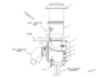 Locked diagram
Parts in this unit
Catalog descriptions with masked part numbers.
| Part number | Description |
|---|---|
| 0s***91 | Screw, cap, hexagon bearing retainer; part of kit p/n 1w***82; spare part 0s***91 screw, cap, hexagon bearing retainer (Caterpillar) |
| 10***56 | Air cleaner group |
| 10***57 | Tube as; Spare Part 10***57 Tube as (Caterpillar) |
| 1d***17 | Nut-plate and angle assembly to hydraulic and fuel tanks; nut plate and angle assembly to hydraulic and fuel tanks; spare part 1d***17 nut-plate and angle assembly to hydraulic and fuel tanks (Caterpillar) |
| 2k***73 | Locknut inside guard assembly; spare part 2k***73 locknut inside guard assembly (Caterpillar) |
| 4j***77 | Seal - o - ring (11.23mm od); spare part 4j***77 seal - o - ring (11.23mm od) (Caterpillar) |
| 5k***68 | Fitting; (Pipe Hexagon); Spare part 5k***68 Fitting (Caterpillar) |
| 5p***75 | Washer-hard; (10.2x22.5x3-mm thk)(shield to a/c); spare part 5p***75 washer-hard (Caterpillar) |
| 5s***82 | Capscrew; (hex hd) (1/2-13x1 3/8, gd8, z); spare part 5s***82 capscrew (Caterpillar) |
| 7e***77 | Air cleaner group; spare part 7e***77 air cleaner group (Caterpillar) |
| 7s***80 | Clamp Assembly; Spare Part 7s***80 Clamp Assembly (Caterpillar) |
| 7s***96 | Prescreener as; spare part 7s***96 prescreener as (Caterpillar) |
| 7x***92 | Elbow-90 degree; (1/8-27 thd); spare part 7x***92 elbow-90 degree (Caterpillar) |
| 8n***94 | Indicator-air filter change; (air cleaner); spare part 8n***94 indicator-air filter change (Caterpillar) |
| 8t***28 | Adapter-o-ring face seal; spare part 8t***28 adapter-o-ring face seal (Caterpillar) |
| 8t***96 | Washer-hard- line from pipe as. to gear; spare part 8t***96 washer-hard- line from pipe as. to gear (Caterpillar) |
| 8t***77 | Bolt (3/8-16x2.25in); (3/8-16x2.25-in); spare part 8t***77 bolt (3/8-16x2.25in) (Caterpillar) |
| 9s***47 | Body as; (pre-cleaner); spare part 9s***47 body as (Caterpillar) |
140H NA serial number reference
On the 140H NA the product identification plate is mounted on the front frame, near the cab and close to the moldboard lift-cylinder support - references disagree on whether it sits on the left or right side, so check both. The serial is also stamped directly into the frame steel nearby as a backup if the plate is lost or painted over. The old-style tag reads as a 3-character prefix followed by a 5-digit sequence number (for example 2ZK00001) - the prefix identifies the model/configuration and is what a parts lookup or dealer uses to pull the correct manual, so read it off the plate or frame stamp rather than a sales sticker.
| Prefix | Identifies | Notes |
|---|---|---|
| 2ZK | 140H NA motor grader | Serial range 2ZK00001 and up. Cat's own parts-catalog naming lists this prefix under 140H NA Motor Grader. Fitted with the Cat 3306 diesel engine. Reported model years vary by source and generally fall within the 140H's broader 1996-2002 production window - treat any specific year as approximate and confirm the exact build year for your serial with your dealer. Some references tie this prefix to a US assembly run, but the plant is not documented for this exact serial range - verify with your dealer. |
| 9TN | 140H NA motor grader | Serial range 9TN00001 and up. Independent service/parts-manual listings title this prefix 140H NA Motor Grader. Fitted with the Cat 3306 diesel engine. Reported model years vary by source, spanning roughly the mid/late 1990s to early 2000s - treat as approximate and confirm the exact build year for your serial with your dealer. Some references tie this prefix to a non-US (Brazil-market) assembly run, but the plant is not documented for this exact serial range - verify with your dealer. |
| 9ZN | 140H NA motor grader | Serial range 9ZN00001 and up. Independent service/parts-manual listings title this prefix 140H NA Motor Grader. Fitted with the Cat 3306 diesel engine. Reported model years vary widely by source (roughly mid-1990s to early 2000s), and the factory parts manual covering this range was still current as of 2008 - treat the year window as approximate and confirm with your dealer. Some references tie this prefix to a non-US (Australia-market) assembly run, but the plant is not documented for this exact serial range - verify with your dealer. |
Frequently asked questions
What engine does the Caterpillar 140H NA motor grader use?
The 140H NA, covering serial prefixes 2ZK, 9TN, and 9ZN, runs the Cat 3306 DIT/DITA, a mechanical, turbocharged six-cylinder diesel with Engine Power Management trimming output across the gear range: about 138 kW (185 hp) net in the upper gears and 123 kW (165 hp) in the lower gears. There is no engine ECM on this NA electrical package. A separate, later Global-spec 140H build moved to the electronically governed Cat 3176C engine; that is a different configuration, not the NA machine.
What is the operating weight of the Caterpillar 140H NA?
Standard operating weight on factory tires with full fluids and an operator aboard runs about 14.7 t (32,460 lb), split roughly 4.2 t (9,310 lb) on the front axle and 10.5 t (23,150 lb) on the rear. Factory attachments add to that base: a rear ripper-scarifier adds close to 960 kg (2,120 lb), a front push plate about 920 kg (2,025 lb). No separate maximum-configuration weight is published for this engine arrangement, so treat heavily optioned machines as varying by configuration.
What replaced the Caterpillar 140H?
The 140M line succeeded the 140H, moving to a Cat C7 ACERT turbocharged diesel, joystick steering, and a redesigned cab, while meeting later emissions standards the mechanical 3306 in the NA-spec 140H was never built to meet. The 140H itself had replaced the earlier 140G. Many 140H NA units remain in daily service today largely because their mechanical engine and simple electrical package need no emissions aftertreatment or engine ECM to keep running.
What 140H NA owners discuss
What transmission behavior do 140H NA operators most commonly complain about, and how do techs chase it down?
Is there a well-known electrical weak point on these graders?
Which engine does the 140H NA actually carry?
What causes the hydraulic system to run hot on a 140H NA under sustained grading?
Where does wear concentrate on a high-hour 140H NA, and what should an owner watch for?
Is there a safety-relevant fault owners specifically warn about?
What should a buyer check before purchasing a used 140H NA?
Compiled from owner and technician discussions across the industry — experiences vary by serial range and machine history.
Need a specific 140H NA part?
Search live OEM part data, check fitment, and cross-reference alternatives with Heavy Parts AI.
Post a parts request and compare supplier quotes.