Caterpillar 12H ES
Specifications · fluids and capacities · maintenance intervals
Post a parts request and compare supplier quotes.
The Caterpillar 12H is a medium-frame articulated motor grader built from 1996 to 2007, sitting in Cat's mid-size road grader class alongside the 140H and 160H. The ES (and closely related NA) version runs a Cat 3306 DIT, a four-stroke six-cylinder turbocharged diesel rated at 104 kW (140 hp) net at 1900 rpm, paired with an electronically controlled 8-speed forward, 6-speed reverse, direct-drive power-shift transmission. Standard operating weight for the ES configuration runs about 14,247-14,249 kg (31,405-31,411 lb) with full fuel, coolant, lubricants, an operator, and standard 13.00-24 tires; ripper, scarifier, extended-moldboard, and heavier tire/rim options push it higher. The 12H replaced the 12G (built 1987-1995, 135 hp, 6-speed transmission) and was itself replaced by the 12M series starting in 2007. Alongside the ES/NA build, Caterpillar also offered a Global-spec 12H powered by the C-9 engine (145-185 hp, Variable Horsepower arrangements) for markets with tighter emissions rules, so engine and weight figures vary by configuration and region.
The step from 12G to 12H in the mid-1990s was the platform's biggest change: Cat added electronic shift control and two extra gears over the 12G's transmission, redesigned the cab for better sightlines, and carried over the same drawbar, circle, and moldboard wear-insert system that later H-series and M-series graders still use. Mid-cycle, Cat split the 12H into regional builds - the mechanical 3306 DIT-powered ES/NA versions for markets without strict emissions rules, and a Global version on the electronically governed C-9 engine - before retiring the whole H-series for the joystick-controlled 12M in 2007. In the used and parts market, the 12H, ES included, remains one of the most common mid-frame graders in circulation worldwide. Its mechanically simple drivetrain, wide availability of 3306 engine parts shared with other Cat equipment, and straightforward circle, drawbar, and tandem wear-part interchange keep rebuild costs down and parts supply strong compared with the electronically dense M-series machines that followed it.
Below: full specifications, fluids & capacities, the factory service schedule, common service parts, verified fault codes, what owners discuss, attachment guidance, the complete assembly directory, and a serial-number reference. Complete parts lists with full OEM part numbers, exploded diagrams, quantities, and fitment data are available free in Heavy Parts AI.
Caterpillar 12H ES specifications
Engine
| Engine model | Cat 3306 — four-stroke-cycle, six-cylinder, direct-injection turbocharged diesel |
| Gross power | 115 kW (154 hp) @ 1900 rpm |
| Net power | 104 kW (140 hp) @ 1900 rpm, rated per ISO 9249 and EEC 80/1269; this is the flywheel horsepower figure used in brochure literature across all gears |
| Displacement | 10.45 L (637.7 cu in) |
| Bore x stroke | 121 mm x 152 mm (4.76 in x 5.98 in) |
| Peak torque | 682 Nm (503 lb-ft) @ 1200 rpm; torque rise 30% |
| Emissions tier | Not stated in factory literature for this engine arrangement — the 3306 series predates formal EPA Tier / EU Stage certification for this equipment class |
Weights
| Operating weight, front axle | 3797 kg (8371 lb) |
| Operating weight, rear axle | 10,450 kg (23,038 lb) |
| Operating weight, total (standard configuration) | approx. 14,248 kg (31,410 lb), based on standard machine with 13.00-24 12PR (G-2) tires, full fuel, coolant, lubricants and operator |
| Weight vs. other 12H arrangements | The North America output arrangement of the 12H publishes essentially the same total operating weight (about 31,409 lb). A later Global-version 12H built around a different engine is a distinct generation with a heavier maximum gross vehicle weight rating near 45,818 lb (20,783 kg) — that figure does not apply to this engine arrangement |
| Shipping weight | Not published separately from operating weight in factory literature |
| Ground pressure | Not published |
Dimensions
| Overall length | 8571 mm (28.12 ft), standard configuration; add 234 mm for a front push plate, add 1207 mm for a rear-mounted ripper-scarifier |
| Width over tires | 2440 mm (8.01 ft) with base 13.00-24 tires; add 267 mm for optional 17.5-25 tires |
| Height to top of cab | 3107 mm (10.19 ft) with standard ROPS cab; add 225 mm for optional full-height cab; height without ROPS, exhaust, seat back or other easily removed items is 3.05 m |
| Wheelbase | 6086 mm (19.97 ft) |
| Minimum turning radius (outside front tires) | 7.4 m (24.3 ft), using front-wheel steering, frame articulation and differential unlocked |
| Steering range / articulation angle | 50 degrees left/right steering range; 20 degrees left/right frame articulation |
| Front axle ground clearance | 608 mm (23.9 in) |
| Rear ground clearance (at transmission case) | approx. 341.5 mm (13.4 in); figure varies slightly by source/measurement point |
| Moldboard length | 3658 mm (12.0 ft) standard blade |
| Moldboard height | 610 mm (24.0 in) |
| Moldboard throat clearance | 120 mm (4.7 in) |
Performance
| Forward travel speed range | 3.4-39.7 km/h (2.1-24.7 mph) across 8 forward gears, base 13.00-24 tires at rated engine speed |
| Reverse travel speed range | 2.7-31.3 km/h (1.7-19.5 mph) across 6 reverse gears |
| Turning radius | 7.4 m (24.3 ft) minimum, outside front tires |
| Gradeability | Not published |
| Drawbar / blade pull | Not published for this engine arrangement in factory literature |
Service capacities (summary)
| Fuel tank | 284 L (75.0 gal) |
| Hydraulic system, total | 80 L (21.1 gal), of which the hydraulic tank itself holds 38 L (10.0 gal) |
| Engine oil (crankcase) | 27 L (7.1 gal) |
| Cooling system | 40 L (10.6 gal) |
| Transmission, differential and final drives | 47 L (12.4 gal) |
| Tandem housing (each side) | 65 L (17.2 gal) |
Values vary by configuration, region, and serial range — confirm against your machine before planning transport or lifts.
12H ES fluids & capacities
| System | Capacity | Recommended fluid |
|---|---|---|
| Engine crankcase (with filter) | 24 L (6.3 US gal) with filter, per the current Cat factory Operation and Maintenance Manual covering the 12H family (the edition tied to the international/export designation associated with the ES spec, powered by the Cat C-9 diesel). Earlier-production 12H ES units built with the Cat 3306 DIT engine are commonly cited at about 27 L (7.2 US gal) in independent spec sheets — capacity varies by engine build/production era. | Cat DEO-ULS or Cat DEO multigrade. By climate: SAE 0W-40 (Cat DEO-ULS Cold Weather) down to -40°C (-40°F); SAE 5W-40 synthetic (Cat DEO-ULS SYN / Cat DEO SYN) -30 to 50°C (-22 to 122°F); SAE 10W-30 -18 to 40°C (0 to 104°F); SAE 15W-40 -10 to 50°C (14 to 122°F). Commercial oils meeting API CH-4 or ECF-1a/ECF-2/ECF-3 are acceptable on the same viscosity bands. |
| Cooling system | 44 L (11.6 US gal / 9.7 Imp gal) | Cat ELC (Extended Life Coolant) preferred; Cat DEAC (Diesel Engine Antifreeze/Coolant) acceptable. Never run the system on plain water. Change ELC at 12,000 hours or 6 years; add ELC Extender at 6,000 hours or 3 years. |
| Fuel tank | 378 L (99.9 US gal / 83.1 Imp gal) per the current factory OMM for the 12H family. Some spec sheets for 12H ES/NA configurations cite a smaller tank of about 284 L (75.1 US gal) — capacity varies by configuration/series. | Diesel fuel meeting the Cat distillate fuel specification, ASTM D975, or EN 590. Biodiesel blends up to B20 are acceptable in this engine; the diesel portion of any biodiesel blend must be ultra-low-sulfur (15 ppm max in the US, 10 ppm max in the EU). |
| Transmission and differential housing (combined) | 47 L (12.4 US gal / 10.3 Imp gal), close to the 46 L (12.2 US gal) figure some spec sheets give for the 3306-engine 12H. | Cat TDTO, Cat TDTO-TMS, Cat Cold Weather TDTO, or Cat TO-4/TO-4M. By climate: SAE 0W-20 down to -40°C (-40°F); SAE 10W -20 to 10°C (-4 to 50°F); SAE 30 0 to 35°C (32 to 95°F); SAE 50 10 to 50°C (50 to 122°F); Cat TDTO-TMS multigrade covers -20 to 43°C (-4 to 110°F). |
| Tandem drive housing, each side | 64 L (16.9 US gal / 14.1 Imp gal) per side | Same fluid family as the transmission/differential: Cat TDTO, Cat TDTO-TMS, Cat Cold Weather TDTO, or Cat TO-4/TO-4M. By climate: SAE 0W-20 to -40°C; SAE 10W -20 to 20°C (-4 to 68°F); SAE 30 -10 to 40°C (14 to 104°F); SAE 50 10 to 50°C; Cat TDTO-TMS -20 to 43°C (-4 to 109°F). |
| Circle drive housing (blade circle gearbox) | 7 L (1.8 US gal / 1.5 Imp gal) | Cat GO (Gear Oil), Cat Synthetic GO, or an API GL-5 gear oil. By climate: SAE 75W-90 -30 to 40°C (-22 to 104°F); SAE 75W-140 -30 to 45°C (-22 to 113°F); SAE 80W-90 -20 to 40°C (-4 to 104°F); SAE 85W-140 -10 to 50°C (14 to 122°F); SAE 90 0 to 40°C (32 to 104°F). |
| Hydraulic system, total (implement + steering circuits) | 94 L (24.8 US gal / 20.7 Imp gal) total system per the factory OMM. Spec sheets for ES/NA configurations show a wider range of roughly 68-80 L (18-21 US gal) for the tank alone — capacity varies by configuration/series. | Cat HYDO Advanced is the preferred fluid (it roughly doubles the standard oil-drain interval to 4,000 hours/2 years, up to 6,000 hours/3 years with S·O·S oil analysis). Acceptable alternates: Cat TDTO, Cat BIO HYDO Advanced (ISO 46), Cat MTO, Cat DEO-ULS/Cat DEO, or Cat TDTO-TMS. By climate: SAE 10W -20 to 40°C (-4 to 104°F); SAE 30 0 to 50°C (32 to 122°F); ISO 46 multigrade (Cat BIO HYDO Advanced) -30 to 45°C (-22 to 113°F); SAE 10W-30 -20 to 40°C; SAE 15W-40 -15 to 50°C (5 to 122°F); SAE 5W-40 synthetic -25 to 40°C (-13 to 104°F); SAE 0W-40 cold-weather grade to -40°C; SAE 0W-20 cold-weather TDTO to -40°C. |
| Hydraulic tank | 55 L (14.5 US gal / 12.1 Imp gal), part of the 94 L total hydraulic system capacity above | Same fluid as the hydraulic system: Cat HYDO Advanced preferred, with the same climate-graded alternates listed under Hydraulic system. |
| Front wheel spindle bearing housing, each side | 1 L (0.26 US gal / 0.22 Imp gal) per side | Same TDTO-family fluid as the transmission/differential, graded per the tandem drive/wheel spindle bearing chart: SAE 0W-20 to -40°C, SAE 10W -20 to 20°C, SAE 30 -10 to 40°C, SAE 50 10 to 50°C, or Cat TDTO-TMS -20 to 43°C. |
| Grease points (articulation bearings/pins, blade lift and centershift cylinder sockets, drawbar ball and socket, circle top/pinion, kingpins, wheel lean linkage, fan drive bearings) | Spec only — no listed reservoir capacity; serviced by grease gun at scheduled intervals. | Cat Ultra 5Moly Grease, NLGI 1-2, for high-load points (ditching, ripping, heavy road maintenance, snow plowing), rated -35 to 50°C (-31 to 122°F). Cat Advanced 3Moly Grease, NLGI 2, for medium-load points (average road maintenance, scarifying), -20 to 40°C (-4 to 104°F). Cat Multipurpose Grease, NLGI 2, for low-load points (finish grading, road travel), -30 to 40°C (-22 to 104°F). Cat High Speed Ball Bearing Grease, NLGI 2, for fan drive bearings, -20 to 40°C. The centershift lock bar, circle top, drawbar ball-and-socket, and circle drive pinion specifically call for a 5% molybdenum-disulfide grease (Cat Ultra 5Moly or Cat Advanced 3Moly). |
Capacities are refill values from factory literature — always fill to the dipstick/sight gauge, not the number.
Caterpillar 12H ES maintenance schedule
| Service interval | Tasks |
|---|---|
| Every 10 h |
|
| Every 500 h |
|
| Every 1,000 h |
|
| Every 2,000 h |
|
| Every 3,000 h |
|
| Every 6,000 h |
|
Servicing the 12H ES beyond the schedule
Predictive Maintenance and Fluid Analysis
S.O.S oil sampling ports for the engine and hydraulic system are standard on the ES version. Draw samples every 500 hours to track 3306 DIT wear metals and injection-pump condition before bore glazing or turbo bearing wear shows up as power loss. Pull coolant samples at 500 hours and again annually to catch ELC inhibitor depletion before liner pitting starts. Watch transmission, differential, and tandem oil samples for chain and gear wear, since the 3306's high torque rise loads the tandem final drives hard during ripping and snow work.
Corrective and Common Repairs
Typical 12H ES repairs center on the circle and drawbar wear system: the nylon composite wear strips between circle and drawbar wear thin under fine-grading loads and let the moldboard chatter or drift off line. Blade lift and centershift cylinder sockets loosen over time and need re-shimming. On the 3306 DIT, turbo boost leaks and worn injection pump plungers show up as power loss and black smoke under load. Tandem drive chain and sprocket wear from mixed road and ripping duty is the other frequent repair driver.
Overhaul and Rebuild Points
At major overhaul, focus on the 3306 DIT's cylinder liners, turbocharger, and injection pump, plus the power-shift transmission clutch packs that absorb the load from direct-drive shifting across eight forward and six reverse speeds. Tandem final drives and the oil-disc brake packs inside each tandem housing wear from continuous grading loads and are a common rebuild point. Reset circle drive teeth and the drawbar and circle wear inserts as a matched set, not piecemeal, to keep centershift and blade geometry correct after rebuild.
Seasonal and Environment Servicing
Cold-climate ES units need engine, transmission/differential, and hydraulic oil viscosity matched to ambient temperature ahead of winter, and the ether starting aid checked, since the mechanical 3306 DIT has no glow-plug assist. Snow removal work in the mid gear range loads the blade float circuit and optional lift accumulators harder, so check accumulator charge and cylinder seals before each winter season. In hot, dusty environments, clean the radiator core and dry-type air filter precleaner more often than the standard interval to protect the turbo and cooling system.
12H ES common service parts
| Part number | Part | Notes | |
|---|---|---|---|
| 1D-4540 | Bolt,Machine Fuel Filter Mounting | Fuel system service | Check fitment → |
| 1R-0750 | Filter As-Fuel | Fuel system service | Check fitment → |
| 6I-0273 | Filter Element As-Air | Air intake service | Check fitment → |
| 6I-0274 | Filter Element As-Air | Air intake service | Check fitment → |
| 231-4486 | Filter Element As-Cab Air | Air intake service | Check fitment → |
Always confirm against your machine's serial number — cross-check any part in Heavy Parts AI before ordering.
12H ES fault codes & troubleshooting
| Code | Meaning | Likely cause | What to do |
|---|---|---|---|
| 668-02 | Transmission shift lever signal erratic, intermittent, or incorrect (Transmission ECM). | Worn or misaligned shift lever position sensor, damaged connector at the shifter console, or corroded harness pins. | Inspect shift lever sensor wiring and connector for damage or corrosion, verify sensor calibration with the diagnostic tool, replace sensor if the fault stays active. |
| 669-02 | Transmission input speed sensor data erratic, intermittent, or incorrect. | Damaged tone wheel teeth, sensor air gap out of spec, or a chafed harness near the transmission case. | Check sensor mounting and air gap, clear debris from the tone wheel, verify wiring continuity before replacing the sensor. |
| 573-03 | Inching pedal position sensor voltage reading above the normal operating range. | Short to battery voltage in the pedal sensor circuit, or a failed sensor. | Disconnect the sensor and check circuit voltage against spec, inspect harness for chafing near the pedal linkage, replace sensor if voltage stays out of range. |
| 764-05 | Transmission indicator lamp driver circuit current below normal (open circuit). | Open wiring to the lamp, blown bulb or LED, or a failed driver output in the transmission ECM. | Check the lamp and socket, trace wiring back to the ECM connector for an open, test the ECM driver output before replacing components. |
| 585-02 | Transmission speed sensor signal abnormal — ECM is not getting a stable update rate from the sensor. | Sensor air gap drift, debris on the sensor tip, or an intermittent wiring fault that often worsens once the machine is warm. | Recheck sensor gap and mounting torque, inspect the connector for heat-related corrosion, clear the code and retest under load. |
| 673-02 | Transmission output speed sensor signal abnormal or update rate erratic. | Same failure family as 585-02: sensor gap out of spec, damaged tone wheel, or chafed harness near the output shaft housing. | Inspect and reset sensor gap, check the tone wheel for damage, reroute harness away from heat sources, retest. |
| 1408-05 / 1408-06 | Transmission shift solenoid current below normal (05) or above normal (06) — open or shorted solenoid circuit. | Open signal or return wire at the solenoid connector, failed solenoid coil, or an ECM driver fault. | Check solenoid coil resistance against spec, inspect connector pins for corrosion, replace the solenoid if it fails the resistance test. |
Codes and remedies are general guidance for this model family — always confirm with diagnostic tooling and your dealer before major repairs.
12H ES attachments & work tools
Moldboard / cutting blade
Standard moldboard is 3658 mm (12 ft) long x 610 mm (24 in) high x 22 mm (0.87 in) thick. A factory option steps up to a 4267 mm (14 ft) moldboard on the same circle, adding roughly 75 kg (165 lb). Bolt-on curved through-hardened cutting edges and end bits measure 152 x 16 mm (6 x 0.6 in), with 610 mm (24 in) bolt-on blade extensions and reversible overlay end bits also offered.
Circle and blade positioning range
The single-piece rolled-ring circle is 1530 mm (60.2 in) in diameter with a hydraulic circle drive motor, giving 360-degree rotation. Blade centershift reaches 728 mm right / 695 mm left (28.7/27.4 in), sideshift 660 mm right / 524 mm left (26/20.6 in), max lift 480 mm (18.9 in) above ground, max cut depth 715 mm (28.1 in), and blade tip travels 40 degrees forward to 5 degrees back, enough for steep ditch cuts and 1.5:1-2:1 backslopes.
Mid/front scarifier
An optional V-type scarifier mounts on the front frame ahead of the cab through the front lift group. Working width is 1184 mm (46.6 in) with a maximum penetration of 292 mm (11.5 in), sized for lighter break-up of compacted material, asphalt or rocky subgrade ahead of the moldboard pass.
Rear ripper-scarifier
A rear-mounted combination unit pivots up behind the tandems, with a working width of 2300 mm (90.6 in). In scarifier mode it cuts to 411 mm (16.2 in); in ripper mode it reaches 462 mm (18.2 in). Penetration and pryout forces run around 8047/9281 kg (17,700/20,500 lb) and vary with machine configuration; raising the beam adds about 1207 mm (47.5 in) to overall machine length.
Front dozer blade and push plate
An optional front-mounted straight blade, 2750 x 980 mm (9 ft x 38.6 in), bolts to the front lift group for light dozing duty and adds roughly 850 kg (1875 lb). A separate front push plate mounts to the nose plate, doubling as a counterweight for a rear ripper-scarifier and as a push point when the grader shoves another machine; it adds about 919 kg (2025 lb).
Snow tools
The standard hydraulic system supports snow plow and snow wing attachments through an optional hydraulic arrangement kit. Service and disconnect points are grouped on the left side of the machine specifically so they remain reachable with a snow wing mounted on the right. Exact snow wing/plow sizing is not published in the factory spec sheet - verify current offerings with a dealer.
Hydraulic kit requirements
The base machine carries closed-center valve circuits covering blade lift left/right, sideshift, tip, circle drive, centershift, front wheel lean, and articulation, fed by a load-sensing pump rated near 206 L/min (54 gal/min) at up to 24 150 kPa (3500 psi). Fitting a front scarifier, rear ripper-scarifier, dozer blade, angling dozer blade, snow plow or snow wing each calls for its own optional hydraulic arrangement adding control valves for that tool.
Mounting and coupling method
Work tools are not fitted through a universal quick-coupler. The moldboard rides in the circle's sideshift rails on replaceable nylon-composite and metallic wear inserts, front-mounted tools (push plate, dozer blade, front scarifier) bolt to the front lift group/frame, and the rear ripper-scarifier bolts to its own hydraulically raised rear beam - each tool is a dedicated bolt-on/pin-on group rather than a common interchangeable coupler.
Guarding and factory configuration options
A bolt-on transmission guard (about 98 kg/216 lb) is available for underbody protection in rocky or abrasive ground. Cab choice runs from the standard low-profile sound-suppressed ROPS/FOPS cab to an optional high-profile version (about 77 kg/170 lb), and a European roading group adds an extra air tank, circuit protection valve and twin position/turn-signal lighting for on-road compliance.
Blade shock protection and cutting systems
Optional blade lift accumulators (about 71 kg/157 lb) cushion vertical shock when the moldboard strikes a fixed object, useful in rough grading or rocky terrain. A separate optional penetration-bit cutting edge system (about 163 kg/360 lb) replaces the standard curved cutting edge for better bite in hard or frozen material.
Part Book
Browse by group, subgroup and unit. Part numbers are masked and diagram thumbnails are locked.
7e-5677 Air Cleaner Group s/n 2gs384-99999 Part of 123-4191 Installation ar-engine
7e-5677 Air Cleaner Group s/n 2gs384-99999 Part of 123-4191 Installation ar-engine is listed in the Air inlet and exhaust system / air cleaner group catalog section.
- Group
- Air Inlet and Exhaust System
- Subgroup
- Air Cleaner Group
- Unit
- 7e-5677 Air Cleaner Group s/n 2gs384-99999 Part of 123-4191 Installation ar-engine
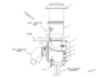 Locked diagram
Parts in this unit
Catalog descriptions with masked part numbers.
| Part number | Description |
|---|---|
| 0s***91 | Screw, cap, hexagon bearing retainer; part of kit p/n 1w***82; spare part 0s***91 screw, cap, hexagon bearing retainer (Caterpillar) |
| 10***56 | Air cleaner group |
| 10***57 | Tube as; Spare Part 10***57 Tube as (Caterpillar) |
| 1d***17 | Nut-plate and angle assembly to hydraulic and fuel tanks; nut plate and angle assembly to hydraulic and fuel tanks; spare part 1d***17 nut-plate and angle assembly to hydraulic and fuel tanks (Caterpillar) |
| 2k***73 | Locknut inside guard assembly; spare part 2k***73 locknut inside guard assembly (Caterpillar) |
| 4j***77 | Seal - o - ring (11.23mm od); spare part 4j***77 seal - o - ring (11.23mm od) (Caterpillar) |
| 5k***68 | Fitting; (Pipe Hexagon); Spare part 5k***68 Fitting (Caterpillar) |
| 5p***75 | Washer-hard; (10.2x22.5x3-mm thk)(shield to a/c); spare part 5p***75 washer-hard (Caterpillar) |
| 5s***82 | Capscrew; (hex hd) (1/2-13x1 3/8, gd8, z); spare part 5s***82 capscrew (Caterpillar) |
| 7e***77 | Air cleaner group; spare part 7e***77 air cleaner group (Caterpillar) |
| 7s***80 | Clamp Assembly; Spare Part 7s***80 Clamp Assembly (Caterpillar) |
| 7s***96 | Prescreener as; spare part 7s***96 prescreener as (Caterpillar) |
| 7x***92 | Elbow-90 degree; (1/8-27 thd); spare part 7x***92 elbow-90 degree (Caterpillar) |
| 8n***94 | Indicator-air filter change; (air cleaner); spare part 8n***94 indicator-air filter change (Caterpillar) |
| 8t***28 | Adapter-o-ring face seal; spare part 8t***28 adapter-o-ring face seal (Caterpillar) |
| 8t***96 | Washer-hard- line from pipe as. to gear; spare part 8t***96 washer-hard- line from pipe as. to gear (Caterpillar) |
| 8t***77 | Bolt (3/8-16x2.25in); (3/8-16x2.25-in); spare part 8t***77 bolt (3/8-16x2.25in) (Caterpillar) |
| 9s***47 | Body as; (pre-cleaner); spare part 9s***47 body as (Caterpillar) |
12H ES serial number reference
The PIN/serial plate on a 12H-series grader is riveted to the main frame. Exact position varies by source - commonly placed on the right-hand side of the frame forward of the cab, near the steering gear/articulation joint - so check the operator's manual for the exact spot if the plate is hard to find or missing (the number is often also stamped directly into the frame at the same location). Read the first three characters stamped on the plate as the serial-number prefix (letters and digits, e.g. 2GS or 2LR); this identifies the specific model/version/running-change build. The digits that follow are the sequential unit number. Match the three-character prefix against a Caterpillar prefix chart or dealer lookup to confirm it ties to the ES-version 12H rather than the NA or Standard trim, since Caterpillar reused the same chassis across multiple prefix families.
| Prefix | Identifies | Notes |
|---|---|---|
| 2GS | 12H ES | Serial break 2GS00001 and up, factory documentation cites roughly 2GS00359 as the top of this run. Same 12H chassis as the NA and Standard trims but built to ES specification, powered by the Caterpillar 3306 turbocharged diesel rated about 104 kW (140 hp) net. Parts and electrical documentation groups this prefix with the equivalent ES-version 140H and 160H graders under one manual family, so match the full prefix plus the serial plate PIN before ordering parts. |
| 2LR | 12H ES | Later serial break for the same ES configuration, 2LR00001 and up, factory documentation cites roughly 2LR00294 as the top of this run. Same ES specification and Caterpillar 3306 turbocharged diesel as the 2GS break; this second prefix reflects a running production change rather than a new model. Electrical and parts documentation covers 2GS and 2LR together as the two ES-version prefixes for this chassis size. |
Frequently asked questions
What engine does the Caterpillar 12H ES motor grader use?
The 12H ES runs Caterpillar's 3306 DIT, a four-stroke, six-cylinder turbocharged diesel rated at 104 kW (140 hp) net at 1900 rpm. Later Global-spec 12H builds switched to the Cat C-9 engine (145-185 hp) for tighter emissions rules, so always confirm engine plate data against the machine's model and serial number before ordering parts.
What is the operating weight of the 12H ES motor grader?
Standard ES-configuration operating weight is about 14,247-14,249 kg (31,405-31,411 lb) with full fuel, coolant, lubricants, an operator, and standard 13.00-24 tires. Adding a ripper-scarifier, an extended moldboard, ballast, or heavier tire and rim options increases it, so treat this figure as a baseline that varies by configuration.
What replaced the Caterpillar 12H ES motor grader?
Caterpillar retired the H-series in 2007 in favor of the 12M, which moved to joystick steering and implement controls and a Cat C7 ACERT engine. The 12M kept the 12H's basic frame, circle, and drawbar architecture but modernized the operator's station and electronics.
What 12H ES owners discuss
Why do some 12H ES graders lose forward or reverse gears, and is a flashing transmission warning light always a real fault?
What steering and hydraulic quirks come up most with the 12H ES?
What wear patterns show up in the circle, drive pinion, and articulation joint on this machine?
What fluid goes in the tandem (chain) drive cases, and why is there disagreement about it online?
What engine quirks show up on the 3306 DIT used in the 12H ES?
Why does it matter whether a 12H is the NA or ES electrical configuration when troubleshooting or sourcing parts?
What should a buyer walk through before purchasing a used 12H ES?
Compiled from owner and technician discussions across the industry — experiences vary by serial range and machine history.
Need a specific 12H ES part?
Search live OEM part data, check fitment, and cross-reference alternatives with Heavy Parts AI.
Post a parts request and compare supplier quotes.