Caterpillar 12H
Specifications · fluids and capacities · maintenance intervals
Post a parts request and compare supplier quotes.
The Caterpillar 12H is a medium-frame motor grader built for road construction, maintenance grading, and finish work, produced from roughly 1996 to 2007. Early production used the mechanically governed Cat 3306 turbocharged diesel with no engine ECM; later production carries the electronically controlled Cat C-9, offered in Base, VHP, and VHP Plus power ratings, roughly 108-138 kW (145-185 hp). Operating weight runs from about 31,320 lb (14,210 kg) in base configuration up to roughly 45,818 lb (20,783 kg) maximum gross weight, depending on ballast, tires, and attachments. The 12H sits in the long-running Cat No.12 lineage, following the 12G-series graders and preceding the 12M/120M Global M-series machines introduced from 2007 onward. Cat offered it with standard and wide moldboards, circle-and-drawbar steering, front, mid, and rear scarifier or ripper mounts, snow wing and plow attachments, and an optional front lift group requiring a separate hydraulic kit.
The main running change inside the 12H generation is the engine and control switch from the mechanical 3306 to the electronic C-9, which added ECM diagnostics and the VHP/VHP Plus power steps without changing the base transmission design. The electronically controlled powershift transmission stayed common across the 12H, 140H, and 160H, so drivetrain parts and service knowledge carry across the family. In the used and parts market, the 12H remains a heavily worked machine: the mechanical 3306 variant appeals to owners who want to avoid ECM complexity, while C-9 units draw buyers wanting factory diagnostics and higher VHP Plus output. Caterpillar retired the No.12 grader nameplate in 2019, folding the lineage into the renamed 140 model, so parts supply and rebuild expertise for the 12H now depend on the aftermarket and used-parts trade rather than current factory production.
Below: full specifications, fluids & capacities, the factory service schedule, common service parts, verified fault codes, what owners discuss, attachment guidance, the complete assembly directory, and a serial-number reference. Complete parts lists with full OEM part numbers, exploded diagrams, quantities, and fitment data are available free in Heavy Parts AI.
Caterpillar 12H specifications
Engine
| Engine models (by configuration) | Two engine arrangements used across the 12H run (1996-2007): Cat 3306 turbocharged diesel (DITA/DIT) on NA/ES emissions configurations, and Cat C-9 ETA on later VHP/VHP Plus arrangements. Confirm which arrangement applies to a given serial range before ordering parts. |
| Cylinders | 6, inline, both engine arrangements |
| Displacement - 3306 arrangement | 10.45 L (637.7 cu in); bore 121 mm (4.76 in), stroke 152 mm (5.98 in) |
| Displacement - C-9 ETA arrangement | 8.8 L (537 cu in); bore 112 mm (4.4 in), stroke 149 mm (5.9 in) |
| Net power - 3306 arrangement | 104 kW / 140 hp @ 1900 rpm (gross approx. 115 kW / 154 hp) |
| Net power - C-9 ETA, Base/VHP arrangement | 108 kW / 145 hp (gears 1-3), 123 kW / 165 hp (gears 4-8), gross 116-131 kW / 156-176 hp; rated speed 2000 rpm |
| Net power - C-9 ETA, VHP Plus arrangement | 108 kW / 145 hp (gears 1-3), 123 kW / 165 hp (gears 4-6), 138 kW / 185 hp (gears 7-8), gross 116-146 kW / 156-196 hp; rated speed 2000 rpm |
| Peak torque | 3306 arrangement: 682 N·m (503 lb-ft) net @ 1200 rpm, 30% torque rise. C-9 ETA arrangement: 988 N·m (728 lb-ft) @ 1000 rpm, 50% torque rise |
| Emissions | C-9 ETA VHP/VHP Plus arrangement meets or exceeds US EPA Tier 2 and EU Stage II. Earlier 3306-powered configurations predate Tier 2/Stage II regulation |
Weights
| Operating weight (standard/base, C-9 ETA config) | 14,200 kg (31,320 lb) - front axle 3,784 kg (8,346 lb), rear axle 10,416 kg (22,974 lb) |
| Operating weight (standard, 3306 config) | approx. 14,248-14,249 kg (31,409-31,412 lb) - essentially the same class weight as the C-9 config, minor variance by configuration |
| Maximum operating weight (with attachments/counterweight, ballast) | 20,783 kg (45,818 lb) - front axle 6,234 kg (13,744 lb), rear axle 14,549 kg (32,074 lb) |
| Shipping weight | Not separately published in factory literature reviewed; operating weight figures above are the best-documented reference |
| Ground pressure | Not published for this model in sources reviewed |
Dimensions
| Overall length (base machine, no ripper) | approx. 8.57-8.60 m (28.1-28.2 ft) |
| Overall length (with rear ripper fitted) | approx. 10.0 m (394 in / 32.8 ft), per factory dimension from front counterweight to ripper |
| Width over tires | 2.42-2.47 m (7.95-8.1 ft) - outside front tires 2,440 mm (96 in), outside rear tires 2,422 mm (95.3 in) |
| Height to cab top (low-profile cab) | 3.09-3.14 m (10.17-10.30 ft) |
| Height to cab top (high-profile cab option) | 3.33 m (131 in / 10.93 ft) |
| Wheelbase (front axle to mid-tandem) | 6.09-6.10 m (19.97-20.0 ft) |
| Tandem wheelbase (between tandem axles) | 1.52 m (59.9 in / 4.99-5.0 ft) |
| Ground clearance, front axle | 0.59-0.61 m (1.95-2.0 ft) |
| Ground clearance, rear axle/tandem | 0.34-0.37 m (1.13-1.2 ft) |
| Ground clearance at transmission case | 341.5 mm (13.4 in), per factory spec sheet |
| Turning radius (outside front tires) | 7.4 m (24.25-24.3 ft) |
| Articulation angle | 20 degrees left/right |
| Steering range | 50 degrees left/right |
| Moldboard/blade width | 3.66-3.69 m (12-12.1 ft) |
| Moldboard height | 610 mm (24-24.1 in) |
| Moldboard thickness | 22 mm (0.87-0.9 in) |
Performance
| Travel speed, forward (max, top gear) | varies by configuration: up to 44 kph (27.4 mph) on C-9 ETA config; approx. 39.7 kph (24.7 mph) reported for 3306-engine NA/ES configurations |
| Travel speed, reverse (max, top gear) | varies by configuration: up to 34.7 kph (21.6 mph) on C-9 ETA config; approx. 31.4-31.7 kph (19.5-19.7 mph) reported for 3306-engine NA/ES configurations |
| Forward/reverse speed range (all 8F/6R gears, C-9 ETA config) | Forward: 3.8-44 kph (2.3-27.4 mph) across gears 1-8. Reverse: 3-34.7 kph (1.8-21.6 mph) across gears 1-6 |
| Transmission | Direct-drive power shift, 8 forward / 6 reverse speeds, both engine arrangements |
| Blade pull, at maximum GVW | 13,094 kg (28,867 lb) |
| Blade pull, at base GVW | 9,379 kg (20,677 lb) |
| Blade down pressure, at maximum GVW | 10,799 kg (23,800-23,808 lb) |
| Blade down pressure, at base GVW | 6,555 kg (14,447 lb) |
| Maximum depth of cut | 735 mm (28.9 in) |
| Maximum lift above ground | 480 mm (18.9 in) |
| Hydraulic pump output | 196 L/min (51.8-54.5 gal/min) @ 1850 rpm, closed-center load-sensing, variable piston pump |
| Maximum hydraulic system pressure | 24,150 kPa (3,500 psi) |
| Gradeability | Not published as a discrete figure in sources reviewed |
Service capacities (summary)
| Fuel tank | varies by configuration: 378 L (100 gal) per factory spec sheet for C-9 ETA equipped machines; approx. 284 L (75.1 gal) reported for 3306-engine NA/ES configurations |
| Hydraulic system, total | approx. 68-80 L (18-21.2 gal) depending on configuration; factory spec sheet lists 74 L (19.5 gal) total, of which 38 L (9.9 gal) is tank capacity, for the C-9 ETA config |
| Engine oil (with filter) | approx. 24-27 L (6.3-7.2 gal), varies by source/configuration |
| Cooling system | 44 L (11.6 gal) |
| Final drive/differential (each) | 47 L (12.2 gal) |
| Tandem housing (each) | 64 L (16.9 gal) |
| Circle drive housing | 7 L (1.8 gal) |
Values vary by configuration, region, and serial range — confirm against your machine before planning transport or lifts.
12H fluids & capacities
| System | Capacity | Recommended fluid |
|---|---|---|
| Engine crankcase (with filter) | 24 L (6.3 US gal) per the C-9 diesel engine factory OMM; earlier 3306-engine production of this model lists roughly 27 L (7.2 US gal) — varies by engine/series | Cat DEO-ULS or Cat DEO multigrade diesel engine oil. SAE 10W-30 preferred for 0 to 104°F (-18 to 40°C). Cat DEO-ULS SYN / DEO SYN 5W-40 for -22 to 122°F (-30 to 50°C). Cat DEO-ULS Cold Weather 0W-40 down to -40°F (-40°C). SAE 15W-40 for hot climates to 122°F (50°C). Commercial oils meeting ECF-1a, ECF-2, or ECF-3 accepted as alternates. |
| Cooling system | 44 L (11.6 US gal) | Cat ELC (Extended Life Coolant) preferred. Cat DEAC (Diesel Engine Antifreeze/Coolant) acceptable. Never run the system on water alone. |
| Fuel tank | 378 L (99.9 US gal) | Ultra low sulfur distillate diesel meeting Cat fuel specification. Biodiesel blends up to B20 are accepted in this engine; the base diesel stock in the blend must be ULSD. |
| Transmission and differential housing | 47 L (12.4 US gal) — combined transmission/differential case | Cat TDTO, Cat TDTO-TMS, Cat Cold Weather TDTO, or Cat TO-4/TO-4M. SAE 10W below 50°F (10°C), SAE 30 for 32 to 95°F (0 to 35°C), SAE 50 for warm climates to 122°F (50°C), SAE 0W-20 or TDTO-TMS multigrade for extreme cold to -40°F (-40°C). |
| Hydraulic system (total) and hydraulic tank | Total system 94 L (24.8 US gal) with the tank alone holding 55 L (14.5 US gal), per the factory C-9 engine OMM. Some Cat sales literature for this model instead lists a smaller hydraulic system figure of about 74 L (19.5 US gal) — varies by configuration/series, verify against the machine's own capacity plate | Cat HYDO Advanced 10 or 30 preferred (longer drain interval). Acceptable alternates: Cat TDTO, Cat BIO HYDO Advanced, Cat MTO, Cat DEO-ULS/DEO, Cat TDTO-TMS. SAE 10W for cold climates to -4°F (-20°C), SAE 30 for 32 to 122°F (0 to 50°C), cold-weather 0W-20/0W-40 grades down to -40°F (-40°C). |
| Tandem drive / final drive housing (each side) | 64 L (16.9 US gal) per side | Cat TDTO, Cat TDTO-TMS, Cat Cold Weather TDTO, or Cat TO-4/TO-4M — same viscosity grades and temperature ranges as the transmission and differential. |
| Circle drive housing | 7 L (1.8 US gal) | Cat GO gear oil, Cat Synthetic GO, or API GL-5 gear oil. SAE 75W-90 or 75W-140 for cold climates, SAE 85W-140 for hot climates, SAE 90 for moderate temperatures. |
| Front wheel spindle bearing housing (each) | 1 L (0.26 US gal) each side | Same Cat TDTO/TO-4 family oil used for the tandem drive and wheel spindle bearings, graded by ambient temperature. |
| Grease (spec only, no fill volume) | Not applicable — grease fittings, not a reservoir | Cat Ultra 5Moly Grease for high-load points (articulation bearings and pins, blade lift and centershift cylinder sockets, fan drive belt tightener, pump drive slip spline) under severe duty. Cat Advanced 3Moly Grease for medium-duty road maintenance. Cat Multipurpose Grease for light duty and finish grading. Cat High Speed Ball Bearing Grease for fan drive bearings. NLGI grade drops as low as NLGI 0 for extreme cold service. |
Capacities are refill values from factory literature — always fill to the dipstick/sight gauge, not the number.
Caterpillar 12H maintenance schedule
| Service interval | Tasks |
|---|---|
| Every 50 h |
|
| Every 250 h |
|
| Every 500 h |
|
| Every 1,000 h |
|
| Every 2,000 h |
|
| Every 4,000 h |
|
Servicing the 12H beyond the schedule
Predictive maintenance and fluid analysis
Run S-O-S oil, coolant, and hydraulic sampling on the 12H's engine, tandem housings, differential, and transmission at every scheduled oil change. On C-9-equipped units, pull ECM fault history and monitor exhaust temperature and boost trends to catch turbocharger or injector drift early. On 3306 units, track fuel consumption and blow-by since there's no ECM to flag it. Watch tandem housing oil for metal fines, a leading indicator of duo-cone seal or final-drive gear wear before a tandem rebuild becomes unavoidable.
Corrective and common repairs
Common 12H fixes center on the circle and drawbar steering group: worn circle wear pads, a loose circle drive gear mesh, and drawbar ball wear all show up as steering slop or moldboard drift and need shimming or pad replacement. Tandem housing duo-cone seal leaks and final-drive bearing wear are frequent on high-hour machines. On 3306 engines, turbocharger shaft play and injector wear are the usual repairs; C-9 units more often need sensor, harness, or ECM-related diagnostics.
Overhaul and rebuild points
Major rebuild points on the 12H are the tandem housings (gears, bearings, duo-cone seals), the circle drive assembly (circle gear segment, wear pads, drive motor), and the powershift transmission clutch packs and torque converter shared with the 140H/160H family. Front wheel spindles and steering cylinders warrant inspection at overhaul. On 3306-powered machines, expect a top-end rebuild around turbocharger and injector wear; C-9 units typically need injector and turbo reconditioning rather than a full mechanical teardown.
Seasonal and environment servicing
Before winter work, service the 12H's snow wing and plow mounting hardware, check hydraulic fluid viscosity grade for cold starts, and drain the fuel-water separator more often since condensation increases in cold, damp storage. In hot, dusty grading environments, shorten air filter and radiator-cleaning intervals and check tandem housing oil more frequently, since fine grit accelerates duo-cone seal wear. Grease circle, drawbar, and articulation pivots more often when working in mud or standing water to purge contaminated grease.
12H common service parts
| Part number | Part | Notes | |
|---|---|---|---|
| 220-8678 | Seal-Ring | Fuel system service | Check fitment → |
| 326-1644 | Filter As-Water Sep & Fuel | Fuel system service | Check fitment → |
| 6I-0273 | Filter Element As-Air | Air intake service | Check fitment → |
| 6I-0274 | Filter Element As-Air | Air intake service | Check fitment → |
| 203-2423 | Kit-Heating Element | Air intake service | Check fitment → |
Always confirm against your machine's serial number — cross-check any part in Heavy Parts AI before ordering.
12H fault codes & troubleshooting
| Code | Meaning | Likely cause | What to do |
|---|---|---|---|
| 585-02 | Transmission Output Speed Sensor #1 - erratic or intermittent signal | Damaged sensor wiring, corroded connector, or a failing output speed sensor at the transmission case | Check sensor connector and harness for corrosion or chafing, verify sensor air gap, then confirm with a diagnostic tool before replacing the sensor |
| 673-02 | Transmission Output Speed Sensor #2 - erratic or intermittent signal | Same wiring or connector fault pattern as sensor #1, or a worn tone wheel at the sensor location | Inspect harness routing near the transmission case, clean and reseat the connector, retest before condemning the sensor |
| 669-02 | Transmission Input Speed Sensor - erratic or intermittent signal | Loose or corroded connector at the input speed sensor, or internal sensor failure | Inspect wiring and connector, check sensor gap to the rotating element, replace sensor if signal stays erratic after wiring repair |
| 668-02 | Transmission Shift Lever (direction/speed selector) - erratic or intermittent signal | Worn selector linkage, corroded selector switch contacts, or chafed harness near the console | Check selector switch continuity and linkage adjustment, clean contacts, repair or replace the harness section as needed |
| 0100-01 | Engine Oil Pressure - reading below normal operating range | Low oil level, worn oil pump, plugged suction screen, or a failing oil pressure sensor | Stop the engine, check oil level and condition, inspect for leaks, verify sensor reading against a mechanical gauge before returning to service |
| 0110-00 | Engine Coolant Temperature - reading above normal operating range | Low coolant level, blocked radiator core, failed thermostat, or slipping/failed fan drive | Shut down before damage occurs, check coolant level and radiator for debris, verify fan operation and thermostat, confirm sensor accuracy |
| 0274-03 | Atmospheric Pressure Sensor - voltage above normal range | Open or shorted sensor supply/signal wiring, corroded connector, or a failed sensor | Inspect sensor wiring and connector for damage or corrosion, check supply voltage, replace sensor if circuit checks out normal |
| 0164-03 | Injector Actuation Pressure sensor - voltage above normal range (hydraulic electronic unit injector circuit) | Damaged sensor circuit wiring, corroded connector, or a failed actuation pressure sensor | Inspect wiring harness and connector at the sensor, check for correct reference voltage, replace sensor if wiring tests good |
Codes and remedies are general guidance for this model family — always confirm with diagnostic tooling and your dealer before major repairs.
12H attachments & work tools
Moldboard / front blade
Standard straight moldboard runs about 3.7 m x 610 mm (12 ft x 24 in), roughly 23 mm thick, with a curved through-hardened cutting edge and replaceable end bits. A wider 4.3 m x 610 mm (14 ft x 24 in) moldboard is also documented for this frame, shared across the 12H/120H/135H/140H/140K blade family. Blade can be manual-angle or hydraulic-angle depending on how the machine is optioned.
Circle and drawbar
One-piece circle of about 1.5 m (60 in) diameter, hydraulically driven for full 360-degree rotation, with heat-hardened drive teeth on the front arc; consistent with Cat's H/M-series grader circle design. Two-beam Y-frame drawbar supports the moldboard linkage for bank sloping and ditch work.
Front-mount scarifier
Light-duty scarifier that hooks to the front lift group ahead of the blade. Used to break up compacted material, asphalt, or rocky subgrade before final grading passes; lower cost than mid-mount but with less depth control.
Mid-mount scarifier
Multi-shank bar mounted mid-frame between the front axle and moldboard, offering better cut-depth control, improved operator visibility, and the ability to fracture harder material than a front-mount unit. Documented as a shared attachment across the 12H/12M and 140/160-series grader line, with shank spacing adjustable to match ground conditions.
Rear ripper/scarifier
Rear-mounted shank bar that puts ripper weight over the rear tandem for maximum breakout force, useful for close-in ripping near walls or corners. Heavy ripper shanks and light scarifier shanks are interchangeable on the same bar and can be stowed on top when not in use.
Snow wing
Two styles offered for this class: mast-type wings for throwing deep drifted snow, and mastless wings for benching and clearing shoulder snow up to roughly a 40-degree bench angle. Both mount off the front lift group and need the machine's hydraulic kit to power wing fold/lift.
Snow/V-plow and straight snow blade
Dedicated snow-clearing front blades (straight or V-plow) offered alongside the standard moldboard for winter service, mounted at the nose separate from the grading moldboard.
Front lift group / hydraulic kit
Mounting frame at the nose that lets front-hitched tools (blade, scarifier, broom, snow wing) attach quickly; hydraulically powered tools require the machine to carry the matching valve and line hydraulic kit, which varies by which front tool is fitted.
Push block / counterweight
Bolts to the nose plate to counterbalance a rear ripper's added weight and doubles as a push point when the grader is used to push other equipment. Typically specified alongside a rear ripper rather than on its own.
Front-mounted broom
Hydraulically driven rotary broom attaches through the front lift group for sweeping duty; needs auxiliary hydraulics to drive the brush head, in addition to the lift group's mounting hardware.
Fenders
Rear tire fenders offered as a factory or dealer-fit option to limit mud, snow, and debris build-up around the tandem and protect surrounding sheet metal.
Cab guarding / ROPS-FOPS
ROPS-rated operator cab is standard on this model. Chassis-mounted or cab-mounted rock/demolition FOPS screens are available as a protective option for aggregate, quarry, or demolition-adjacent grading work; exact guarding fitment varies by configuration.
Part Book
Browse by group, subgroup and unit. Part numbers are masked and diagram thumbnails are locked.
163-0310 Aftercooler & Mounting Group s/n 1251-up Part of 185-1542, 242-6181 Cooling ar
163-0310 Aftercooler & Mounting Group s/n 1251-up Part of 185-1542, 242-6181 Cooling ar is listed in the Air inlet and exhaust system / aftercooler & mounting group catalog section.
- Group
- Air Inlet and Exhaust System
- Subgroup
- Aftercooler & Mounting Group
- Unit
- 163-0310 Aftercooler & Mounting Group s/n 1251-up Part of 185-1542, 242-6181 Cooling ar
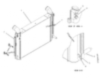 Locked diagram
Parts in this unit
Catalog descriptions with masked part numbers.
| Part number | Description |
|---|---|
| 12***27 | Seal; (95-cm each); spare part 12***27 seal (Caterpillar) |
| 16***10 | Aftercooler & Mounting Group; spare part 16***10 aftercooler & mounting group (Caterpillar) |
| 16***11 | Core as-aftercooler; spare part 16***11 core as-aftercooler (Caterpillar) |
| 19***11 | Spacer; (7.82x26.67x75-mm thk); spare part 19***11 spacer (Caterpillar) |
| 4s***91 | Washer to mainshaft lube cap; spare part 4s***91 washer to mainshaft lube cap (Caterpillar) |
| 6v***20 | Bolt; (m10x1.5x30-mm); spare part 6v***20 bolt (Caterpillar) |
| 7x***29 | Washer; (11x25x3-mm thk); spare part 7x***29 washer (Caterpillar) |
| 8t***36 | Bolt (m10x1.75x130mm); spare part 8t***36 bolt (m10x1.75x130mm) (Caterpillar) |
12H serial number reference
The PIN/serial plate on a 12H is riveted to the main frame, commonly on the right-hand chassis rail near the front axle/front frame section (some machines show it left-front ahead of the blade). If the plate is gone, the number is also stamped directly into the frame steel in the same area. The prefix is the first three characters of the serial (or of the 17-character PIN on machines re-tagged after the industry-standard PIN changeover); that three-character code ties to a specific build configuration/engine grouping, and the digits after it are the individual unit's sequence number.
| Prefix | Identifies | Notes |
|---|---|---|
| 4XM | 12H NA (North America spec) version, standard configuration | 4XM00001-UP. Fitted with the 3306B engine. Among the earliest 12H NA prefixes, dating to the mid-1990s at the start of 12H production. |
| 2WR | 12H NA (North America spec) version, standard configuration | 2WR00001-UP. Fitted with the 3306 engine. Dates to around 1996, early in the 12H run. |
| 8MN | 12H NA (North America spec) version, standard configuration | 8MN00001-UP, with parts breaks documented into the 8MN700s. Fitted with the 3306B engine. |
| 5ZM | 12H Standard-version configuration (non-NA, non-ES) | 5ZM00001-UP. Fitted with the 3306 engine. Factory electrical documentation for the Standard-version 12H/140H/160H line splits prefixes per model and lists 5ZM and 4ER as the 12H's own pair. |
| 4ER | 12H Standard-version configuration (non-NA, non-ES) | 4ER00001-UP, with parts breaks documented past 4ER600. Fitted with the 3306 engine. |
| XZJ | 12H configuration, later production run | XZJ00001-UP. Fitted with the 3306 engine (confirmed across parts-catalog listings for cab, wheel, and power-train components). Runs later in the model's life, in parts documentation issued alongside the C-9-powered prefixes; exact sub-version (NA/ES/Standard) not confirmed - confirm with dealer. |
| 125 | 12H configuration, later/global production run | 12500001-UP (also documented as 1251-UP in component listings). Fitted with the C-9 engine. |
| AMZ | 12H configuration, later/global production run | AMZ00001-UP. Fitted with the C-9 engine. Parts-catalog documentation dates this grouping to around 2000. |
| CBK | 12H configuration, later/global production run | CBK00001-UP. Fitted with the C-9 engine. Parts-catalog documentation dates this grouping to around 2003. |
| 2GS | 12H ES version configuration | 2GS00001-UP, with the ES-version electrical schematic for 12H/140H/160H documenting the 12H's serial break as 2GS1-359. Fitted with the 3306 engine. |
| 2LR | 12H ES version configuration | 2LR00001-UP, with the ES-version electrical schematic for 12H/140H/160H documenting the 12H's serial break as 2LR1-294. Fitted with the 3306 engine. |
Frequently asked questions
What engine does the Caterpillar 12H motor grader use?
Cat built the 12H with two engine arrangements. Early units run the mechanically governed Cat 3306 turbocharged diesel with no electronic engine control. Later units run the electronically controlled Cat C-9, offered in Base, VHP, and VHP Plus power ratings, roughly 108-138 kW (145-185 hp) depending on rating.
What is the operating weight of the Caterpillar 12H?
Base configuration runs about 31,320 lb (14,210 kg). Fully equipped with ballast, front lift group, and scarifier or ripper attachments, maximum gross weight reaches roughly 45,818 lb (20,783 kg). Exact weight varies by moldboard width, tires, and attachment package.
What replaced the Caterpillar 12H motor grader?
The 12H was followed by the 12M Global M-series grader, introduced from 2007, which added an eight-speed transmission and joystick controls. Caterpillar retired the No.12 nameplate in 2019, folding the lineage into the renamed 140 model as part of a broader motor grader rebrand.
What 12H owners discuss
What engine problems come up most with the 12H, and does it matter which engine it has?
Why does the hydraulics feel sluggish on side shift, circle rotation, or articulation?
What wears out on the circle, drawbar and moldboard, and how often does it need attention?
What causes the transmission to lose gears or drop to neutral on its own?
What do the EMS warning lights actually mean, and how urgent is a flashing light?
Are the brakes on a 12H high-maintenance?
What should I check before buying a used 12H?
Compiled from owner and technician discussions across the industry — experiences vary by serial range and machine history.
Need a specific 12H part?
Search live OEM part data, check fitment, and cross-reference alternatives with Heavy Parts AI.
Post a parts request and compare supplier quotes.