Caterpillar 120M
Specifications · fluids and capacities · maintenance intervals
Post a parts request and compare supplier quotes.
The Caterpillar 120M is a mid-size motor grader built for road maintenance, site grading, and general earthmoving. It runs a Cat C6.6 ACERT 6-cylinder, 6.6-liter diesel rated 103-136 kW (138-182 hp) net depending on VHP, VHP Plus, or AWD configuration, and meets EPA Tier 3 / EU Stage IIIA emissions. Operating weight spans roughly 14,466 kg (31,891 lb) in base trim to about 20,271 kg (44,690 lb) in a fully equipped AWD configuration. The 120M is the M-series successor to the long-running 120K/120H/120G grader line, offered as a standard rear-wheel-steer machine and as an all-wheel-drive (AWD) variant, with a standard 3.7 m (12 ft) moldboard or an optional 4.3 m (14 ft) moldboard.
The 120M's main shift from its K-series predecessor was ACERT emissions technology on the C6.6 engine, paired with a redesigned cab, joystick controls, and easier-access service points such as top-loading drawbar wear inserts and simplified circle lube access. Caterpillar later replaced the 120M with the 120M2, which stepped up to the larger C7.1 ACERT engine and higher-tier emissions hardware, moving the platform into a heavier class. That leaves the 120M as the last grader in this size bracket before the displacement jump, which keeps it in steady demand on the used and parts market: a simpler emissions system than later Stage IV/Tier 4 Final machines, broad parts commonality across the C6.6 industrial engine family, and a layout familiar to shops and operators who came up on K-series graders.
Below: full specifications, fluids & capacities, the factory service schedule, common service parts, verified fault codes, what owners discuss, attachment guidance, the complete assembly directory, and a serial-number reference. Complete parts lists with full OEM part numbers, exploded diagrams, quantities, and fitment data are available free in Heavy Parts AI.
Caterpillar 120M specifications
Engine
| Engine model | Cat C6.6 ACERT (VHP / VHP Plus power management) |
| Displacement | 6.6 L (403 cu in) |
| Cylinders | 6, inline |
| Bore x stroke | 105 mm x 125 mm (4.13 in x 4.92 in) |
| Net power, base (1st gear) | 103 kW (138 hp) |
| Net power, VHP range | 103-114 kW (138-153 hp) |
| Net power, VHP Plus range (optional, tandem-drive) | 103-136 kW (138-182 hp) |
| Net power, AWD range (optional All Wheel Drive) | 110-144 kW (148-193 hp) |
| Max torque (VHP Plus) | 906 N*m (668 lb ft) |
| Speed at rated power | 2,000 rpm |
| Emissions certification | U.S. EPA Tier 3 / EU Stage IIIA equivalent |
| Altitude derating | No derating required up to 3,505 m (11,500 ft) |
Weights
| Gross vehicle weight, base configuration - total | 14,466 kg (31,891 lb); some spec listings show a close 14,093 kg (31,069 lb) base figure depending on tire and attachment mix |
| Gross vehicle weight, base - front axle | 4,209 kg (9,280 lb) |
| Gross vehicle weight, base - rear axle | 10,256 kg (22,611 lb) |
| Gross vehicle weight, base with AWD - total | 15,424 kg (34,003 lb) |
| Gross vehicle weight, maximum configuration - total | 20,271 kg (44,690 lb) |
| Gross vehicle weight, maximum - front axle | 7,460 kg (16,446 lb) |
| Gross vehicle weight, maximum - rear axle | 12,811 kg (28,244 lb) |
| Ground pressure | Not published for this model |
Dimensions
| Overall length (front tire to rear of machine) | 8.49 m (334.1 in / 27.8 ft) |
| Overall length with rear ripper fitted (counterweight to ripper) | 9.89 m (389.3 in / 32.4 ft) |
| Wheelbase (front axle to mid-tandem) | 5.92 m (232.8 in / 19.4 ft) |
| Height, top of cab | 3.31 m (130 in / 10.9 ft) |
| Height, top of cylinders | 2.92 m (115 in) |
| Height, exhaust stack | 2.89 m (113.6 in) |
| Width, outside front tires | 2.53 m (99.6 in / 8.3 ft); ranges up to 2.76 m (108.6 in) with optional larger tire arrangements |
| Width, outside rear tires | 2.51 m (98.9 in / 8.2 ft) |
| Ground clearance, rear axle | 347 mm (13.6 in) |
| Front axle height to center | 572 mm (22.5 in) |
| Standard moldboard width | 3.67 m (12 ft); optional 4.27 m (14 ft) |
| Turning radius, outside front tires | 7.34 m (24 ft 1 in) |
| Articulation angle | 20 degrees left/right |
| Steering range | 47.5 degrees left/right |
Performance
| Top travel speed, forward | 45.7 km/h (28.4 mph) per factory specification; some third-party listings show approximately 44.6 km/h (27.7 mph) depending on tire size |
| Top travel speed, reverse | 36.1 km/h (22.4 mph) per factory specification; some third-party listings show approximately 37.8 km/h (23.5 mph) |
| Forward/reverse gears | 8 forward / 6 reverse |
| Blade pull, base GVW | 9,230 kg (20,350 lb) |
| Blade pull, maximum GVW | 10,985 kg (24,218 lb) |
| Blade pull, base GVW with AWD engaged | 13,881 kg (30,603 lb) |
| Blade pull, maximum GVW with AWD engaged | 15,887 kg (35,024 lb) |
| Blade down pressure, base GVW | 7,455 kg (16,435 lb) |
| Blade down pressure, maximum GVW | 13,211 kg (29,125 lb) |
| Maximum depth of cut | 720 mm (28.3 in) |
| Maximum blade lift above ground | 427 mm (16.8 in) |
| Maximum blade position angle | 90 degrees |
| Gradeability | Not published for this model |
Service capacities (summary)
| Fuel tank | 341 L (90 gal) |
| Hydraulic system (tank) | 64 L (16.9 gal) |
| Engine oil (service refill) | 14 L (3.7 gal) |
| Cooling system | 33 L (8.7 gal) |
| Transmission / differential / final drives | 62.5 L (16.5 gal) |
| Tandem housing (each side) | 59 L (15.6 gal) |
Values vary by configuration, region, and serial range — confirm against your machine before planning transport or lifts.
120M fluids & capacities
| System | Capacity | Recommended fluid |
|---|---|---|
| Engine crankcase (with filter) | 14 L (3.7 US gal) | Cat DEO-ULS or Cat DEO multigrade diesel engine oil. SAE 15W-40 covers roughly -9.5 to 50 C (15 to 122 F); switch to SAE 10W-30, 5W-40, 0W-40 or 0W-30 grades for colder start temperatures per the ambient-temperature chart. Standard 500-hour oil change interval, verified by S O S sampling. |
| Cooling system | 33 L (8.7 US gal) | Cat ELC (Extended Life Coolant), factory-filled and rated to -35 C (-30 F). Supplied premixed 1:1 with water; ELC concentrate extends protection to -52 C (-62 F) for arctic climates. Six-year/12,000-hour service life with a mid-life extender treatment at the halfway point. |
| Fuel tank | 341 L (90 US gal) | Distillate No. 2-D diesel fuel meeting Cat's off-highway distillate fuel specification; No. 1-D winter blend recommended in cold climates. Ultra low sulfur diesel (15 ppm or less) used where local emissions rules require it. |
| Transmission, differential and final drives (combined compartment) | 62.5 L (16.5 US gal) | Cat TDTO (Transmission/Drive Train Oil). SAE 30 covers roughly 0 to 25 C (32 to 77 F); Cat Arctic TDTO SAE 0W-20 for cold starts to -40 C (-40 F); SAE 50 for sustained hot-climate duty. Commercial oil meeting the Cat TO-4 spec is an acceptable second choice. |
| Tandem final drive housing (each side) | 59 L (15.6 US gal) per side | Cat TDTO, same grade selection as the transmission/differential/final-drive compartment (SAE 0W-20 through SAE 50 depending on ambient temperature). Commercial TO-4 spec oil is an acceptable alternative. |
| Circle drive housing | 7 L (1.8 US gal) | Cat GO (Gear Oil). SAE 85W-140 for warm climates, SAE 75W-90 or 75W-140 for cold ambient conditions down to -30 C (-22 F). Commercial API GL-5 gear oil is an acceptable alternative. |
| Front wheel spindle bearing housing (each side) | 0.5 L (0.1 US gal) per side | Sealed live-spindle bearing lubricated with a light-weight oil per the machine's own lubrication chart; the general Cat fluids guide does not break this compartment out by name, so confirm the exact grade against the OMM lubrication chart for the specific serial range. |
| Hydraulic system tank | 64 L (16.9 US gal) | Cat HYDO Advanced 10 (SAE 10W), the preferred hydraulic oil for M Series motor grader hydraulic systems between 0 C and 40 C (32 F and 104 F). Cat HYDO SAE 10W is second choice. For cold climates use Cat Arctic TDTO SAE 0W-20 or Cat Arctic DEO SYN SAE 0W-30, both rated to -40 C (-40 F). |
| Grease (all points: articulation, drawbar, circle, moldboard, driveline) | Spec only, no reservoir capacity | Cat Multipurpose Grease (NLGI 2) for general-duty points in moderate climates. Cat Advanced 3Moly Grease for heavily loaded pin joints. Cat Ultra 5Moly Grease for severe-duty joints across a wide temperature range, down to about -30 C (-22 F). |
Capacities are refill values from factory literature — always fill to the dipstick/sight gauge, not the number.
Caterpillar 120M maintenance schedule
| Service interval | Tasks |
|---|---|
| Every 10 h |
|
| Every 250 h |
|
| Every 500 h |
|
| Every 1,000 h |
|
| Every 2,000 h |
|
| Every 3,000 h |
|
| Every 4,000 h |
|
| Every 6,000 h |
|
Servicing the 120M beyond the schedule
Predictive Maintenance & Fluid Analysis
Run S·O·S oil sampling on the C6.6 ACERT engine every 250 hours to catch bearing and injector wear early. Pull parallel samples from the transmission, tandem cases, hydraulic tank, and (on AWD units) the wheel gear group; metal in an AWD hub sample usually flags planetary wear before it strands the machine. Track circle drive oil condition at each 2000-hour change; rising iron content there traces back to skipped daily pinion greasing more often than the oil itself.
Corrective & Common Repairs
Circle drive pinion teeth and the blade circle itself take the most abuse on a 120M; skipped daily greasing wears the pinion and circle ring fast, and both show up as slop in the moldboard. Drawbar wear inserts and moldboard slide rail wear strips need regular shimming or replacement to stop chatter and uneven cuts. AWD-equipped units add wheel hub and planetary seal leaks as recurring repair items. Steering cylinder and linkage wear shows up as drift or hunting under load.
Overhaul & Rebuild Points
Tandem case and transmission oil changes at 1000 hours are the early warning line for gear and bearing wear inside the tandem housings; metal-laden oil there signals a coming tandem overhaul. Circle drive gear and, on AWD machines, the wheel gear group get fresh oil at 2000 hours, the usual point to inspect the circle ring gear and guide shoes for wear. Hydraulic pump and cylinder reseal work typically lines up with the 4000-hour full hydraulic oil change, alongside the C6.6 ACERT valve lash check.
Seasonal & Environment Servicing
Cold climates need block heaters and correct-viscosity oil for the C6.6 ACERT before start-up, plus closer coolant freeze-point checks on the Cat ELC fill. Dusty or high-debris sites shorten cab HVAC evaporator and heater coil cleaning well below the standard 2000-hour mark. Wet or humid regions need more frequent fuel tank water-and-sediment draining and fuel filter checks to protect the ACERT fuel system. Winter grading work adds tire chain and ballast inspection to the daily walk-around.
120M common service parts
| Part number | Part | Notes | |
|---|---|---|---|
| 299-8229 | Filter-Fuel | Fuel system service | Check fitment → |
| 220-8678 | Seal-Ring | Fuel system service | Check fitment → |
| 326-1644 | Filter As-Water Sep & Fuel | Fuel system service | Check fitment → |
| 256-7902 | Filter Element As-Air | Air intake service | Check fitment → |
| 256-7903 | Filter Element As-Air | Air intake service | Check fitment → |
Always confirm against your machine's serial number — cross-check any part in Heavy Parts AI before ordering.
120M fault codes & troubleshooting
| Code | Meaning | Likely cause | What to do |
|---|---|---|---|
| E192 (3) — Steering System Malfunction | Implement ECM lost a valid position signal from the steering cylinder position sensors while steering was commanded; treated as an immediate safe-shutdown event on M-series graders. | Worn or loose spherical bearings at the steering cylinder pivots let the front wheels flutter and confuse the position sensors; also caused by a faulty steering cylinder position sensor, damaged connector, or a fault in the electro-hydraulic steering valve actuator. | Stop the machine safely per the operator manual procedure, inspect steering cylinder pivot bearings for play, check position sensor connectors for corrosion or damage, then pull logged codes on the Implement ECM with Cat ET. |
| 597-14 — Implement Hydraulic Pump / Secondary Steering Pump, Special Instruction | Secondary (standby) steering pump circuit reports pressure above roughly 7500 kPa (1000 psi) while the pump is expected to be idle, or fails its automatic startup self-test. | Drifted or faulty implement pump pressure sensor, sticking relief valve, or a wiring fault on the secondary steering pump circuit; often shows up alongside a steering system malfunction code. | Run the secondary steering pump self-test at key-on, compare sensed pressure to a shop gauge, inspect the pressure sensor and its wiring to the Implement ECM, and correct before returning the machine to service since this affects backup steering. |
| 127-3 — Transmission Oil Pressure Sensor, Voltage Above Normal | Transmission ECM sees the transmission oil pressure sensor signal above the valid range, consistent with an open circuit or a short to supply voltage rather than an actual pressure reading. | Damaged or failed pressure sensor, chafed harness shorted to a power circuit, or a corroded/loose connector at the sensor. | Inspect the sensor connector and wiring for a short to battery voltage, verify sensor supply and signal with Cat ET on the Transmission ECM, and replace the sensor if wiring checks out good. |
| 41-4 — 8 Volt DC Sensor Supply, Voltage Below Normal | The 8V sensor reference supply from the ECM is reading below the valid range, indicating the supply is loaded down or shorted. | A shorted sensor or chafed harness on a circuit fed by the 8V supply, water intrusion at a connector, or an internal ECM supply fault. | Disconnect sensors fed by the 8V supply one at a time to isolate the short, inspect connectors for corrosion or moisture, and confirm supply voltage recovers once the faulty branch is isolated using Cat ET. |
| 2252-3 — Articulation Angle Sensor #2, Voltage Above Normal | Implement ECM sees the secondary articulation angle sensor signal above the valid range. | Sensor wiring shorted to a power circuit, a failed articulation sensor, or a loose/corroded connector at the frame pivot. | Inspect the articulation sensor and harness routing at the frame hinge point, check connector pins for damage, and verify sensor operation with Cat ET. |
| 168-3 / 168-4 — Electrical System Voltage, Above/Below Normal | Main machine electrical system voltage sensed by the ECM is outside the normal charging range; FMI 3 is high voltage, FMI 4 is low voltage. | Weak, sulfated, or failed battery; corroded or loose battery terminals and ground straps; faulty alternator or voltage regulator. | Check battery state of charge and terminal condition, measure charging voltage at idle and high idle (typically in the 13.8-14.4V range with the engine running), and inspect alternator output and ground connections. |
| 110-0 / 110-3 — Engine Coolant Temperature Sensor | FMI 0 indicates the sensor reading is valid but the coolant temperature itself is above the normal operating range (a real overheat condition); FMI 3 indicates the sensor circuit voltage is above normal, pointing to a wiring or sensor fault rather than actual heat. | For an actual high-temperature event: low coolant, plugged radiator core, fan drive or fan clutch fault. For a circuit fault: damaged coolant temperature sensor or chafed/shorted wiring. | Check coolant level and radiator core condition first, confirm fan operation, then check the sensor connector and wiring if the code points to a circuit fault, and verify with Cat ET on the engine ECM. |
| 100-0 / 100-3 — Engine Oil Pressure Sensor | FMI 0 indicates a valid reading of an actual low oil pressure condition; FMI 3 indicates the sensor circuit is shorted high or open, a wiring/sensor fault rather than a true pressure problem. | Real low pressure: low or degraded engine oil, worn oil pump or bearings. Circuit fault: failed oil pressure sensor or damaged wiring/connector. | Check oil level and condition and verify actual pressure with a mechanical gauge before condemning the sensor, then inspect the sensor connector and wiring, confirming with Cat ET on the engine ECM. |
Codes and remedies are general guidance for this model family — always confirm with diagnostic tooling and your dealer before major repairs.
120M attachments & work tools
Front moldboard / blade
Standard moldboard is 3.7 m (12 ft); an optional 4.3 m (14 ft) moldboard is offered for wider road coverage. A bolt-on moldboard extension adds up to 605 mm (24 in) of additional coverage on one side.
Front lift group
Optional front-mounted, hydraulically actuated lift group bolts to the nose of the machine and gives a hydraulic quick-coupling point for front-mounted tools. It accepts straight/front blades, V-plows and reversible plows, and a light-duty front scarifier.
Scarifiers
Front scarifier hooks to the front lift group for light-duty work, breaking up compacted material, asphalt and rocky subgrade ahead of the moldboard. A mid-mount scarifier (behind the front axle) gives better cut-depth control, improved forward visibility, and can fracture harder material.
Rear ripper/scarifier
Hydraulic rear-mounted ripper/scarifier attaches behind the tandem, putting rear-tire weight over the shanks for maximum penetration in hardened ground. Shanks and teeth are interchangeable between ripping and scarifying duty.
Snow removal tools
Snow package includes straight and flexible U/V blades for plowing, pushing, casting or carrying snow, plus V-plows for pioneering through deep drifts. Snow wings come in mastless (40-48 in bench height, for shoulders/ramps) and masted (60 in bench height with below-grade ditch-cleaning reach) versions.
Push block
Push block mounts to the machine's nose plate. It serves as a counterweight to balance a rear-mounted ripper and doubles as a push point when the grader is used to push other equipment.
Tow hitch
Optional rear tow hitch allows the grader to pull trailed implements or equipment behind the machine.
Guarding and protection package
Standard bottom guard covers the transmission and filters; an upgraded steel guard option is available for demanding, debris-heavy applications. A front axle cylinder guard option protects the cylinders, hoses and fittings on rough or rocky terrain.
Drawbar-circle-moldboard assembly
Standard equipment: tubular A-frame drawbar and a box-sectioned circle with hardened circle teeth. Top-adjust wear strips let shims and strips be replaced through access plates without dropping the circle, cutting moldboard/circle adjustment time.
Cutting edges and end bits
Moldboard cutting edges are offered in flat or curved profiles, with straight or serrated (bolt-on) options, sized to match the 12 ft or 14 ft moldboard. Through-hardened end bits protect the moldboard corners from abrasive wear; thickness/width are matched to the moldboard selected.
All-wheel-drive (AWD) configuration
Factory AWD arrangement drives the front wheels hydraulically for extra traction in mud, sand, gravel or snow and improves side-slope stability. AWD machines run 113-309 mm (4.4-12.2 in) wider than the standard 2WD arrangement, varies by configuration.
Part Book
Browse by group, subgroup and unit. Part numbers are masked and diagram thumbnails are locked.
246-7103 Aftercooler Group-Air s/n njd1-up Part of 343-6922, 343-6923 Cooling ar An Attachment
246-7103 Aftercooler Group-Air s/n njd1-up Part of 343-6922, 343-6923 Cooling ar An Attachment is listed in the Air inlet and exhaust system / aftercooler group-air catalog section.
- Group
- Air Inlet and Exhaust System
- Subgroup
- Aftercooler group-air
- Unit
- 246-7103 Aftercooler Group-Air s/n njd1-up Part of 343-6922, 343-6923 Cooling ar An Attachment
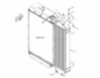 Locked diagram
Parts in this unit
Catalog descriptions with masked part numbers.
| Part number | Description |
|---|---|
| 12***07 | Mount as-resilient; spare part 12***07 mount as-resilient (Caterpillar) |
| 19***77 | Washer-hard; (11x25x10-mm thk); spare part 19***77 washer-hard (Caterpillar) |
| 24***03 | Aftercooler Group-Air; Spare Part 24***03 Aftercooler Group-Air (Caterpillar) |
| 25***07 | Core As-Aftercooler; Spare Part 25***07 Core As-Aftercooler (Caterpillar) |
| 26***76 | Bracket As; Spare Part 26***76 Bracket As (Caterpillar) |
| 7x***29 | Washer; (11x25x3-mm thk); spare part 7X***29 washer (Caterpillar) |
| 8t***90 | Nut-weld (m10x1.5-6h thd); spare part 8t***90 nut-weld (m10x1.5-6h thd) (Caterpillar) |
| 8t***85 | Bolt (m10x1.5x50mm); (m10x1.5x50-mm); Spare Part 8t***85 Bolt (m10x1.5x50mm) (Caterpillar) |
| 8t***95 | Capscrew; (hex hd) (m10 x 1.50 x 30l gr 10.9); spare part 8t***95 capscrew (Caterpillar) |
| 8t***96 | Capscrew; (Hex Hd) (m10 x1.5 x 35, gr10.9, z); Spare Part 8t***96 Capscrew (Caterpillar) |
| 8t***26 | Washer; (plated) (10.5x45x3mm thk); spare part 8t***26 washer (Caterpillar) |
120M serial number reference
The PIN/serial plate is riveted to the machine frame. Reported locations vary by source: the front frame rail near the steering gear/cab window, or the frame just forward of the moldboard lift cylinder support (left or right side varies by build) — check the frame rail under the cab if the plate is not immediately visible. On machines built after 2001 the plate carries a 17-character PIN; the 3-letter serial prefix plus 5-digit sequence number form the last 8 characters (for example B9N00156). That prefix ties the machine to a specific model/configuration build for parts and service lookup.
| Prefix | Identifies | Notes |
|---|---|---|
| B9N | 120M motor grader (Series 1, standard/non-AWD) | Cat C6.6 ACERT engine, EPA Tier 3 / EU Stage IIIA equivalent. Prefix plus 5-digit sequence forms the last 8 characters of the 17-character PIN on post-2001 machines. |
| B9C | 120M motor grader (Series 1, standard/non-AWD) | Cat C6.6 ACERT engine, Tier 3 / Stage IIIA equivalent. Distinguishing build detail versus B9N (plant or running change) not documented in public sources; verify exact configuration with dealer. |
| B9W | 120M AWD motor grader (Series 1, all-wheel-drive) | All-wheel-drive version of the Series 1 120M. Cat C6.6 ACERT engine, Tier 3 / Stage IIIA equivalent. AWD units run wider axles/tires than the standard 120M. |
| R9A | 120M motor grader (Series 1) | Cat C6.6 ACERT engine. Likely a later production run or regional build of the Series 1 120M; exact distinguishing detail vs B9N/B9C not documented — confirm with dealer. |
| R9C | 120M motor grader (Series 1) — confirm with dealer | Matches the naming convention of the other Series 1 120M prefixes in factory service-manual cataloging. Distinguishing build detail vs B9N/B9C/R9A not documented; verify against the PIN plate or a dealer lookup. |
| M9C | 120M2 motor grader (Series 2, standard/non-AWD) | Cat C7.1 ACERT engine with Clean Emissions Module, Tier 4 Interim / Stage IIIB equivalent. Next-generation redesign that replaced the Series 1 120M. |
| M9H | 120M2 AWD motor grader (Series 2, all-wheel-drive) | All-wheel-drive Series 2 120M2. Cat C7.1 ACERT engine, Tier 4 Interim / Stage IIIB equivalent. |
| R9W | 120M2 AWD motor grader (Series 2, all-wheel-drive) — confirm with dealer | Also ties to 120M2 AWD with the C7.1 ACERT engine. Relationship to M9H (production phase, plant, or running change) is not documented in public sources — verify exact build with dealer. |
Frequently asked questions
What engine does the Caterpillar 120M motor grader use?
The 120M runs a Cat C6.6 ACERT, a 6-cylinder, 6.6-liter diesel rated 103-136 kW (138-182 hp) net, depending on VHP, VHP Plus, or AWD configuration. It meets EPA Tier 3 / EU Stage IIIA emissions. The 120M2 that followed switched to the larger C7.1 ACERT, a different engine family.
What is the operating weight of the Caterpillar 120M?
Base operating weight is about 14,466 kg (31,891 lb). Fully configured with AWD, a larger moldboard, and attachments, weight climbs to roughly 20,271 kg (44,690 lb). Exact figure varies by moldboard size, AWD option, and attachment fitment.
What replaced the Caterpillar 120M motor grader?
Caterpillar replaced the 120M with the 120M2 and 120M2 AWD. The 120M2 keeps the same size class but moves to the larger Cat C7.1 ACERT engine, a step up from the 120M's C6.6 ACERT. The 120M itself succeeded the 120K/120H/120G line.
What 120M owners discuss
What powertrain behavior do owners and mechanics flag on the 120M?
What hydraulic quirks show up as the machine ages?
What wear pattern is typical for the circle, drawbar, and moldboard system?
Are there engine quirks specific to the 120M's C6.6 ACERT versus the later 120M2's C7.1?
What electrical or sensor problems come up most in the field?
Is there a safety-relevant failure point worth knowing about?
What should a buyer check before purchasing a used 120M?
Compiled from owner and technician discussions across the industry — experiences vary by serial range and machine history.
Need a specific 120M part?
Search live OEM part data, check fitment, and cross-reference alternatives with Heavy Parts AI.
Post a parts request and compare supplier quotes.