Caterpillar 10-20WB
Specifications · fluids and capacities · maintenance intervals
Post a parts request and compare supplier quotes.
The Caterpillar 10-20WB is an Extend-A-Mat vibratory asphalt screed, not a self-propelled paver. It is a bolt-on, towed attachment that mounts to the front hitch of a Cat paver tractor (period-correct B-series large pavers such as the AP1000B, AP-1050B, and AP1055B) and covers a paving width class from roughly 2.4 m (8 ft) standard down-width to about 7.4 m (24 ft) fully extended, depending on the extender configuration fitted. It carries no engine, transmission, or fuel tank of its own beyond the small supply feeding its diesel burners; hydraulic power for extension, vibration, and grade functions, plus electrical power, all come from the host tractor. The 10-20WB is the diesel-heat variant in the 10-20 family, using four diesel fuel burners (two on the main screed, one on each extender) firing into replaceable baffled combustion chambers, distinguishing it from the electrically heated 10-20B sibling built on the same frame and extender architecture. Configurations offered include triangular extender support tubes with graduated visual scales, hydraulically synchronized extender vibrators, spring-loaded or heated end gates, and optional bolt-on crown/slope grade control.
Across the Extend-A-Mat generation, Cat offered the same 10-20 screed platform with a choice of heat source: electric elements on the 10-20B or diesel burners on the 10-20WB, letting contractors pick based on fuel logistics, climate, and warm-up preference. Cat later folded this naming into its current SE-series screed lineup (SE47, SE50, SE60 in V, VT, FM, and XW configurations) built for the AP1000D/AP1055-family pavers, which standardized electric plate heating and added factory-integrated grade control and bolt-pattern wear plates. In the used and parts market, 10-20WB units are still working on older B-series paver fleets, and demand runs toward wear items: screed plates, wear strips, gibs, bushings, and diesel burner components. The diesel heat system is mechanically simpler to service than later electric arrays, which keeps these screeds viable on older tractors even as factory support and new-plate tooling shift toward the SE-series.
Below: full specifications, fluids & capacities, the factory service schedule, common service parts, verified fault codes, what owners discuss, attachment guidance, the complete assembly directory, and a serial-number reference. Complete parts lists with full OEM part numbers, exploded diagrams, quantities, and fitment data are available free in Heavy Parts AI.
Caterpillar 10-20WB specifications
Engine
| Machine type | 10-20WB is not a stand-alone, self-propelled paver. It is a trailing Extend-A-Mat screed, one of two frame widths (10-20B and 10-20WB) in the Extend-A-Mat 10-20 screed family that mounts and is towed behind a Cat wheel/track paver tractor. |
| Onboard engine | None. The screed carries no engine or power plant of its own. |
| Power source | Screed extension slide, vibration, and crown functions run on hydraulic power supplied from the towing paver tractor's own engine and hydraulic system; there is no separate power unit to spec. |
| Screed-plate heat, diesel option | Diesel-fired burner heat: two burners on the main screed and one on each extender, mounted on a replaceable baffled combustion chamber with flame deflectors. |
| Screed-plate heat, electric option | Electric heating elements bring plates to operating temperature (122 C / 220 F) in 30 minutes or less at ambient temperatures of 22 C (40 F) and above. |
Weights
| Standalone screed weight | Not published in available factory literature for the screed alone. Weight figures for this screed are only given as part of a complete paver + screed package, which varies with tractor model and extension width ordered - verify with your dealer for a specific serial range. |
| Ground pressure | Not applicable / not published - the screed floats on the mat and is not a load-bearing undercarriage machine. |
Dimensions
| Base (frame) paving width | 3.05 m (10 ft) - the 10 ft main frame that gives the 10-20 series its name. |
| Minimum paving width, fully retracted | 2.44 m (8 ft). |
| Maximum paving width with bolt-on extensions (10-20B baseline) | 7.37 m (24.16 ft) per factory catalog data for the base 10-20 frame. |
| Wide-base (WB) extended working range | Related wide-base 10 ft screed literature cites an overall working range up to 10.0 m (33 ft) with full extension kits fitted. Sources do not break out a 10-20WB-specific maximum separate from 10-20B, so treat the top end as configuration-dependent - varies by extension kit fitted. |
| Transport length/width/height, wheelbase, ground clearance | Not applicable / not published for the screed as a standalone unit - it has no independent chassis; transport dimensions belong to the paver tractor it is mounted behind. |
Performance
| Travel speed | Not applicable. The screed has no independent drivetrain; it moves at the towing paver's laydown (paving) speed. |
| Gradeability / drawbar | Not applicable to a trailing screed attachment. |
| Compaction / vibration system | Hydraulically driven vibrators on the extenders are synchronized with the main screed to match frequency and amplitude, giving consistent mat density across the full working width. |
| Heating warm-up performance | Electric-heat screed plates reach operating temperature in 30 minutes or less at 22 C (40 F) ambient and above. |
Service capacities (summary)
| Fuel tank (diesel-heat screeds) | An onboard diesel supply feeds the burner heating system; a specific tank capacity figure is not published in available literature - confirm with a dealer for your serial range. |
| Hydraulic system | Screed functions (extension, vibration, crown) draw from the paver tractor's hydraulic system; no separate hydraulic reservoir capacity is published for the screed itself. |
| Engine oil / cooling system | Not applicable - the screed has no engine of its own. |
Values vary by configuration, region, and serial range — confirm against your machine before planning transport or lifts.
10-20WB fluids & capacities
| System | Capacity | Recommended fluid |
|---|---|---|
| Engine crankcase (with filter) | Not applicable - the 10-20WB is an Extend-A-Mat screed attachment with no onboard engine; power, hydraulics and electrics are supplied from the host paver tractor | Not applicable |
| Cooling system | Not applicable - no separate engine or radiator on the screed | Not applicable |
| Transmission / powertrain compartment | Not applicable - no transmission fitted to the screed | Not applicable |
| Final drives | Not applicable - no final drives on the screed | Not applicable |
| Axles / differentials | Not applicable - no axles on the screed | Not applicable |
| Hydraulic system and tank | No dedicated screed reservoir documented - extension, crown, and vibrator circuits run off the paver tractor's shared hydraulic system rather than a screed-mounted tank | Matches host paver tractor hydraulic oil spec (Cat HYDO Advanced 10 or equivalent, viscosity graded by ambient temperature per tractor OMM) |
| Screed heater fuel supply (diesel-heat variant) | Not documented for this exact configuration - verify tank size with your dealer; the WB diesel-heat screed runs four burners (two on the main screed, one on each extender) fed from a dedicated diesel supply separate from the paver's main fuel tank | No. 2 diesel fuel, same grade as specified for the host tractor's engine |
| Grease - extension slides, vibrator bearings, and pivot points | Spec only, no fill volume applicable - apply at scheduled grease-fitting intervals per the maintenance chart | Cat multipurpose chassis grease (Cat Advanced 3Moly or Cat Extreme Application Grease, NLGI 2); select an arctic-grade multipurpose grease for sustained sub-zero ambient operation |
Capacities are refill values from factory literature — always fill to the dipstick/sight gauge, not the number.
Caterpillar 10-20WB maintenance schedule
| Service interval | Tasks |
|---|---|
| Every 10 h |
|
| Every 250 h |
|
| Every 500 h |
|
| Every 1,000 h |
|
| Every 2,000 h |
|
| Every 4,000 h |
|
Servicing the 10-20WB beyond the schedule
Predictive Maintenance & Fluid Analysis
The 10-20WB has no onboard engine, so condition monitoring centers on the shared hydraulic circuit and grease points instead of engine oil. Pull hydraulic fluid samples at the screed's supply/return ports on the host tractor's schedule; metal fines point to vibrator bearing wear or gib scoring before it shows up as play. Watch grease purge at extension slide and tow point fittings for contamination. Track diesel burner flame color and warm-up time; a smoky flame or slow heat-up flags fuel filter or nozzle fouling before an outright burner failure.
Corrective & Common Repairs
Typical faults on the 10-20WB are mechanical, not powertrain: binding extension slides from worn gibs, vibrator bearing failure causing uneven compaction between main screed and extenders, and tow point bushing elongation that shows up as inconsistent mat thickness. On the diesel-heat side, expect ignition and thermostat faults, sooted combustion chambers, and burned flame deflectors. Screed plate gouging from tramp material in the mix is common and calls for plate inspection and re-crown, not just spot patching.
Overhaul & Rebuild Points
A full rebuild on this screed targets the extension tubes, gibs, and bushings as a set, since uneven wear on one side throws off slide clearance everywhere else. Rebuild vibrator shafts and bearings on main screed and both extenders together to keep frequency and amplitude synchronized. On the heat side, replace combustion chambers, baffles, and igniters as a group rather than piecemeal. Recheck tow arm pivots and, if fitted, recalibrate crown/slope grade control after any structural rebuild work.
Seasonal & Environment Servicing
Diesel burner reliability drives cold-start performance on the 10-20WB, so service fuel filters, nozzles, and igniters before the first cold-weather mat of the season and confirm warm-up time against factory spec, since cold ambient temperatures push warm-up well past the rated 30 minutes. Protect exposed hydraulic hoses and extension tubes from corrosion during storage, inspect wear strips and end gates before lay-up, and re-grease all slide and pivot points after washdown to displace trapped moisture.
10-20WB fault codes & troubleshooting
| Code | Meaning | Likely cause | What to do |
|---|---|---|---|
| No dedicated 10-20WB fault code set exists | The 10-20WB Extend-A-Mat is a bolt-on extendable screed with no engine, no driveline, and no onboard electronic control module of its own. A model-specific diagnostic/fault code list for it has not been published. | n/a - architectural fact, not a fault | Any code an operator sees comes from the host paver tractor (e.g. AP1000/AP1055 series) reading a sensor or circuit that happens to be mounted on or routed through the screed. |
| Host display: sensor-circuit code tied to screed height/grade (ski or sonic) sensor | Generic open-circuit, short-circuit, or out-of-range fault reported by the paver tractor's grade control for a height sensor mounted on the screed or its tow arm. | Damaged sensor, chafed harness at the screed hinge/extension joint, corroded connector, moisture ingress. | Inspect the harness and connector at the screed pivot point first, then swap or recalibrate the height sensor before assuming a tractor-side fault. |
| Host display: sensor-circuit code tied to slope/grade-and-slope sensor | Generic open-circuit, short-circuit, or signal-range fault reported by the paver's grade-and-slope system for a slope sensor mounted on the screed. | Vibration-damaged wiring along the screed extension, bad ground, sensor moisture ingress. | Trace and reseat the wiring loom between tractor and screed, then recheck sensor calibration. |
| Screed heat indicator lamp out or breaker tripped (no scannable code) | The 10-20WB's electric heating elements are thermostatically controlled and breaker-protected rather than managed by an electronic module, so a heat problem shows as a lamp state or tripped breaker, not a numeric fault code. | Shorted or open heating element, tripped thermal/overload breaker, low generator/alternator output from the tractor to the heat circuit. | Check the breaker at the screed heat control box, test element continuity, confirm the tractor's AC supply to the screed before replacing parts. |
| Host display: hydraulic pressure/solenoid code affecting extension or vibration | Extension and vibration on the 10-20WB are hydraulically powered from the tractor, so a low-flow, low-pressure, or solenoid-valve fault surfaces as a generic tractor hydraulic-system code, not a screed-specific one. | Low hydraulic oil, plugged filter, faulty solenoid or valve at the tractor's manifold. | Check tractor hydraulic oil level and filter condition first; only inspect screed-side cylinders/valves if the tractor circuit checks out. |
Codes and remedies are general guidance for this model family — always confirm with diagnostic tooling and your dealer before major repairs.
10-20WB attachments & work tools
Machine identity
The 10-20WB is not a self-propelled paver; it is the Extend-A-Mat screed fitted to Caterpillar wheel-tractor pavers such as the AP-1000B, AP1055B, AP800D and AP-655C. It carries no engine of its own and draws hydraulic power from the tractor, so work-tool compatibility here means screed-side attachments rather than tractor buckets or blades.
Paving-width extension system
Base screed width is about 2.4-3.0 m (8-10 ft), extending out to roughly 6-7.3 m (20-24 ft) with bolt-on or hydraulically powered extenders, depending on configuration. A triangular extender frame with graduated scales lets the operator read extension distance directly, and figures vary by series/paving package.
Extender vibration and drive
Each extender carries its own hydraulically driven vibrator, synchronized in frequency and amplitude with the main screed vibrators. An adjustable inboard plate on each extender closes the gap to the main screed to stop mix bleeding through the joint.
Screed heating package
Offered as either a diesel-fired burner system (burners on the main screed and on each extender, mounted on a replaceable baffled combustion chamber with flame deflectors) or a multi-zone electric heating element system reaching full plate temperature in well under an hour. Choice of heat source is a factory/order-time configuration, not a field retrofit.
Screed plates and wear parts
Plates are abrasion-resistant alloy steel with a curved nose-bar profile for precompaction and material flow control, sold as replaceable wear items rather than field-fabricated parts. Plate choice and thickness can vary with mix type and job class.
Crown, slope and height control
Power crown/camber and power slope-and-height actuation are standard or optional control features on this screed family, letting the operator adjust mat cross-section from the console without manual jacking. Some sources describe these as factory-set packages tied to the screed's control display rather than standalone bolt-on kits.
Edge-forming and joint-finishing attachments
Available bolt-on tooling includes bevel end plates, berm-forming extensions, and a cutoff shoe package for forming a clean vertical or sloped mat edge. These mount to the extender ends and are swapped per job requirement rather than left on permanently.
Grade/slope automation and sensing
The screed supports factory-integrated grade control, with tractor and screed displays linked for guidance, plus mounting provision for sonic or sensor-ski averaging beams along the tow arms. An infrared thermal-mapping option (mast-mounted camera with an in-cab or screed-side display) is offered on the broader paver line for surface-temperature visibility behind the screed; confirm exact availability on this legacy screed with a dealer.
Mounting and hydraulic hookup to the tractor
The screed hitches to the paver tractor through the tow/pull-arm and leveling-arm linkage rather than a quick-attach coupler, and connects to the tractor's hydraulic system for vibration, heat circulation pumps (electric variant excepted), and power-extend/crown functions. Hydraulic circuit and hose-routing needs vary by which tractor model (AP-1000B, AP1055B, AP800D, AP-655C) it is mounted to, so match kit to tractor before ordering.
Part Book
Browse by group, subgroup and unit. Part numbers are masked and diagram thumbnails are locked.
112-3471 Adjuster Group-height -Power Type 1 An Attachment
112-3471 Adjuster Group-height -Power Type 1 An Attachment is listed in the Controls / adjuster group-height catalog section.
- Group
- Controls
- Subgroup
- Adjuster Group-Height
- Unit
- 112-3471 Adjuster Group-height -Power Type 1 An Attachment
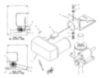 Locked diagram
Parts in this unit
Catalog descriptions with masked part numbers.
| Part number | Description |
|---|---|
| 10***39 | Key-square; spare part 10***39 key-square (Caterpillar) |
| 10***10 | Wire as; Spare Part 10***10 Wire as (Caterpillar) |
| 10***36 | Motor Group-power Adjuster; Spare Part 10***36 Motor Group-power Adjuster (Caterpillar) |
| 11***71 | Adjuster Group-height; -Power; Spare Part 11***71 Adjuster Group-height (Caterpillar) |
| 11***83 | Wire as; Spare Part 11***83 Wire as (Caterpillar) |
| 3l***87 | Lockwasher 7.24mm(.285in.)o.d.; (3.7x7.24x.48mm thk); Spare Part 3l***87 Lockwasher 7.24mm(.285in.)o.d. (Caterpillar) |
| 4l***54 | Capscrew; (3/8-16x21 in) (gd8) (hex hd) (4-roller); spare part 4l***54 capscrew (Caterpillar) |
| 6t***31 | Nut-hexagon-(15/32-32 thd); Spare Part 6t***31 Nut-hexagon-(15/32-32 thd) (Caterpillar) |
| 6t***32 | Lockwasher 15.08mm(.59in.)o.d.; Spare Part 6t***32 Lockwasher 15.08mm(.59in.)o.d. (Caterpillar) |
| 6t***33 | Lock Ring; (12.3mm id); Spare Part 6t***33 Lock Ring (Caterpillar) |
| 6v***74 | Screw-machine (6-32x0.25in); (6-32x0.25-in); Spare Part 6v***74 Screw-machine (6-32x0.25in) (Caterpillar) |
| 7n***08 | Switch as; (2 Pole); Spare Part 7n***08 Switch as (Caterpillar) |
| 8i***36 | Support as-motor; spare part 8i***36 support as-motor (Caterpillar) |
| 8i***40 | Coupling group; spare part 8i***40 coupling group (Caterpillar) |
| 8t***96 | Washer-hard- line from pipe as. to gear; spare part 8t***96 washer-hard- line from pipe as. to gear (Caterpillar) |
10-20WB serial number reference
On Extend-A-Mat screeds the PIN/serial plate sits above the right-side tow arm; the paver tractor's own plate is separate, mounted on the back of the tractor below the operator-station steps. Cat serial numbers run a three-character prefix followed by an eight-digit serial number; read the full stamped number off the screed's own plate (not the tractor's) and give the prefix to the parts counter, since fitment on this screed family is broken out by serial-number block rather than one blanket parts list.
| Prefix | Identifies | Notes |
|---|---|---|
| 2MN | 10-20WB Extend-A-Mat screed (diesel-only heated extendable screed; offered on the Cat AP1000D wheel paver and AP1055E track paver; distinct from the sibling 10-20B screed, which is offered in electric or diesel heat) | Cat's own paver spec configurators for both the AP1000D and AP1055E list the Extend-A-Mat 10-20WB as a screed choice separate from the Extend-A-Mat 10-20B, described as diesel-only versus the 10-20B's electric-or-diesel option, confirming 10-20WB as a real, currently offered screed model in its own right. Base paving width is about 3.05 m (10 ft); extended width varies by configuration, up to roughly 7.4 m (24 ft) on the shared 10-20 screed body. The screed is a bolt-on attachment towed and powered by the paver tractor, not self-propelled and with no engine of its own; being diesel-only, its heat comes from screed-mounted diesel burners rather than resistive elements. The 2MN serial-number block turns up in parts-catalog listings for this model and is not one of the prefixes the current factory parts reference guide assigns to the sibling 10-20B, consistent with 2MN being the separate WB-specific block, but it has not been checked against a factory SIS printout directly - confirm the exact serial break with your dealer, and ask whether later production added another prefix block, before ordering parts. |
Frequently asked questions
What engine does the Caterpillar 10-20WB have?
None. The 10-20WB is a towed/bolt-on Extend-A-Mat screed attachment, not a powered machine. It carries no engine, transmission, or driveline of its own aside from the small fuel supply for its diesel screed-heating burners. All hydraulic power, vibration, and grade-control functions run off the host paver tractor it is mounted to (period-correct Cat large pavers such as the AP1000B, AP-1050B, or AP1055B).
What is the operating weight of the 10-20WB?
Factory literature reviewed publishes combined paver-plus-screed weights rather than a standalone shipping weight for the 10-20WB screed itself, and the figure varies by which paver tractor it is paired with and which extension configuration is fitted. For a weight figure specific to your unit, check the host paver's spec sheet or your dealer's parts and service records for that serial range.
What replaced the Caterpillar 10-20WB?
No direct one-for-one factory replacement notice for the 10-20WB was found in the documents reviewed. Cat phased out the Extend-A-Mat naming in favor of its current SE-series screeds (SE47, SE50, SE60 in V, VT, FM, and XW configurations), which pair with the current AP1000D/AP1055-family pavers and add standardized electric heat plus factory grade control. Treat the SE-series as the lineage successor rather than a documented direct replacement.
What 10-20WB owners discuss
Owners say the extension plates on this Extend-A-Mat screed won't hold their adjustment. Is that normal?
What actually wears out the extension tubes and slide bushings?
Why does the screed plate wear unevenly from corner to corner?
The electric-heated screed takes a long time to reach paving temperature. Is that a fault?
What causes the mat thickness to wander even when the screed settings haven't changed?
What should I check before buying a used Cat 10-20WB Extend-A-Mat screed?
Compiled from owner and technician discussions across the industry — experiences vary by serial range and machine history.
Need a specific 10-20WB part?
Search live OEM part data, check fitment, and cross-reference alternatives with Heavy Parts AI.
Post a parts request and compare supplier quotes.